Appealing Your College Rejection: What Actually Works in 2025
August 14, 2026

Key Takeaways
- Appeals rarely succeed. Acceptance rates stay in the single digits.
- A real appeal needs objectively new information.
- The best appeals pair a hard artifact with a short explanation.
- Evidence without explanation looks like a data dump.
- Explanation without evidence looks like pleading. You need both.
- A 150-point SAT jump documented after the deadline is new evidence.
- Transfer applicants often win appeals more often than freshmen.
- A new club or hobby is not persuasive new information.
Quick Summary
An appeal is an emotional moment. The strongest ones do not come from emotion, though. They come from a hard read of the evidence. Most appeals fail, with acceptance rates hovering in the single digits, but the right circumstances can improve those odds. The question is not whether you're disappointed. Everyone is. It is whether you have objectively new information that was not in your original file and could change a committee's view.
When Reconsideration Actually Works
Appeals work when a student shows evidence that did not exist at application time. A documented standardized test increase after the deadline? New. A serious health event during senior year, with medical records to support it? Also new. A student who "really, really wants to attend"? Not new. Every rejected applicant feels that way.
Across the wins, the pattern is not the category of evidence. It is two things working together: a hard artifact like an updated transcript, score report, medical documentation, or award certificate, plus context that explains why it matters. Evidence without explanation is a data dump. Explanation without evidence is a plea. Both matter.
Transfer students tend to see different appeal dynamics than incoming freshmen. Most of that comes down to recent college coursework, which gives the committee direct proof of academic ability at the college level. If you're a freshman applicant, the bar to prove growth is higher.
What Counts as "New" and What Doesn't
Not every post-application win qualifies. One source notes that new activities alone are not enough. Another describes an appeal that succeeded because of a major award. The line is clear: a credential-level recognition like a national competition win, published research, or a USPTO patent reads as documented achievement. Joining another club or picking up a hobby does not.
Ask three questions before you decide to appeal:
- Was this physically unavailable when you applied? "I forgot to mention X" does not count. "X happened in February, and my application was due in January" does.
- Can a third party document it? Score reports, transcripts, medical records, award letters, and acceptance letters from other programs work. Your own testimony about personal growth does not.
- Does it address a weakness the committee likely flagged? Borderline GPA followed by a 4.0 in later coursework is targeted. Strong GPA plus a new hobby fixes nothing.
If you cannot answer yes to all three, focus on schools that said yes, or build a transfer application with a stronger record. Most students should not appeal. The ones who should usually already know they have something concrete to add.
Why an Appeal Is a Strategy Decision, Not an Emotional One
The stakes here are not emotional. They are financial and strategic, and reconsideration forces a call most students are not ready to make alone.
We think about this the way we think about any high-pressure decision point: customized planning based on the student's actual situation, not a generic script. Your accepted offer is real and guaranteed. A pending appeal is a low-probability shot, and it should never delay a decision about the offer you already hold. The numbers are why. UC Berkeley admits just 2% of freshman appeals, and in one consultant's 24-year career, only two students ever overturned a decision, according to Sara Harberson's breakdown. Treat an appeal as anything but a long shot and you are setting up a bad financial call.
Who Actually Benefits From Filing?
Students with objectively new, verifiable evidence. A corrected transcript, a documented medical event, a national-level award earned after submission. Not a new extracurricular, not a stronger essay draft.
That line matters more than most students realize. A University of Washington policy says new activities alone will not move a decision. A major post-application award can, because it functions as a credential, not resume padding. Run every piece of evidence through one strict test: did it exist at submission, and can you document it? If either answer is no, you do not have a case.
Why the Timeline Forces Your Hand
Appeal windows and enrollment deadlines collide, and that collision is the reason to treat your accepted offer as locked-in value. Freshman appeal windows run about four weeks. UC's deadline sits at April 15. Appeal materials also need enough lead time to clear review before the May 1 national enrollment deadline.
That is the practical squeeze. You'll probably have to commit to or decline your accepted offer before you know the appeal outcome. Students who treat the appeal as the real plan, and the accepted offer as a placeholder, tend to end up scrambling in late April with nothing left to use. Flip it. Secure the base, then chase the bonus.
Where the Real Payoff Shows Up
A successful reconsideration changes more than one letter. It can shift a financial aid package, a peer network, or access to a program that shapes a career for years. That is why the call deserves a framework instead of a gut reaction. Skip filing entirely if your school doesn't run an appeals process at all, which is true of most highly selective private colleges. Confirm the policy first. Everything else follows from that.
Collecting Supporting Documentation
The documents decide your appeal before an admissions officer reads a word. A reconsideration request lives or dies on evidence that is new, verifiable, and impossible to have sent the first time. That one test beats any category checklist you'll find online.
Here's the pattern across the wins: the deciding factor was never the type of evidence. It was that the information literally did not exist at submission and could be documented on paper. UW's freshman guidelines say the same thing bluntly. Reviewers overturn very few decisions, so your documentation has to carry real weight.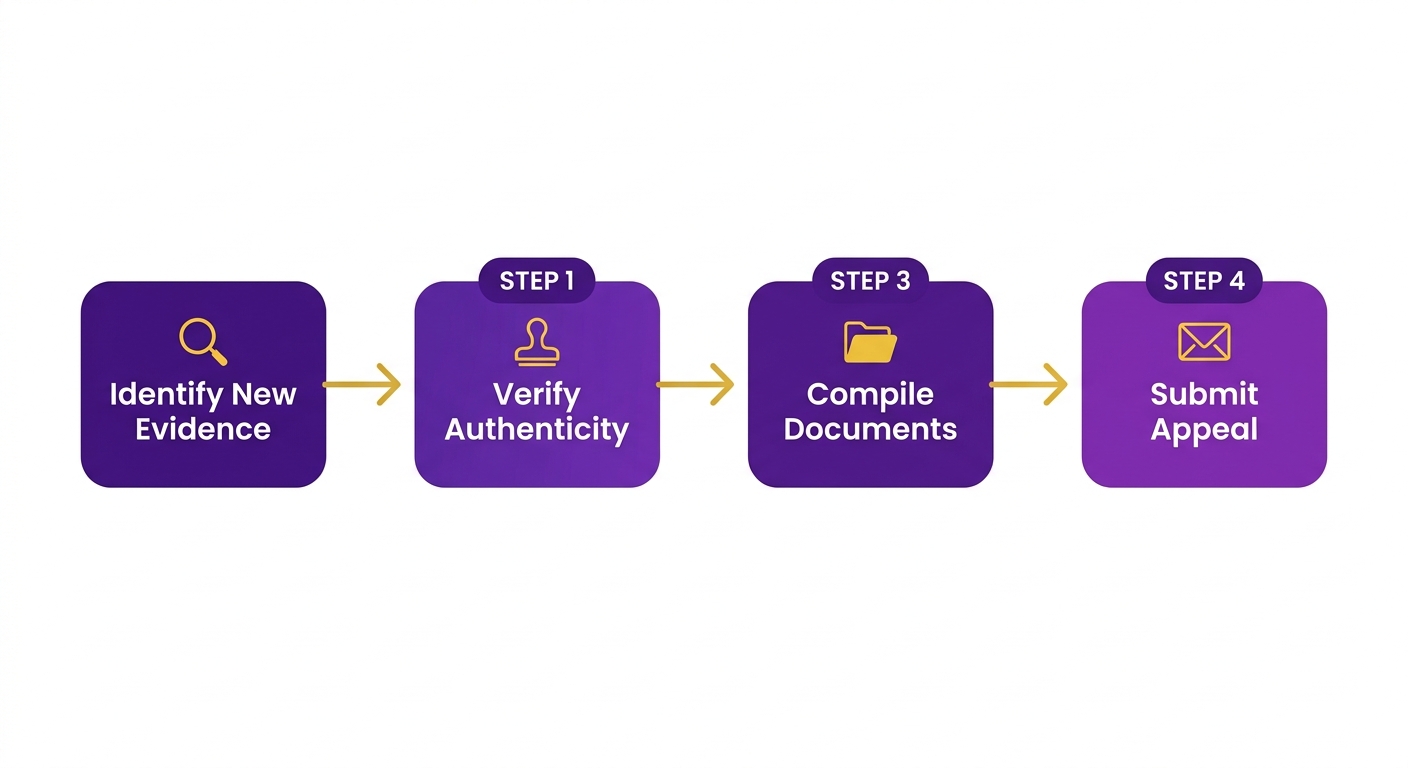
What Documents Actually Move a Reconsideration?
The strongest ones prove a material change or correct an error. An updated transcript showing a jump in senior grades, a new test score, or a credential-level recognition. Routine additions to your activities list do not qualify.
That distinction settles a real conflict in the guidance. UW notes that new activities on their own are not enough, while College Raptor describes a student who appealed successfully after winning a major award after applying.
Both point the same direction. A national award is a verified milestone. Joining a new club does not change your academic profile.
One UW case makes it concrete. A student who documented significantly improved senior grades plus extenuating circumstances won reconsideration. Another who cited only new activities was denied.
How Do You Prepare Transcripts and Test Scores?
Send official, updated documents, and check each school's format rules first. UW asks for an updated high school transcript, plus a college transcript if applicable, and caps the appeal at 1,000 words. Requirements are not universal.
Verify per school. UW explicitly excludes recommendation letters from its review, while UC Berkeley's process runs on a 500-word statement submitted through an online form. Every university sets its own appeal policy, so assume nothing carries over.
Organizing Documents Against the May 1 Clock
Package your evidence early, because the timing forces your hand. Admissions offices run tight spring schedules, so the window to submit is brief. Those institutional timelines overlap with national enrollment deadlines, and that overlap leaves families a narrow window to make big decisions.
You're balancing a confirmed acceptance against a highly uncertain appeal. Public institutions historically report very low success rates on these requests, which is exactly why your plans stay anchored to confirmed options. You'll almost certainly need to commit your deposit before you hear back on the appeal.
Gather materials right away so submission lands well before the deadlines, and you can finalize enrollment at an accepting school without waiting. That way the appeal runs without ever risking the option you already hold.
Writing an Effective Appeal Letter
Once you've decided reconsideration is worth filing, the letter does the rest of the work. Treat it like the deliverable it is. The outcome depends on whether you're presenting genuinely new information, not on how persuasively you restate the application they already read.
The strongest letters read like a status update, not a plea. Hilary Cairns puts it plainly: most students should not send a letter at all unless they have new information. If your draft opens with how much you love the school or how hard you worked, cut it. Not new information, and it will not move a reviewer.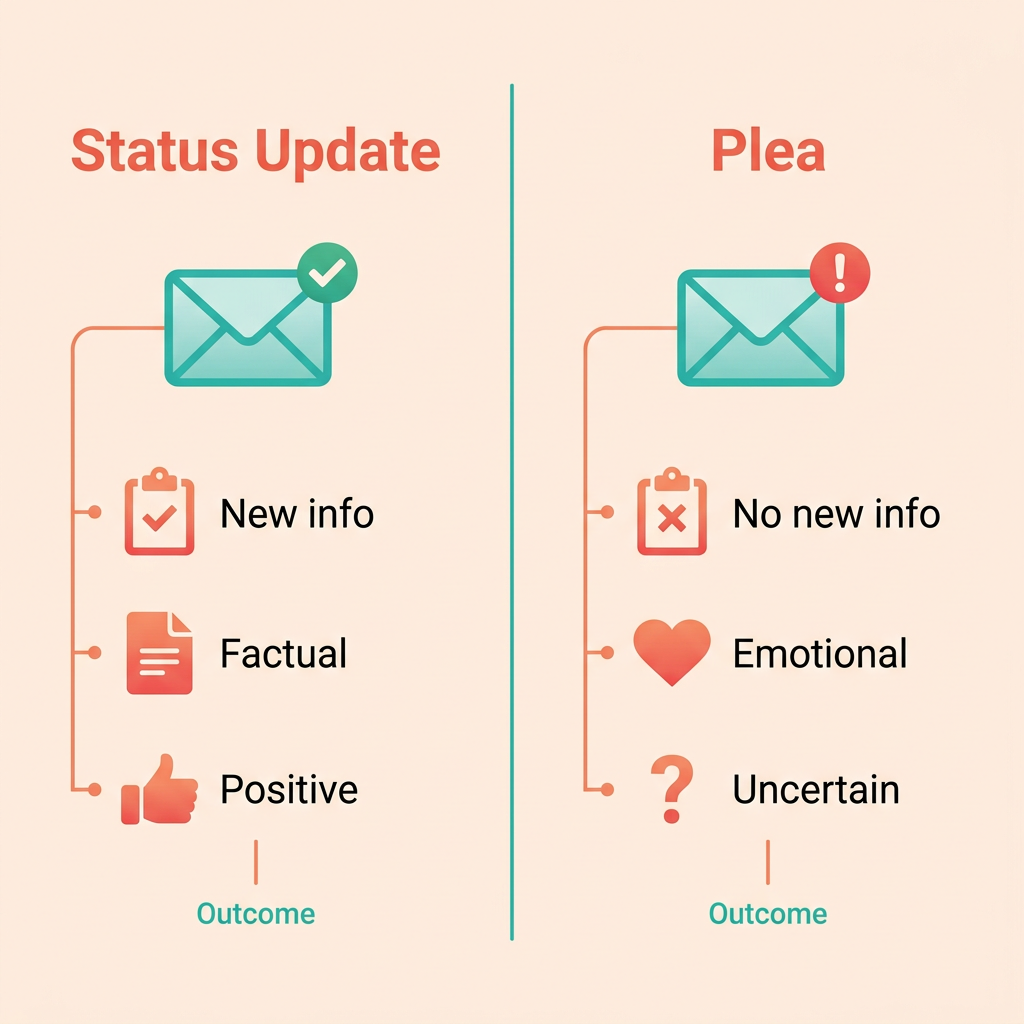
What Tone Actually Works?
Factual, brief, and free of emotional appeals. Admissions offices are not looking to be persuaded. They are looking for a reason the original decision was incomplete.
Many schools enforce hard length limits. Some cap you at a specific word count, others want a short statement typed straight into a portal. Committees do not want a long narrative. They want the specific fact that changes the file, stated clearly.
How Do You Structure the Letter?
Three parts: state what is new, document it, and state what you are asking for. Skip the preamble.
Lead with the new information in your first sentence. Not pleasantries, the update itself, like a documented grade correction or a medical event that affected your performance. Every documented win follows this pattern, opening on the objective fact.
Then attach the proof. A transcript, a score report, a doctor's letter. The sentence states the fact, the document verifies it. Reviewers are not taking your word for it.
Close by naming exactly what you want: reconsideration of your application in light of this new information. Do not ask them to "reconsider how great you are." Ask them to reconsider the file with the new fact added.
One Rule Worth Naming: Skip the Padding
Here is where students slip. A national award or a documented grade jump is new information. A new club membership or a volunteer shift is not. Some universities state flat out that standard activity updates will not influence the decision, and some exclude outside letters of support entirely. Read each school's guidelines closely, because the exclusions vary a lot between campuses.
If your draft is stuffed with resume additions instead of one hard fact, that is your signal to skip the letter and pour the energy into the offer you already have.
Timing and Deadlines for 2025
Deadlines here are not really about the appeal. They are about coordinating with the offers you already hold. The window to submit a reconsideration request is exceptionally tight, often closing right as national enrollment deadlines hit. That overlap leaves families a narrow slot for big financial and academic calls, and the dates rarely line up in your favor.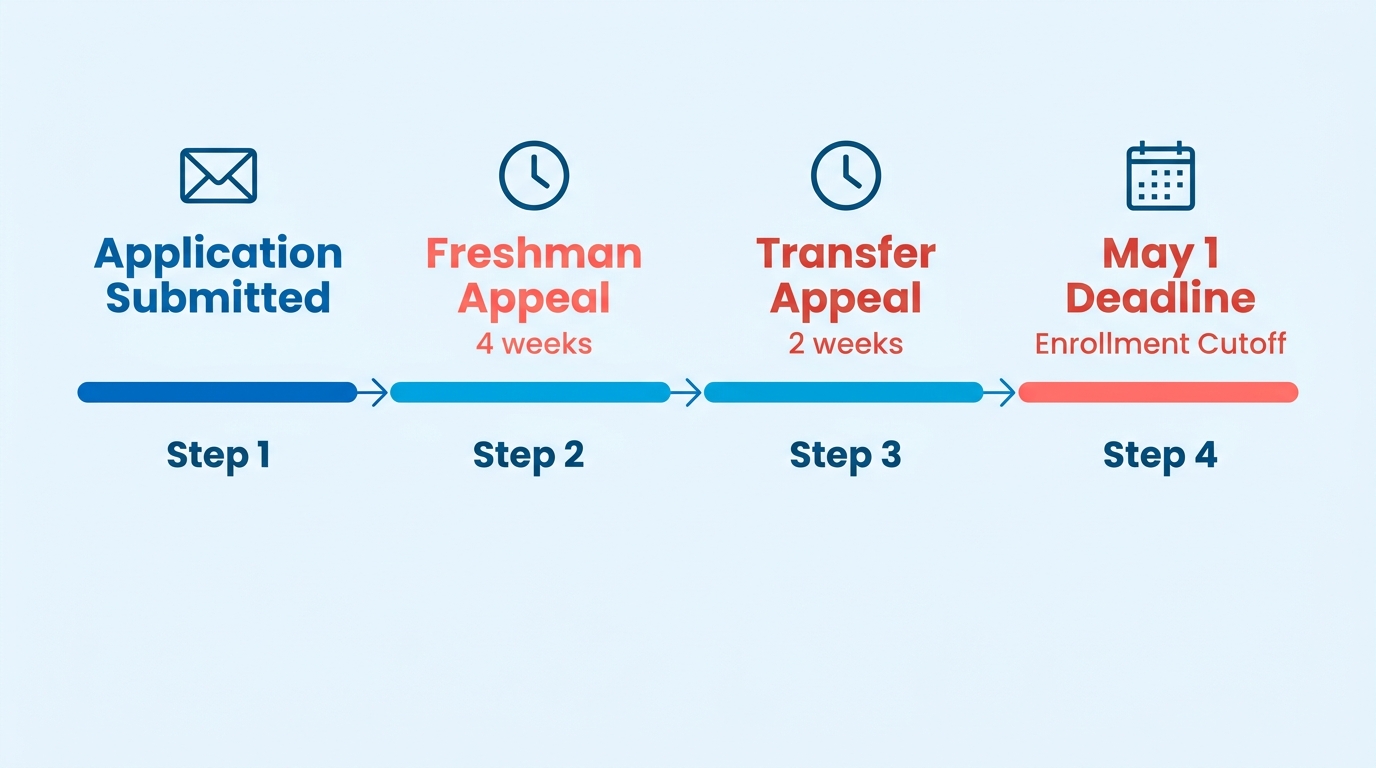
Why the Appeal Timeline Collides With Your Enrollment Deadline
Most students commit to or decline an accepted offer before they know how the appeal turns out. That is not a scheduling accident. It is the structural fact that should drive the whole decision.
So run it systematically. The appeal sits in the background as a secondary option while your main focus stays on housing and enrollment steps at a school that accepted you. A low-probability reversal should not jeopardize a guaranteed spot, a merit scholarship, or a housing preference at another campus.
How Should You Prioritize the Weeks You Have?
Start with the accepted offer, not the appeal. Confirm the deposit deadline first, then work backward to see how much runway you actually have to build a case.
Gather your new information right after the rejection lands, not after you've decided whether to appeal. Test scores, corrected records, and documentation take days to arrive from schools or testing agencies, and you cannot submit what you do not have. If a school wants a specific format or portal entry, check those parameters early so you are not fighting formatting errors against the clock.
What Actually Sinks an Appeal's Timing?
The biggest one: treating the appeal as your primary plan instead of a secondary one. Students who wait on an appeal outcome before securing housing or paying a deposit elsewhere sometimes lose both.
The second: submitting late because the new information was not ready. Health documentation, score reports, and award confirmations all carry their own processing times, so start collecting the day you decide reconsideration is worth it, not the week before the window closes.
The principle is simple. Lock in the accepted offer on its own merits, then let the appeal run in parallel on its own clock.
Case Studies of Successful Appeals in 2025
Sia Sama's UC Berkeley reversal is one of the few publicly documented wins, and what made it work is worth isolating. The committee reconsidered because the file in front of them the second time was materially different from the first, not because the letter's tone changed. That is the line between an appeal and a resubmission dressed up as one.
Keep a realistic read on the data. A reversal is an outlier, which is why your primary enrollment plans stay pointed at the options actually in front of you. Treat a reversal like Sama's as the exception that proves the pattern, not a template you can count on repeating.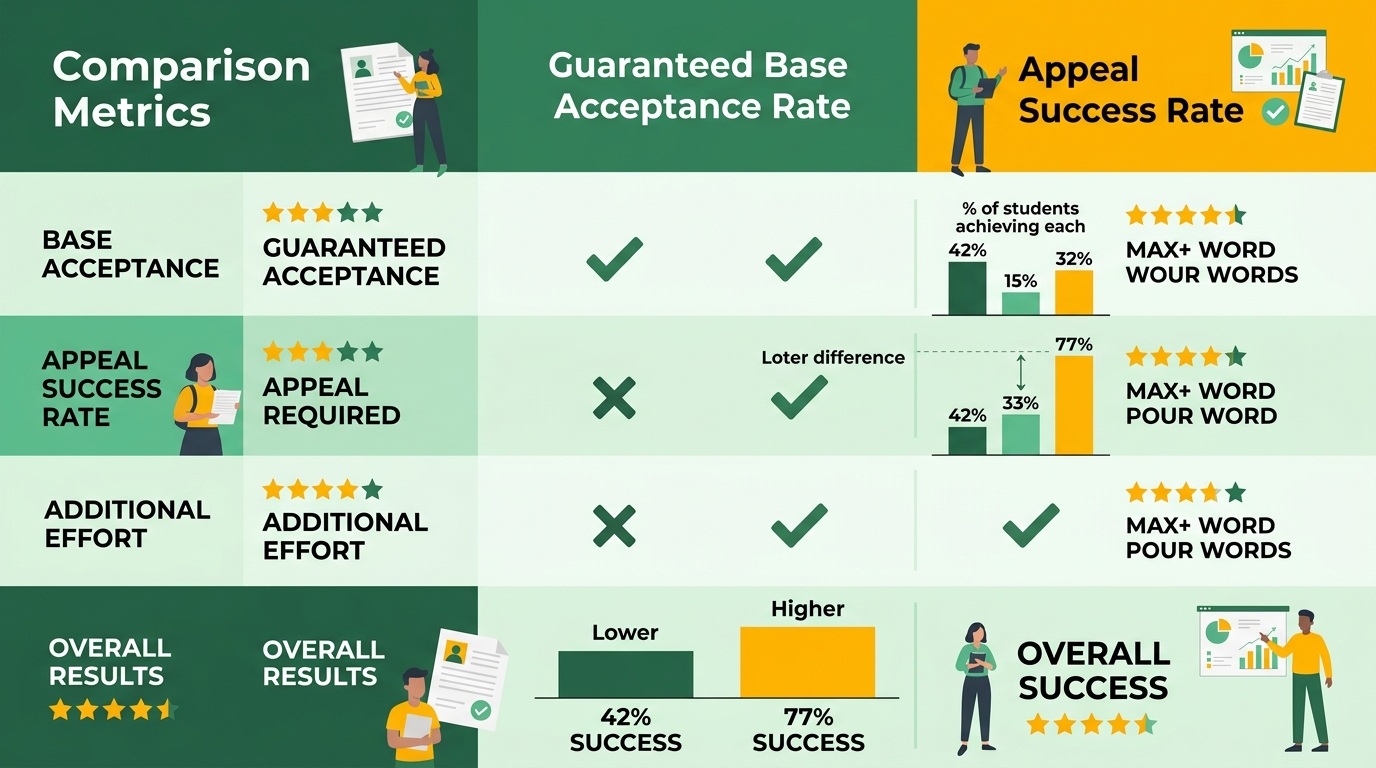
What Do the Wins Have in Common?
Every documented win came from information that did not exist at submission, not from a better-written version of the original story. One student overturned a denial at a private college known for a generous acceptance rate, and the file that got a second look was not a rewritten personal statement. It was new evidence.
A separate financial aid case makes the same point from another angle. A family showed the school a stronger offer from a competing college, and that comparison triggered a re-evaluation. Notice what both share: the win came from outside data the school did not already have, not from persistence or persuasion.
So verify that your appeal carries objective, documented updates and not a rerun of the original application. Without verified new data, the committee has no basis to change anything.
What Do the Failures Get Wrong?
Most rejected appeals are attempts to argue the same case louder, often at schools that do not even review appeals. Many private institutions do not entertain these requests, and experienced consultants report that reversing a rejection is genuinely rare.
That is the mistake we see most: a student spends a week polishing a letter for a school that structurally cannot say yes, while the clock on the accepted offer keeps running. The lesson is not "write better." It is "check whether the school even has a path before you invest the time."
Often the smarter move is to focus on the institutions that recognized your potential from the start, rather than waiting on a highly uncertain reconsideration. Your accepted offer is a real opportunity, and it deserves your full attention.
References
[1] How to appeal a college rejection - https://www.collegeraptor.com/getting-in/articles/college-admissions/how-to-appeal-an-admissions-decision/
[2] Can You Appeal An Ivy League Decision? - https://www.ivycoach.com/the-ivy-coach-blog/college-admissions/appealing-admissions-decisions/
[3] Can You Appeal a College Rejection? | BestColleges - https://www.bestcolleges.com/news/can-you-appeal-a-college-rejection/
[4] Writing a Strong Admissions Appeal Letter (Step-by-Step Guide) - https://www.youtube.com/watch?v=MqQys-j0Uio
[6] First-year guidelines for special admission by appeal - https://admit.washington.edu/apply/first-year/i-applied/special-admission-appeal/
[7] Appeals in College Admissions: Everything You Need to ... - https://www.saraharberson.com/blog/appeals-in-college-admissions
Frequently Asked Questions
1. What if my target school doesn't have an appeals process at all?
If an institution does not offer a formal reconsideration pathway, focus your efforts on finalizing enrollment at an accepting school. Alternatively, you can begin planning a future transfer application by maintaining a strong academic record at another college.
2. Can I appeal a financial aid decision the same way I'd appeal a rejection?
Yes, but the criteria differ. Financial aid offices review appeals based on documented changes in financial circumstances or competing financial packages. You must provide clear financial documentation or official award letters rather than personal statements about your desire to attend.
3. Why do transfer applicants win appeals more often than incoming freshmen?
Transfer students present academic records from a college environment, which provides direct proof of their ability to succeed in higher education. Admissions committees find this post-secondary academic data highly predictive, whereas freshman appeals rely on high school updates that may not significantly alter the initial academic assessment.
4. Should I pay my enrollment deposit while my appeal is still pending?
Yes. Because appeal decisions are typically released after enrollment deadlines, you should secure your spot at an accepting institution. Failing to submit a deposit on time could leave you without any enrollment options if the appeal is denied.
5. Do letters of recommendation help strengthen an appeal?
Generally, no. Most institutions prioritize objective academic updates or documented extenuating circumstances over personal endorsements. Some universities explicitly state they will not review additional letters of support, so it is critical to check individual campus policies before submitting them.
6. How is an appeal different from just resubmitting my application?
An appeal requires introducing verified, objective data that was unavailable during the initial application cycle. Simply revising your essays or expressing a stronger interest in the school does not constitute an appeal; it is merely asking the committee to review the same profile a second time, which rarely leads to a different outcome.