Does Your *Scarlet Letter* Essay Show Critical Reading or Just Plot Recall?
August 25, 2026


Key Takeaways
- Most Scarlet Letter essays fail because they retell the plot instead of interpreting it. That's a dressed-up summary, not analysis.
- The scorecard has 14 items across three categories. Each item carries a priority so you fix the most damaging problems first.
- Plot Recall Red Flags hold five high-priority items. This is where most drafts bleed points.
- Critical Insight Markers include six high-to-medium items. A strong essay should hit at least four.
- Sentences that only report events, like "Then Dimmesdale confesses," signal recounting, not reading.
- A quote earns its place only when it proves a claim. A quote with no "so what" is filler.
- The scarlet "A" shifts meaning as the novel moves. Tracking that evolution past "adultery" is what separates thinkers from summarizers.
Quick Summary
Most Scarlet Letter essays fail for one reason. They retell the story instead of interpreting it. This scorecard makes that gap visible. Run your draft through it and within minutes you'll know whether you wrote real analysis or a dressed-up the scarlet letter summary.
The checklist below sorts the criteria into three tiers. Each item has a priority so you know what to fix first when the clock is running.
What the Scorecard Covers
Here's the breakdown at a glance. High-priority items separate a passing essay from a strong one. Medium items sharpen the argument. Low items polish.
| Category | Items | Priority |
|---|---|---|
| Plot Recall Red Flags | 5 | High |
| Critical Insight Markers | 6 | High–Medium |
| Essay Craft & Structure | 3 | Medium–Low |
Where Essays Slip Into Plot Recall (5 items, High)
This is where most drafts lose points. If you're narrating Hester's punishment scene by scene, you're summarizing, not arguing.
- Cut sentences that only report events without interpreting them. Recounting is not reading.
- Flag every "the author shows" line with no follow-up. Naming a moment isn't analyzing it.
- Remove chapter-by-chapter recaps. Chronology is the novel's job, not yours.
- Check that quotes prove a claim, not decorate one. Every citation has to support your thesis.
- Delete any paragraph built on surface observations. If a reader who never opened the book could write it, it's a recall tell.
What Signals Critical Insight (6 items, High–Medium)
These markers show an admissions or AP reader that you thought, not just remembered. Aim for at least four.
- Trace the evolving symbolism of the central letter. Show how its meaning shifts across the narrative.
- Connect one character's choice to a claim about guilt, shame, or hypocrisy.
- Take a position the text could argue against. Analysis has stakes; summary doesn't.
- Read a passage against itself. Point to where Hawthorne's tone undercuts a character.
- Link a small detail to a large idea. The best insight starts narrow.
- Answer "why does this matter" for your thesis in one clean sentence.
Which Craft Items Polish the Draft (3 items, Medium–Low)
Save these for last. They matter, but not before your argument holds.
- Confirm your thesis lands in the first paragraph, stated as an argument.
- Trim transitions that restate the plot instead of advancing your point.
- Read it aloud once. Recall reads flat; insight has a voice.
Why This Checklist Matters
Admissions readers spot a plot retell in seconds. This checklist catches that problem before an application reader does. Run your draft through it and a vague overview turns into an essay that argues something.
It targets a pattern that shows up in student drafts again and again. The writing is fluent, the plot is accurate, and the analysis is missing. A clean summary of The Scarlet Letter feels like work, so students trust it. Readers don't reward it.
What Happens If You Skip This Check
You submit an essay that proves you read the book but not that you can think about it. That's the exact line between a passing grade and a competitive one. Most rejected literary essays fail here, not on grammar or structure.
Retelling Hester's public shaming or Dimmesdale's guilt shows recall. Explaining why Hawthorne stages that shame in public, and what it reveals about the community, shows insight. The scorecard forces you to separate those two moves and count how often each appears.
Skip the diagnostic and you risk burning hours polishing sentences that only describe events. The essay reads smoothly and says nothing an admissions officer couldn't get from a book jacket. That's wasted effort at the worst possible moment.
When to Use This Scorecard
Use it on any timed essay, class assignment, or supplemental response that analyzes a text. It works as a revision tool, not a drafting one. Write freely first, then score.
Best case: you have a finished draft and a short window to sharpen it. The checklist tells you which paragraphs are recall and which carry an argument.
When to skip it: don't run this on a pure reading-response journal or a creative piece. Those reward personal reaction, not literary claims, and the rubric will flag insight you were never asked to show.
Essays are one of the best chances for an application to stand out, which is why we work closely with students on the writing that carries their argument. Score honestly, fix the high-priority gaps first, and the essay stops describing the book and starts interpreting it. For more on turning coursework into application strength, see our college admissions planning blog.
Protecting Whose Ideas These Are
Think of "integrity" here as guarding your essay against the two failure modes that sink most Scarlet Letter drafts: someone else's reading leaking in, and your own claims being unverifiable. These checks lock down whose ideas you're presenting and whether your evidence holds. Run them last, right before you submit.
How to Keep the Thinking Yours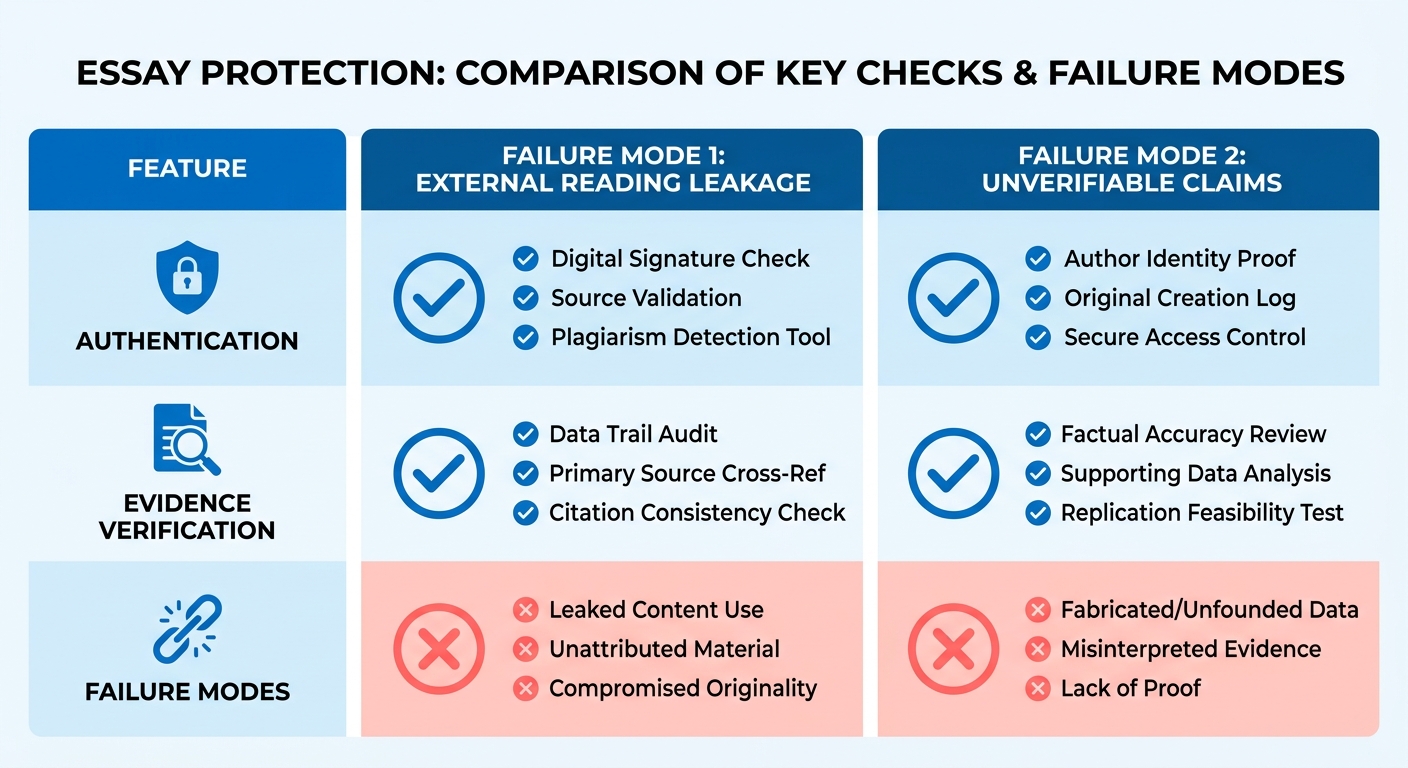
Proving the analysis is yours means proving it isn't a borrowed reading or a rephrased summary you found online. Admissions readers have seen every common take on Hester and Dimmesdale. Your job is to make the interpretation something only you could have written.
- Confirm every claim is yours, not inherited. If your thesis matches the first search result for common online analyses, it isn't yours yet. Push past the obvious "sin and guilt" reading to something you actually argue.
- Keep your voice consistent. A sudden jump from plain sentences to inflated literary-critic diction signals a pasted-in passage. Readers notice the seam. Hold one register.
- Strip out borrowed phrasing. If a sentence sounds like it's explaining the novel to a stranger, it's summary, not analysis. Cut it.
What Guards Your Evidence
Every interpretive move should be backed by the text, and no claim should overreach what the novel supports. An argument you can't ground in a specific passage is a liability.
- Back each claim with textual evidence. Every analytical point needs a quote or scene behind it. A claim floating without the book reads as opinion, not reading.
- Watch for plot leaking into your evidence. When you cite a scene, ask whether you're using it to argue or just to retell. If the sentence works as narration, it's recall.
- Guard your conclusion against summary drift. Weak essays end by restating what happened to Hester. Strong ones end on the claim they proved. Confirm your last paragraph advances the argument, not the plot.
If your draft is still in its earliest stages, build the core argument first. These final-pass checks are for securing a completed draft, not for brainstorming.
Making Every Sentence Work Harder
A strong Scarlet Letter essay does more analysis in fewer words. These checks strip the dead weight that slows a reader down, plus the padding that looks like effort and adds nothing.
Run them after your argument is locked. No point optimizing sentences you'll cut. Tune the engine once the car is built.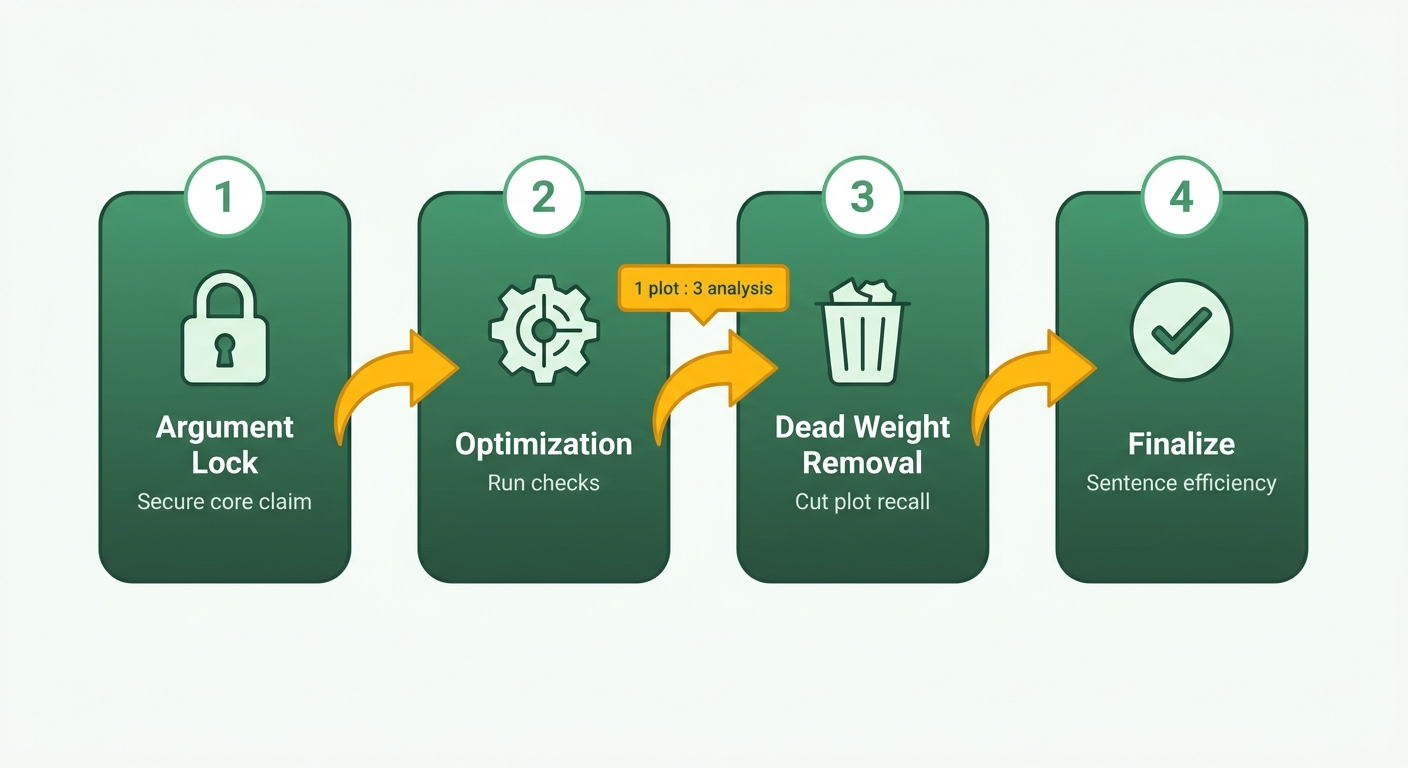
How to Cut Plot Recall Without Losing the Reader
Every plot reference has to earn its place by supporting a claim. Readers already know the story. Spend words on interpretation, not narration. A good ratio is one sentence of plot to three of analysis.
- Cut any plot beat that isn't feeding an argument. If a sentence tells the reader what happened without telling them what it means, delete it or attach a claim.
- Compress background into single clauses. Turn "Hester is forced to wear the scarlet A after her public shaming" into a subordinate phrase, then spend the main clause on your point.
- Replace event recall with textual detail. A specific word or image from a scene does more analytic work than a paragraph retelling it.
What to Check Before You Submit
Check your essay's balance before an admissions reader does. Read your draft with one question: could someone who never read the book learn something new from my thinking?
- Highlight every summary sentence in one color. If more than a quarter of your essay lights up, you've written closer to a summary than an argument.
- Count your claims. How many distinct interpretive claims per paragraph? One buried claim across five sentences is padding.
- Move your strongest line up front. Lead each paragraph with its sharpest insight so a skimming reader hits your best thinking first.
If your draft is running short, expand the analysis instead of padding it. Add textual evidence and unpack it, or check our college admissions planning blog for deeper essay strategy.
The Final Pass Before You Submit
This is the last pass before the essay goes anywhere: teacher, admissions reader, scholarship committee. Treat submission like a final review. Lock the draft, run one last check, confirm nothing broke between your draft and the version that lands in front of a reader. Skip it and a strong argument can still read like a superficial overview because of a formatting slip or a stale paragraph.
Run this once, in order, right before you hit submit. Not the day before. The version you send is the only one that gets scored.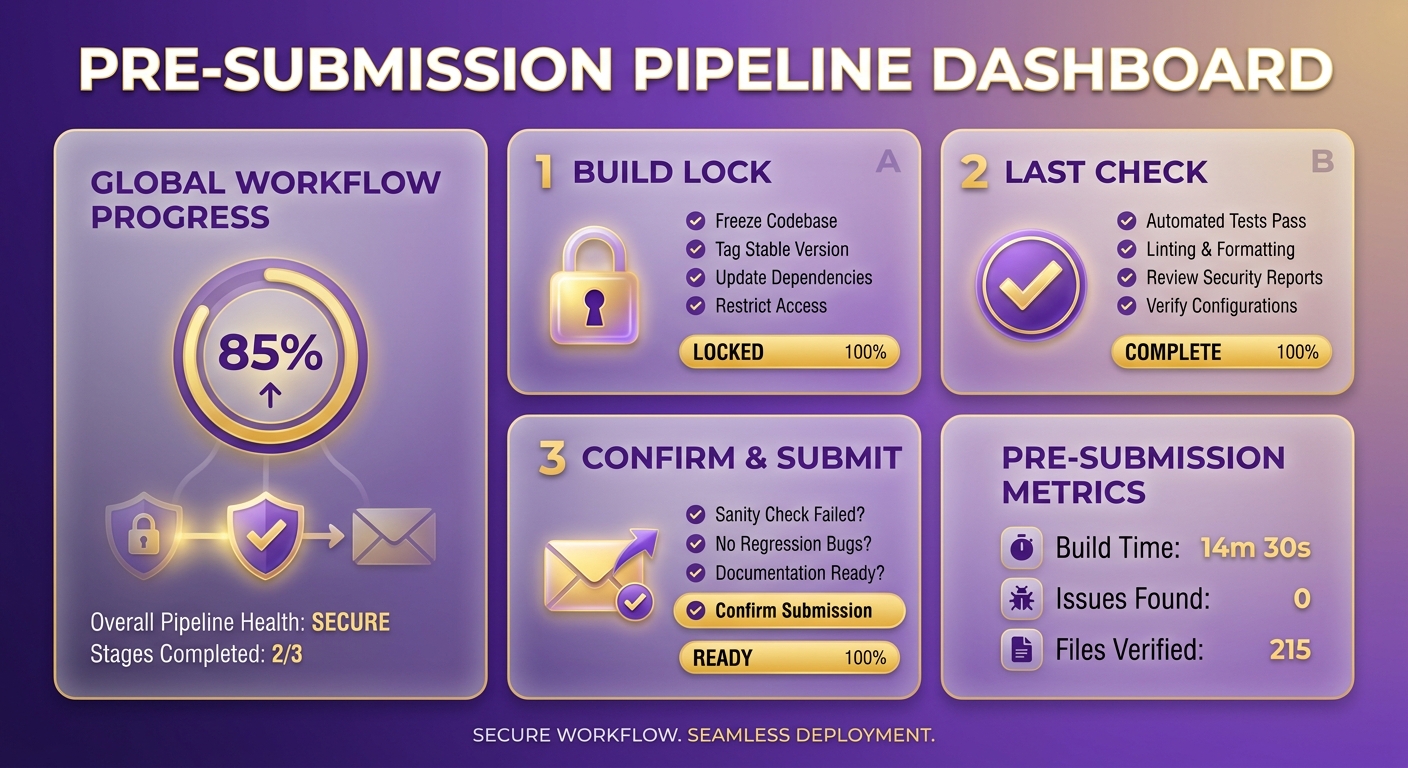
How to Submit Without Breaking What Worked
A regression is when a fix breaks something you already had working. In essays, it happens when you cut a plot beat and orphan the sentence that referenced it. These checks catch that before a reader does.
-
Read the final version start to finish, out loud, in one sitting. Silent reading skips broken transitions. Your ear catches the seam where two edits collided and the argument stopped tracking.
-
Confirm every claim you added survived your cuts. When you trim narration, you sometimes delete the setup a later point depended on. Check that your thesis still has its evidence attached.
-
Match the file to the submission format. A brilliant reading looks careless in the wrong font or spacing. Readers see the file exactly as you saved it, so open the final PDF and look at it as they will.
Your Last-Minute Revision Plan
Keep your previous strong draft saved and named clearly. If a late edit hollows out your argument, you want a clean version to revert to instead of rebuilding under pressure.
-
Save a timestamped copy before the final edit pass. Late confidence is dangerous. If a "better" rewrite turns your analysis back into recall, roll back to the version that worked.
-
Take a five-minute cooldown, then reread once more. Fresh eyes catch what tired eyes approved. Our team treats this pause as part of the submission, not optional polish. For guidance on pacing your application timeline, our advisors build in regular check-ins and feedback sessions from draft to submission.
Keeping the Essay Sharp Over Time
A Scarlet Letter essay isn't a one-and-done submission. You may reuse it across supplements, scholarship applications, and revised drafts, so the version you wrote in the fall may not hold up by the time you send it. Maintenance means checking that your analysis still reads as insight, not as a stale overview you forgot to sharpen.
Through our mentorship and regular check-ins, we push students to revisit every saved essay as their thinking grows. Interpretations drift. A claim that felt bold last semester can read as obvious once you've done more reading. These checks keep the essay honest each time you pull it back out.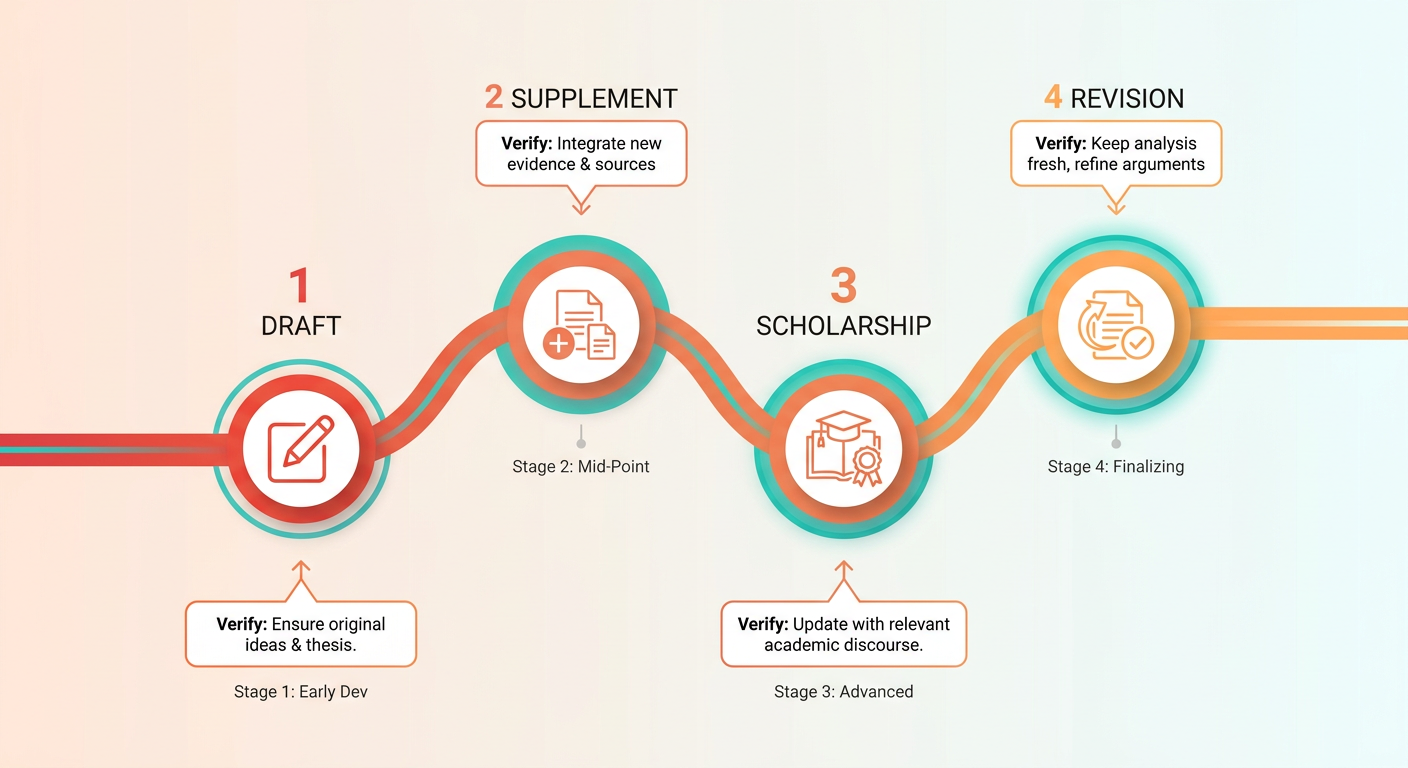
How to Keep an Essay From Going Stale
Run a quarterly re-read and confirm the argument still surprises you. If your own thesis now reads like a generic overview of The Scarlet Letter, it has aged out and needs a sharper claim.
- Re-read the full essay before every new application cycle. A draft written for one prompt often carries assumptions that no longer fit. Reading it cold catches lines that slid back into narration.
- Update your thesis when your reading deepens. As you study more literature, your take on Hester's silence or Dimmesdale's guilt should evolve. An essay frozen at your earliest interpretation signals you stopped thinking.
- Watch which sentences a reader marks up. Track teacher and mentor feedback across drafts. The same flagged line appearing twice means the fix never landed.
What to Back Up and Track
Keep dated versions of every draft so you can see how your analysis grew. Backups protect your strongest phrasing from getting cut and lost when you edit under deadline.
- Archive your progress systematically. When a later edit weakens a paragraph, you can pull the earlier version back. Your best interpretive line is worth protecting.
- Log the sources and ideas behind each claim. Note where a reading came from so you can defend it as your own later. This keeps borrowed takes from creeping in unnoticed.
For a single deadline, a simple backup is enough. If you plan to repurpose your analysis across multiple applications, a clear revision history means your strongest insights never get lost.
Best Practices
The best Scarlet Letter essays share one habit: they treat the plot as evidence, not as the point. Internalize a few working rules before you draft and you spend less time later untangling a summary from an argument. These come from what we see separate competitive essays from ones that stall at "you clearly read the book."
Start with the claim, not the chapter. A chronological approach organizes itself around what happens next. Analysis organizes itself around what you're arguing. Write the thesis first, then pull only the scenes that test it.
Best Practices for Scarlet Letter Analysis
Lead with interpretation and let plot serve it. The habits below keep your draft on the analysis side of the line, where admissions readers reward you.
- Write your thesis before you touch the text. If you can't state your argument in one sentence without narrating a scene, you don't have a claim yet. Fix that before drafting.
- Quote small, then unpack long. Pull a short phrase, then spend three or four sentences on why it matters. Long quotes usually smuggle in plot recall you'll have to cut.
- Name the technique, not the event. Write about Hawthorne's irony or symbolism, not just what Hester does. Readers reward attention to how the book works.
- Argue something a summary cannot. If a plot recap could reach your conclusion, dig deeper. Your reading should require the actual thinking you did.
What Sinks These Essays Most Often
The most common failure is confusing fluency with insight. A smooth retell reads like effort, so students trust it and readers dismiss it.
- Stop narrating in the introduction. Openers that recount the scaffold scene waste your strongest real estate. Open on the argument instead.
- Cut the "and then" chain. Sequential plot beats are the clearest tell of recall over analysis. Break the chain with a claim.
For students who want structured feedback on this gap, our collaborative panel approach gives you diverse perspectives on your essays and applications, with regular check-ins to keep drafts moving.
What I'd Actually Do With Your Draft
A Scarlet Letter essay earns its place when it argues something a plot summary never could. If your draft passed the high-priority checks, you've crossed the line from retelling to reading. If it stalled, you now know exactly where to spend your next revision hour.
The whole point of this scorecard is speed. Run any draft against it in ten minutes and get a clear verdict: real insight, or a polished overview wearing an essay's clothes.
What to Do Next
Fix the high-priority items first, then work down. A single unfixed plot-recall red flag does more damage than three missing polish items. Run the checks in order, submit only the version that clears every high-priority box, and save that version for reuse.
- Kill the warning signs first. Cutting narrative-heavy sentences is the fastest way to lift a draft. Start there.
- Make sure your draft hits the analytical benchmarks. One sharp claim beats a paragraph of accurate narration every time.
- Re-run the scorecard after every major cut. Trimming plot can orphan a claim or expose a gap, so a second pass catches what the first fix broke.
Where a Second Reader Comes In
A scorecard tells you what is wrong. It can't always tell you how to fix a specific argument in a specific voice. That gap is where a second reader earns their keep.
We build this close-reading habit into our mentorship, working with students draft by draft until interpretation becomes the default instinct, not an afterthought. You'll find more of our thinking on essays and admissions strategy on our admissions blog.
If your draft already clears every high-priority box and surprises you on re-read, you're ready to submit. Otherwise, an outside perspective can pinpoint exactly where your analysis slips back into summary.
References
[1] Avoiding Plot Summary | SASS - https://sass.queensu.ca/resources/avoiding-plot-summary
[2] Topoi and literary interpretation: The effects of a critical ... - https://www.researchgate.net/publication/251581979_Topoi_and_literary_interpretation_The_effects_of_a_critical_reading_and_writing_intervention_on_high_school_students'_analytic_literary_essays
Frequently Asked Questions
1. Can an essay have a strong thesis and still fail the plot recall check?
A strong thesis alone won't save an essay if the body paragraphs narrate events scene by scene. If your body paragraphs rely on surface-level observations that don't actively support your thesis, unproven claims and "and then" chains will still cost points regardless of a sharp opening argument.
2. How is this scorecard different from a standard grammar or structure edit?
A grammar edit fixes sentences; this scorecard checks whether sentences argue anything. While standard proofreading addresses mechanics, this tool evaluates the depth of your interpretation, helping you bridge the gap between a passing grade and a truly competitive analysis.
3. What if my draft is under length and short on evidence?
If your draft is running short, avoid cutting text. Instead, focus on expanding your analytical depth. The performance checks assume you have surplus words to trim, so adding grounded interpretive claims backed by specific passages serves you better than compression at that stage.
4. Is a quote in every paragraph enough to prove critical reading?
Quotes only count when they actively support your thesis rather than decorate a paragraph. A quote without a clear analytical purpose reads as filler. Cite a scene to argue, not to retell, since a sentence that works as narration signals recall even when a quotation sits beside it.
5. When should I not use this scorecard at all?
Skip it for pure reading-response journals or creative pieces. Those reward personal reaction, not literary claims, so the scorecard would flag insight you were never asked to show. It works only on essays that analyze a text, and best as a revision tool on a finished draft.
6. What is the minimum I need to pass the high-priority checks?
Address the primary warning signs first, then ensure your draft hits the key analytical benchmarks. A single unfixed narrative-heavy sentence does more damage than minor structural or formatting issues, so resolve the high-priority gaps before polishing.
7. Why keep dated copies of an essay I already finished?
Reused essays drift as your reading deepens, and late edits can hollow out a working argument. Archiving your progress systematically lets you roll back if a "better" rewrite turns analysis back into recall, protecting your strongest interpretive lines from getting cut under deadline.