How a Public School Senior Wrote Her Way Into Princeton
August 1, 2026

Key Takeaways
- Princeton admitted 4.62% of applicants for the class of 2028. That's about one acceptance for every 22 hopefuls.
- Admitted students averaged a 3.95 GPA. Near-perfect grades are the floor, not the differentiator.
- The middle-50% SAT band for fall 2025 ran from 1490 to 1560, per IvyWise.
- Successful public school applicants treat applications as narrative problems, not just academic ones.
- Officers respond to essays that convey a student's context within the 650-word limit.
- Strong public school applications often reflect effective programs and mentors, not perfect scores alone.
- The numbers clear the first cut. The personal story separates one applicant from the next.
Related Video
Watch: High school senior gets full scholarship and more to Princeton by TMJ4 News
Quick Summary
The fastest way a public school senior improves Princeton odds is by treating the application as a narrative problem, not just an academic one. The numbers set a floor. The story clears the bar. Below is what the data says, why strong student success stories share one trait, and where we spend the most mentoring time.
The most compelling public school applicant we study isn't the valedictorian with perfect scores. It's the student who used effective programs and mentors to convey their context in 650 words or less.
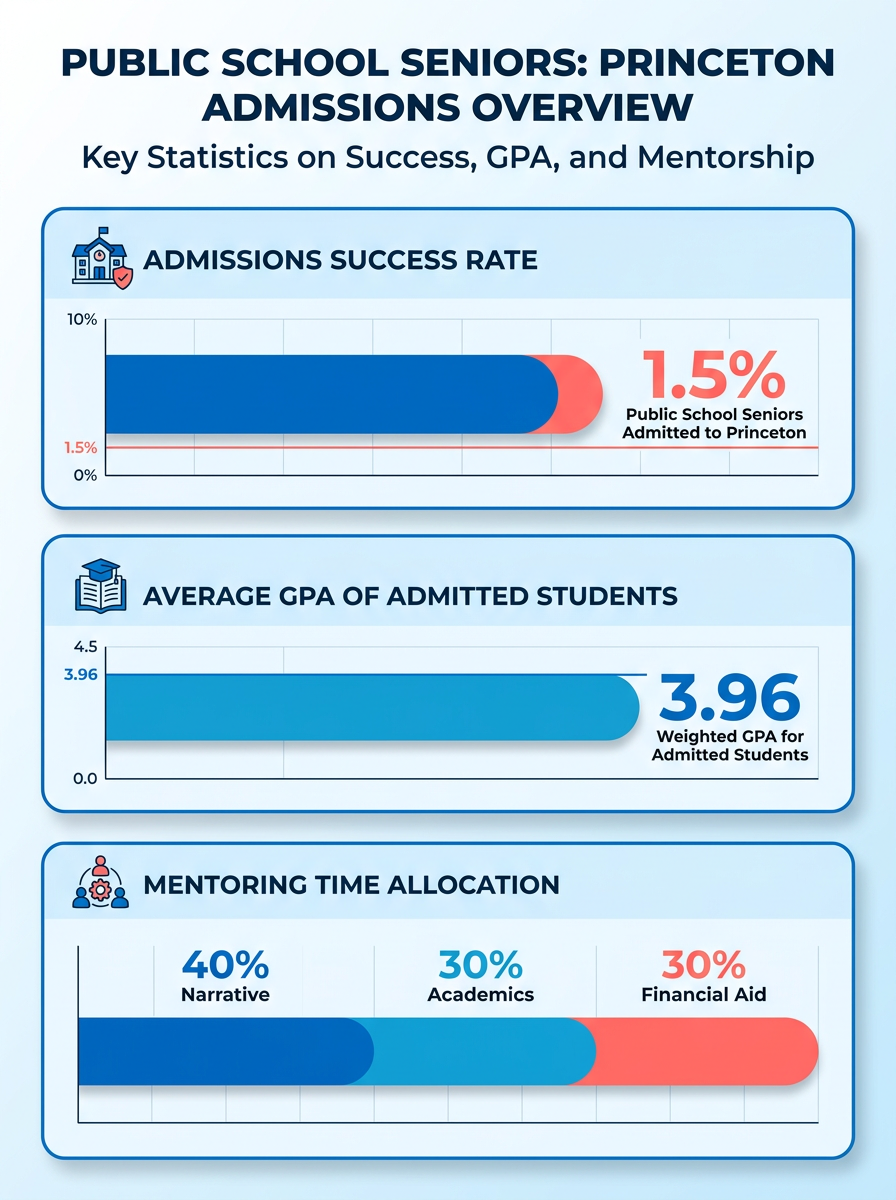
Princeton's real numbers for the class of 2028
The admissions data shows Princeton's selectivity. These figures provide a baseline, not a promise. The academic profile is the first gate.
| Metric | Data point | What it means for you |
|---|---|---|
| Acceptance rate (2028) | 4.62% | Roughly 1 in 22. The applicant pool is large |
| Average GPA | 3.95 | Near-perfect grades are table stakes, not a differentiator |
| SAT middle 50% | 1490–1560 | Above roughly 1490, testing stops being the story |
| Application prep | 3–6 months for essays | Start writing early; rushed drafts read rushed |
| Hardest component | The supplemental essays | Public school applicants can win or lose here |
Princeton's admissions team challenges the idea of a "type" in A Thousand Paths to Princeton. They insist there's no favored profile. Both ideas can be true. The stats are a gate. Among students who clear it, the narrative decides.
Why public school seniors have a hidden edge
Public school seniors carry context that private-school applicants often can't claim. That context can become part of an application. Saul Flores, a senior at a Milwaukee public high school from a family of four earning under $30,000, applied through the QuestBridge portal. He landed a full scholarship covering tuition and transportation.
His outcome wasn't a lottery ticket. QuestBridge and his school's counseling made his first-generation, low-income story clear to Princeton. Public school seniors can build similar support through programs and mentors.
Where to spend your prep time
Focus on the essays. Academics get a public school applicant read. The personal statement and supplements can help secure admission. We rate essays as the highest-difficulty, highest-payoff component by a wide margin.
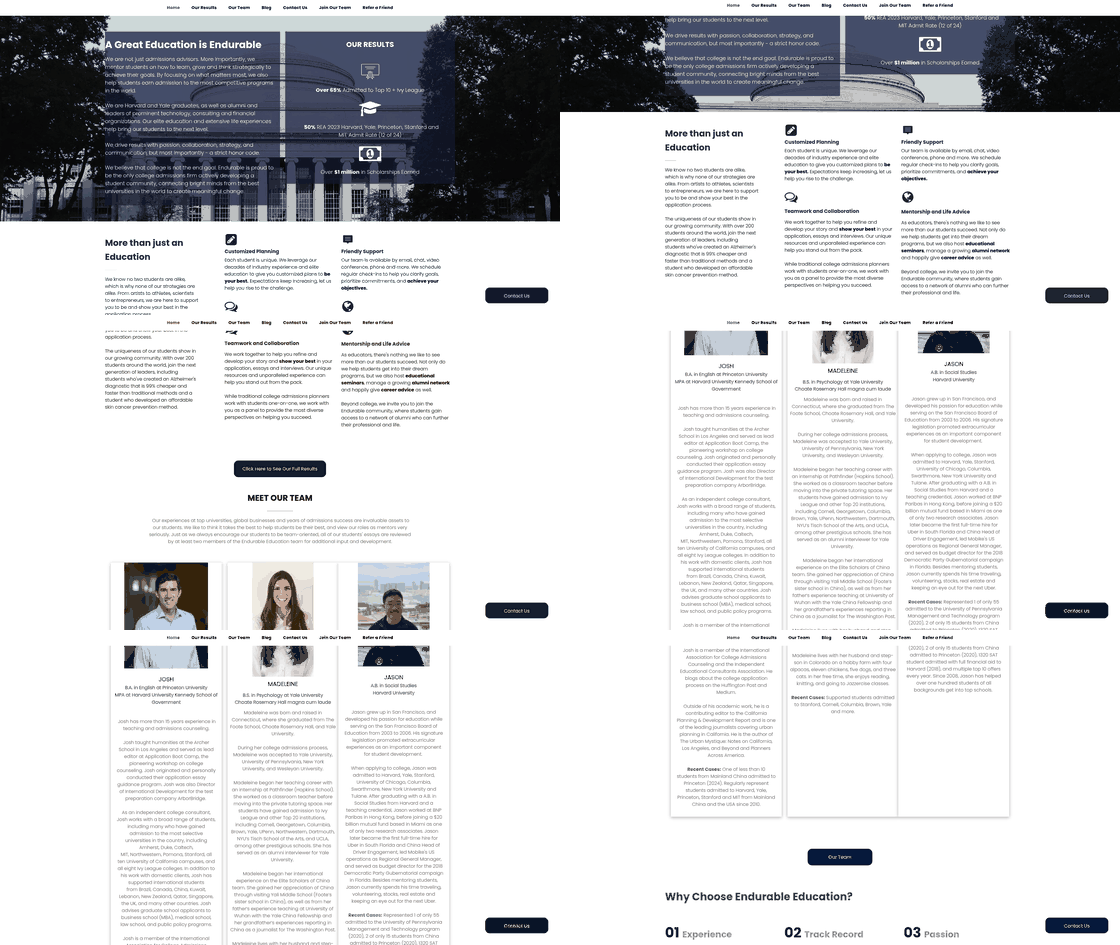
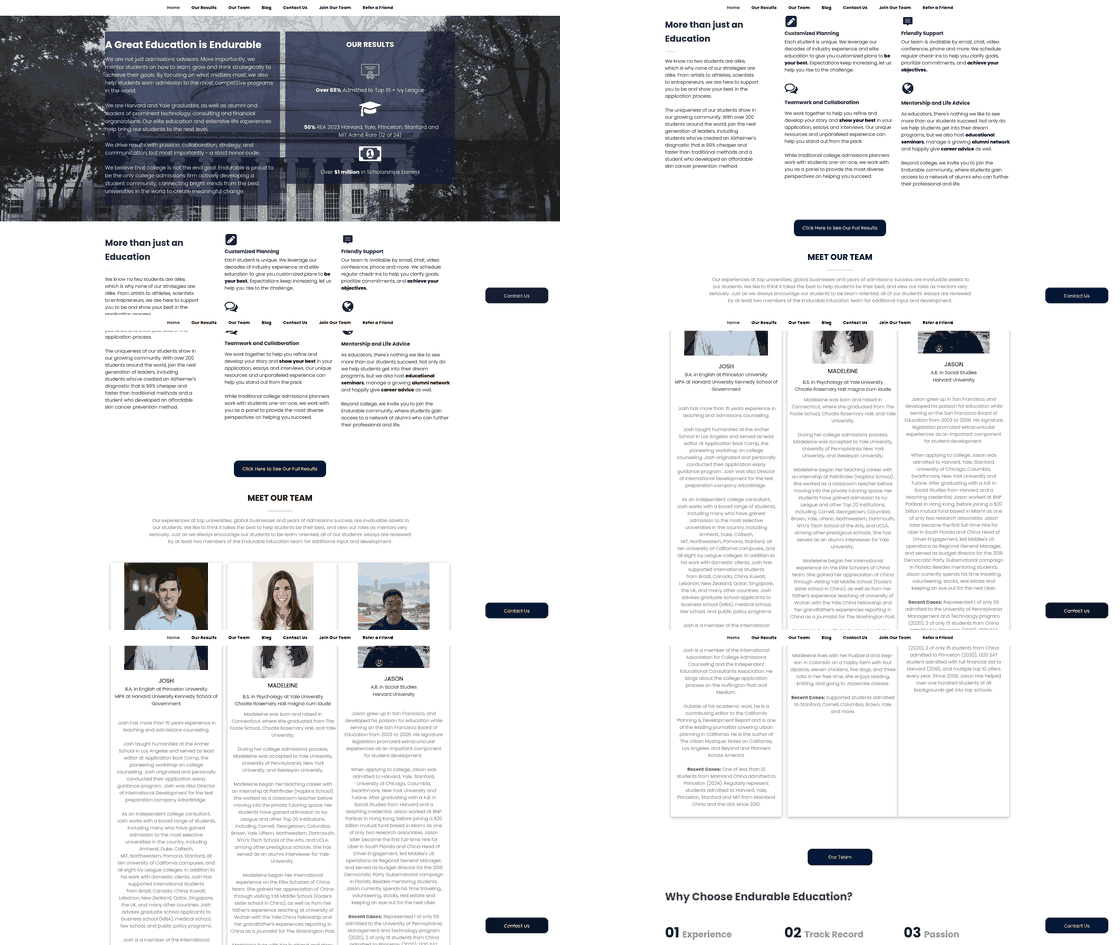
Our approach pairs students with mentors who graduated from Harvard, Yale, and Princeton. They bring over 15 years of admissions counseling experience and have more than 65% of students admitted to Top 10 and Ivy League schools. A strong but ordinary transcript can become a Princeton-competitive narrative. Grades open the door. The story carries the application forward.
Turning a strong file into an admit
A compelling application adds context that raw numbers cannot. It shows how a strong file became an admit. The strongest public school student success stories treat each essay as a way to deliver context, not as a personality showcase. That distinction matters.
The research supports this approach. A study of 311 admissions officers on holistic review found that detailed high-school context raised the likelihood of admitting a low-SES applicant by 13 to 14 percentage points. The same study identified a limitation. Officers use three definitions of holistic review, and only the "whole context" view produces that increase. Without context, the advantage disappears. Experienced advisors help students present it clearly.
How to write a Princeton essay that stands out
Lead with a specific, true moment. Let that moment carry the meaning. Princeton's guidance is direct: "Tell us your story. Show us what's special about you." Effective essays connect an experience to a worldview, then to what you'd bring to campus.
Princeton's supplement has seven prompts, including a 500-word community reflection and a 250-word civic engagement response. The community essay can establish context. Use it to name your school's realities plainly. First-generation status. A job after class. AP courses your school didn't offer.
The 50-word short answers reward genuine thought over polish. Don't over-buff them. The graded-paper requirement offers another chance to show formal writing. Choose a paper that shows your thinking, not only one that earned an A.
Extracurriculars and recommendation letters
Depth beats breadth, and impact beats titles. Princeton wants to see "what commitments you have made and what you've done to act on them." A student who organized a clean-water push at school may read stronger than one with ten shallow memberships. Frame the activity around the problem you owned and the change you drove.
The strongest public school recommendations come from teachers who saw you struggle and grow. Give them a one-page brag sheet with specific moments. Public school teachers carry heavy loads. Make their job easier, and they can write with greater detail.
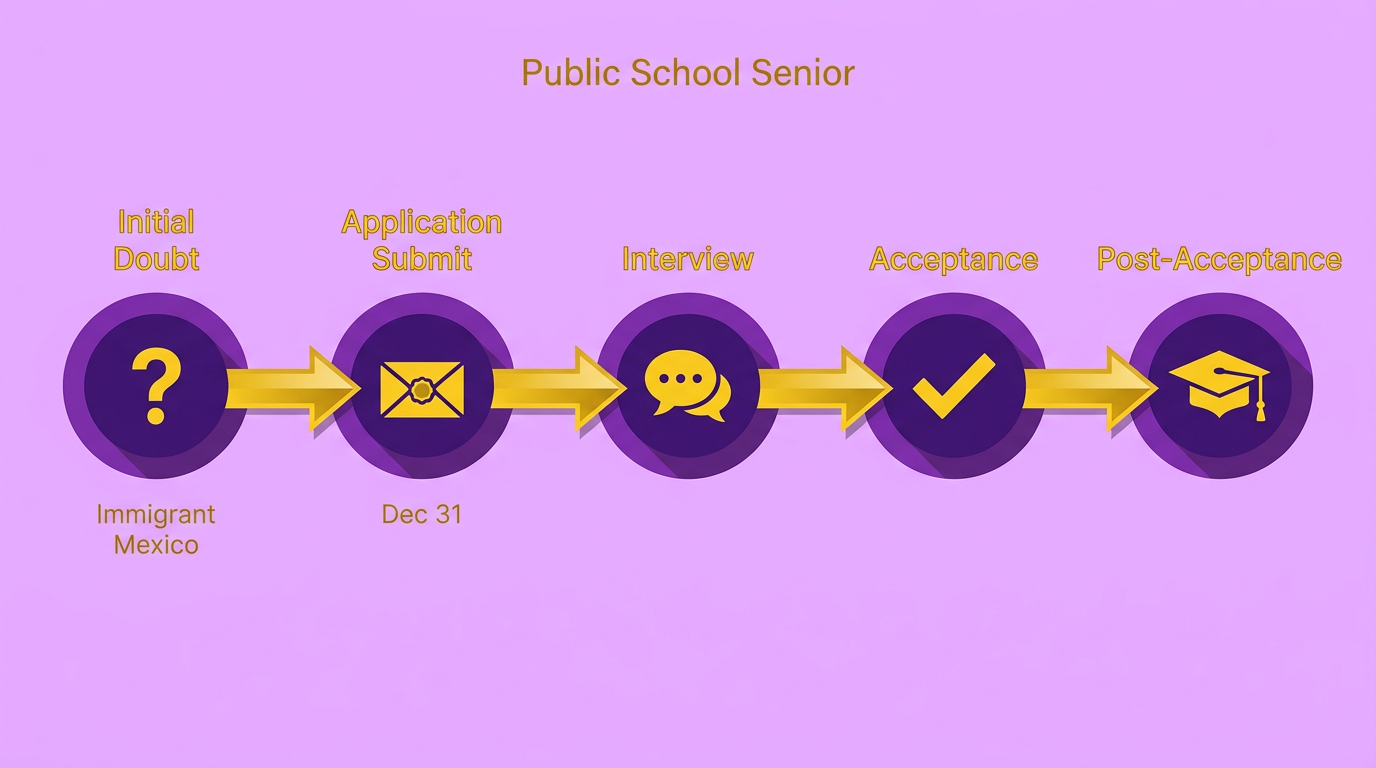
Odette Perrusquia, a public school senior whose family immigrated from Mexico, submitted her Princeton application on December 31 despite doubting she belonged. Her takeaway remains relevant:
"You belong here, and sometimes the scariest choice turns out to be the right choice after all." - Odette Perrusquia
Credentials make you eligible. Your personal narrative sets you apart.
Building a competitive GPA
A competitive GPA for Princeton starts with course rigor, not the number alone. A strong file pairs top grades with the hardest schedule your public school offers. The public school student success stories we mentor often share this approach. They take AP and honors courses, then make the transcript's context clear.
That translation work is where professional guidance helps. A high GPA from a school with limited AP options reads differently from the same GPA at a school with many advanced courses. We help students frame that context so a success story from a resource-limited school reads as strength, not apology.
Building rigor without every AP
Take the most demanding courses available to you. Then supplement any gaps. If your school limits AP offerings, dual enrollment at a community college or a self-studied AP exam can signal intellectual curiosity. Depth in one subject beats a scattered spread.
Build a clear academic through-line. Three years of increasing math rigor tells a story. One AP in every department creates noise. Choose a direction that matches your narrative and pursue it deeply.
When to ask for academic support
Ask early, before a B- becomes a pattern. Free options carry real weight: teacher office hours, peer study groups, and school tutoring centers. These resources can close gaps without adding costs. Officers respect students who use available support.
To manage the workload, protect consistency and sleep. Spread studying across the week instead of cramming. Batch similar subjects. Reserve your strongest hours for your hardest class.
Don't chase a perfect GPA by dropping the toughest course for an easy A. Princeton reads that trade. A slightly lower grade in a harder class can serve your file better than a flawless, cautious transcript. Our mentors help students make that decision within the full application.
Financial aid and scholarships, minus the fear
Princeton meets 100% of demonstrated need with grants, not loans. A public school senior from a low-income family can therefore attend for close to nothing. The aid process can discourage strong students before they apply. Treat it as a solvable problem, not a barrier.
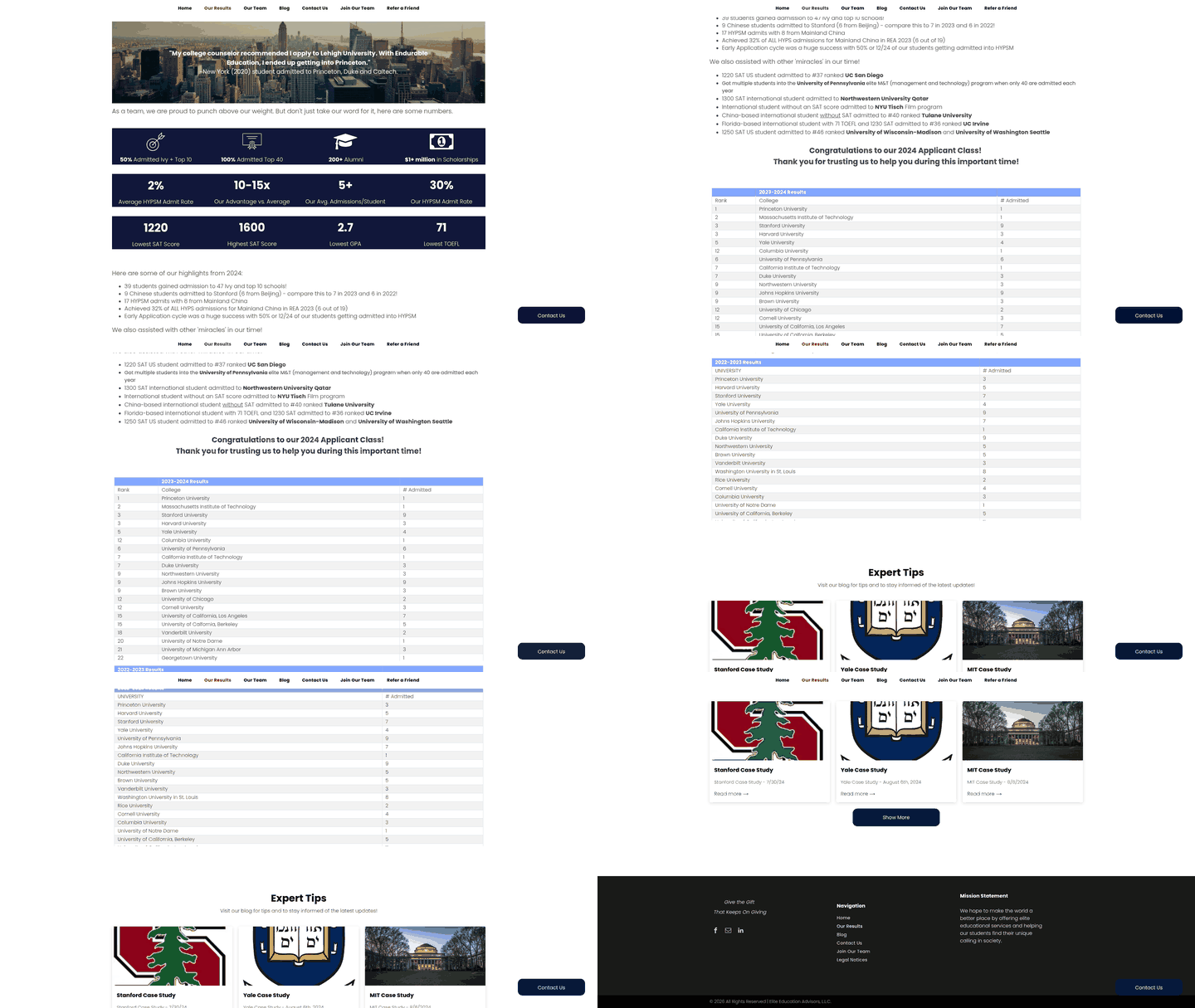
We've guided students to full aid packages at top universities. One earned admission to Harvard in 2018 with a 1320 SAT and full financial aid. This shows what a strong application and need-based aid can achieve together. We help public school seniors pursue these opportunities when cost feels decisive.
The FAFSA and need-based aid
Start with the FAFSA and Princeton's own aid application, the CSS Profile. Need-based aid often matters most for public school families. Princeton's no-loan policy replaces borrowing with grants you never repay. File early, gather tax documents, and report household income honestly.
Programs like QuestBridge match low-income students with top colleges. They combine the application and aid processes. Alumni mentors help students decide whether QuestBridge or Princeton's regular aid track better fits their situation.
Merit scholarships and appeals
Princeton doesn't offer merit-based scholarships. Its aid is entirely need-based, which surprises many families. Pursue outside merit awards from local foundations, community organizations, and national scholarship funds. These can stack on top of your Princeton grant.
If your aid package feels short, you can appeal. Contact the financial aid office, explain changed circumstances, and submit documentation. Clear framing matters. The same narrative skill used in essays can help present your family's financial picture.
We include cost planning in our mentoring from day one. You can read more about that approach on our college admissions blog.
Preparing for the Princeton interview
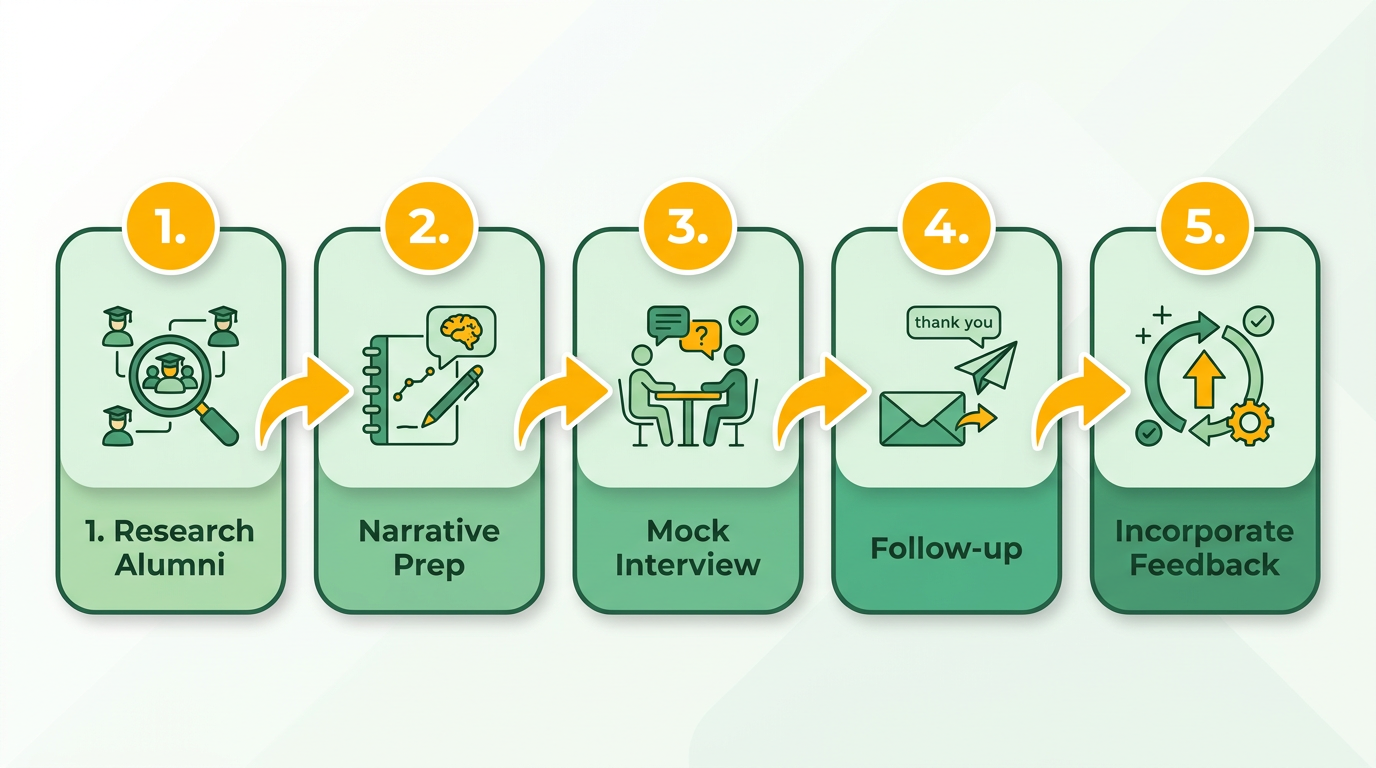
The Princeton interview is a conversation, not an interrogation. Alumni conduct it, and it is optional and evaluative in a limited way. The strongest public school student success stories treat it as another chance to share context. You're showing an alum what you'd add to a seminar table.
The interview rarely makes a weak file strong. It can push a borderline file over the line when a public school senior sounds curious, specific, and human. Advisors build preparation around those qualities and draw on firsthand knowledge of what interviewers remember.
How to research Princeton before the interview
Look beyond rankings and explore what you'd actually study. Name a certificate program, a professor whose work overlaps yours, or a course you'd take first semester. Vague admiration sounds generic. Concrete details show fit.
Connect one Princeton offering to something you already do. If you started a coding club with no budget, tie it to a specific department or initiative. That link turns "I like Princeton" into "here's why this place, not just any elite school."
Practicing the common questions
Practice predictable questions aloud until your answers sound natural. "Why Princeton?" "Tell me about yourself." "What do you do outside class?" These questions appear in almost every session. The goal isn't a script. It's knowing your story well enough to adapt.
Our mentors review these answers in regular feedback sessions. They flag places where students ramble or hedge. Public school seniors often undersell their context. You might explain a thin activities list instead of describing what you built with limited resources.
Skip the canned "greatest weakness" routine. Interviewers see through it. Discuss a real gap and what you did about it. That honesty matters more than polish.
Case study: a public school senior's road to Princeton
For many applicants, the first hurdle is believing elite schools are within reach. Hesitation can last until the final deadline. Success comes from translating personal circumstances into a clear narrative.
We study this path because it reflects the process we teach. The final application shouldn't be a checklist of trophies. It should make the applicant's hometown, family, and challenges legible to an officer. That strategy guides strong public school applications.
What her timeline actually looked like
The strongest applications are built backward from the essays, not forward from the resume. Public school seniors may lack a college office to guide them. An early process addresses that pacing problem.
Start the narrative work in late summer, well before Regular Decision. Princeton's writing load includes multiple essays and a graded academic paper. It requires real drafting time. Last-minute drafting can weaken a strong file.
That rush is avoidable. When advisors review first drafts in September, the final version can carry context instead of panic.
Should a public school senior submit test scores?
Submit strong scores. Hold weak ones. Roughly six in ten Princeton undergraduates came from public high schools, so officers read many files without elite preparation. A score at or above the typical range supports your file. A lower score submitted through a test-optional policy may be better left off. Princeton's testing guidance explains how the optional read works in practice.
If your public school offered limited preparation and your score sits well below the reported range, a test-optional application lets your transcript and essays carry more weight. Many first-generation students reach Princeton this way, often through access programs that emphasize holistic context over standardized testing.
Prepare seriously only if you can realistically reach that band. Take the SAT or ACT in the spring of junior year, leave a summer retake open, and stop chasing points once you're inside the range. Additional sittings add little.
The lessons for your own file
Princeton's admissions office emphasizes authenticity and personal narrative. Public school seniors who succeed do the same, then ask an advisor to pressure-test the delivery.
The outcome wasn't luck. Naming personal challenges plainly can turn doubt into the file's central story. Any senior can repeat that move with the right coaching. Start early, state your context clearly, and treat each prompt as a chance to explain your world.
References
[1] A Thousand Paths to Princeton - https://admission.princeton.edu/blogs/thousand-paths-princeton
[2] How to Get into Princeton: All You Need to Know - https://www.ivywise.com/blog/how-to-get-into-princeton/
[3] Crafting an Unforgettable College Essay - https://www.princetonreview.com/college-advice/college-essay
[4] How to Write the Princeton Supplemental Essays - https://www.collegeessayguy.com/blog/princeton-supplemental-essays
[5] Helpful Tips - Princeton Admission - https://admission.princeton.edu/apply/before-you-apply/helpful-tips
[6] Application Essays and the Performance of Merit in US Selective Admissions - https://www.researchgate.net/publication/344758996_Application_Essays_and_the_Performance_of_Merit_in_US_Selective_Admissions
[7] What are We Talking About When We Talk About Holistic Review - https://www.researchgate.net/publication/324761859_What_are_We_Talking_About_When_We_Talk_About_Holistic_Review_Selective_College_Admissions_and_its_Effects_on_Low-SES_Students
[8] High school senior gets full scholarship and more to Princeton by TMJ4 News - https://www.youtube.com/watch?v=e3fuwkcLigg
Frequently Asked Questions
1. Is the Princeton alumni interview required to get in?
No, the interview is optional and conducted by alumni. Participating lets you share your personality and interests beyond your application.
2. What SAT score is too low to submit through test-optional?
If your score falls below the typical middle-50% range, applying test-optional may be strategic. This is especially true if your school offered limited test preparation. Your academic record and essays can then provide the primary evidence of your capability.
3. Does Princeton offer any merit-based scholarships?
No, Princeton bases all financial aid on financial need. The university meets full demonstrated need without student loans. Students seeking merit awards should apply to external organizations and community foundations. These awards can accompany university grants.
4. What is Princeton's graded-paper requirement, and how do I choose one?
Applicants must submit an analytical paper from high school. Choose a piece that shows your analytical skills and writing style. Focus on how you construct an argument, not only the grade received.
5. How do I build course rigor if my school caps AP offerings?
Take the most challenging classes your school offers. You can also consider community college courses or independent study. Admissions officers value sustained academic interests over scattered advanced classes.
6. When should I start writing my Princeton essays?
Begin drafting during the summer before senior year. Princeton requires multiple supplemental prompts. Starting early gives you time to refine your narrative and avoid a rushed final draft.
7. How does QuestBridge differ from applying for Princeton's regular aid?
QuestBridge serves high-achieving students from low-income backgrounds. Its match process combines admission and financial aid. The regular track requires standard financial aid forms submitted directly to the university. Your financial eligibility and application strategy determine the better choice.