Why the Ivy League Admissions Process Feels Broken
August 5, 2026

Key Takeaways
- Ivy admissions run on rules, not luck. The rules are unevenly known, which is why the process rewards the well-coached and feels random to everyone else.
- Decisions lean on measurable factors like an Academic Index and essay quality long before any subjective read happens, according to Ivy Coach.
- The real advantage isn't intelligence or effort. It's access to how the machine actually works.
- One rejected applicant told Business Insider she wished someone had explained how stacked the odds really were.
- As acceptance rates keep falling, the gap between families with inside knowledge and families flying blind keeps widening.
- Glossy brochures sell admission as a payoff for hard work. That story leaves out most of what's actually happening.
Related Video
Watch: "How Ivy League Admissions Broke America:" David Brooks Explains | Amanpour and Company by Amanpour and Company
Why the Ivy League Admissions Process Feels Broken
The rejection letters land in late March, and families are blindsided. They spent four years believing top grades and real dedication would get their kid in, then watched the gate close. That frustration is earned. The process runs on specific, institutional rules that have little to do with what most people mean by "academic excellence."
Behind the marketing sits a calculated sorting mechanism. Admissions offices lean on standardized metrics to cut most of the pile before anyone reads an essay closely. Families going in without guidance often meet an unexpected rejection they never saw coming. So you get two experiences of the same system: a navigable path for people who understand the mechanics, and a confusing lottery for everyone else.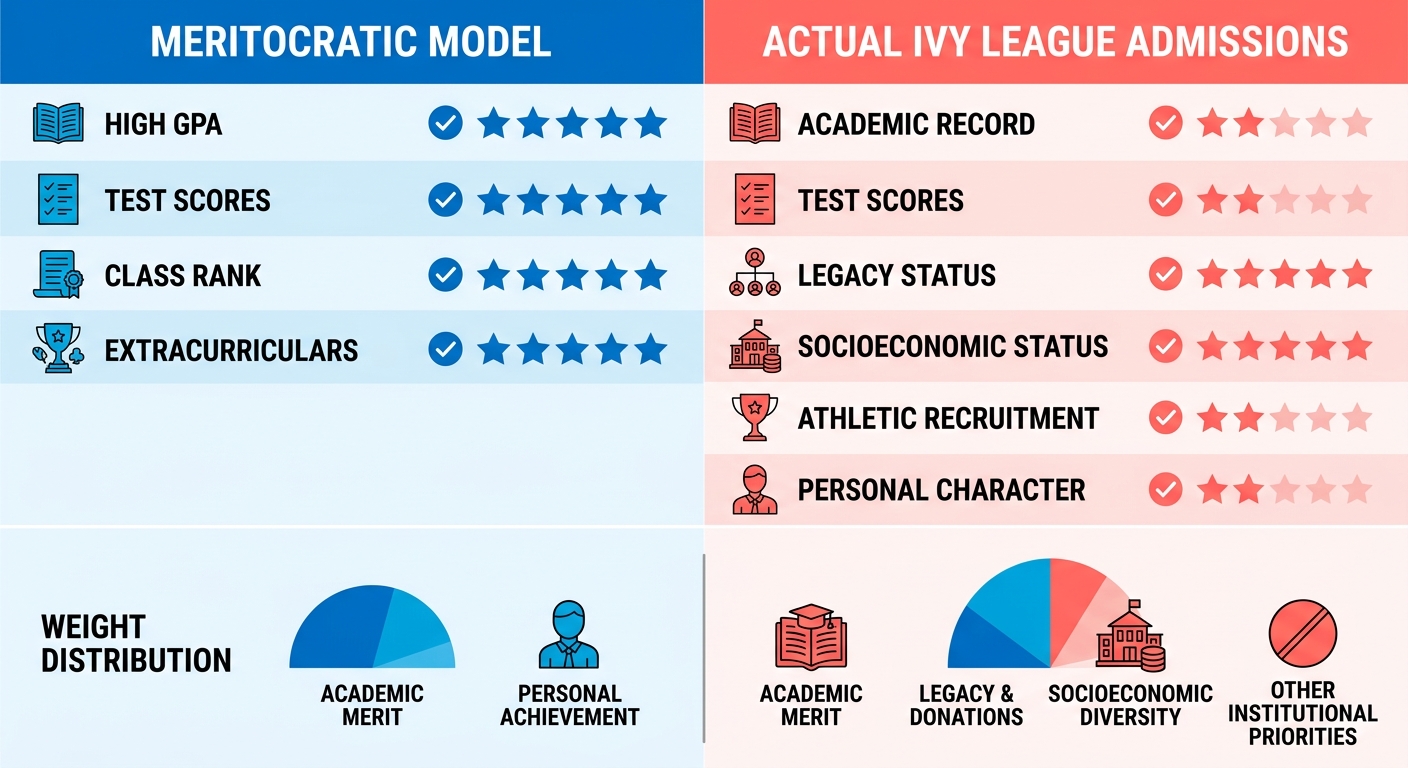
Just how competitive have the numbers gotten?
Brutal, and the insider-outsider gap is measurable. Brown pulled nearly 50,000 applications for a 5.4% acceptance rate. Yale's class of 2030 came in at 4.2%. And Harvard admits legacies at 33.6% against 5.9% for everyone else.
| University | Recent Acceptance Rate | Applicant Pool | Legacy Presence | What the Data Signals |
|---|---|---|---|---|
| Brown | 5.4% (class of 2028) | ~50,000 applicants | 8% of class of 2027 | ED rate rose 13% to 18%, read as fading prestige |
| Yale | 4.2% (class of 2030) | Not disclosed | 11% of class of 2027 | $94,425 cost; 86% call it "too expensive" |
| Harvard | Not disclosed | Not disclosed | 33.6% legacy admit rate | Wealth privileged in admissions per unsealed court documents |
Sit with that legacy gap for a second. 33.6% versus 5.9% is not noise. It's a structural thumb on the scale.
Who actually benefits from this system?
The affluent and the connected. A familiar complaint blames diversity efforts for crowding out qualified kids, but the Brookings data points the other way. The dominant non-merit force is money. Sociologist Ann Mullen found that high-SES students apply to reach schools at higher rates even at identical SAT scores, while talented low-income students count themselves out.
Which means test-optional tweaks and admissions-office reforms can't close the gap on their own. The stratification is baked in years earlier, at the question of who believes they belong in the room. A Yale faculty committee said close to the same thing when it warned that declining public trust is "real, urgent, and must be addressed."
The human cost
The pressure manufactures cookie-cutter profiles and a lot of teenage anxiety. One critic called the process "broken for decades" for the way it pushes students to conform. The toll is real. If your family is chasing a name purely for status, skip it. If you want a strategy built on what you actually control, that's work worth doing.
How Money Bends the Odds
Recent research across the Ivy-Plus group found that children from the top 1% of family income are twice as likely to get in as middle-class peers with identical SAT scores. Two-thirds of that gap comes from higher acceptance rates for wealthy applicants. The other third comes from application and enrollment choices that happen before an officer opens a single file. Families arrive at our door convinced the Ivy League rewards pure merit. The data tells a different story.
The three levers that favor wealth over performance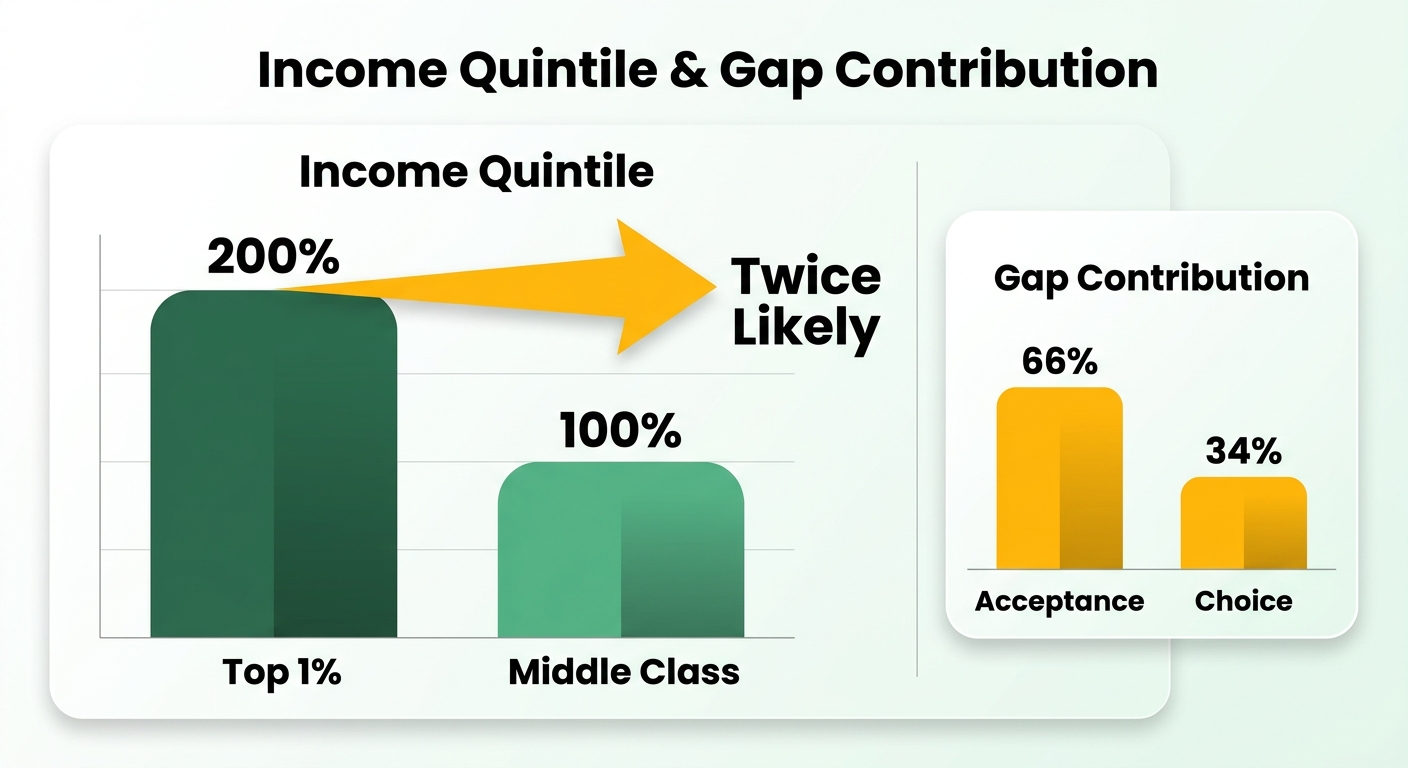
Alumni preference, non-academic ratings from admissions readers, and recruited-athlete slots account for nearly all of the income advantage at private elite schools, per work by economists Raj Chetty, David Deming, and John Friedman. A 2004 analysis pegged legacy status at the equivalent of 160 SAT points. That's a bigger boost than the spread between the 75th and 25th percentile of admitted students at most Ivy-Plus schools.
Then there are the non-academic ratings, the subjective scores for personality, leadership, and likeability. They skew toward students from affluent private schools. Darrell West watched this play out during his time at Brown, where children of prominent donors and alumni pulled markedly higher non-academic scores despite comparable or weaker academic records. Recruited athletes, who disproportionately come from families that can cover club-sport fees and travel, lock in another block of early-decision seats before the regular pool is even read. Princeton's recruited athletes are 83% white against a 43% white applicant pool, and that pattern holds across Ivy-Plus institutions.
What grates is the payoff mismatch. The factors driving the wealth advantage show weak or negative correlation with what happens after graduation. SAT scores and academic ratings predict career earnings, grad-school admission, and placement at prestigious firms. Legacy preference, non-academic ratings, and athlete recruitment do not. The system optimizes for the wrong variables. So when families call it "broken," they're describing a structural fact, not a mood.
The sorting that happens before a single file opens
A quieter inequality plays out years before decision letters go out. Interviews with 50 Yale students traced how family expectations, high-school positioning, and peer culture make Ivy attendance feel like the default for affluent kids. For students from low-income households, the same schools sit "outside the area of the possible," even when their scores and transcripts match or beat wealthier applicants.
A lot of that self-exclusion is a guidance problem. Affluent applicants have private counselors who decode the financial aid landscape. Lower-income students look at the sticker price instead of running a net price calculator, decide it's hopeless, and never apply. That information gap shapes the applicant pool long before any committee starts reading.
First-generation students feel it most. Many tell us they skipped elite schools because they assumed "those schools aren't for people like me." We work to move that belief early, showing students that their credentials and their stories make them competitive. That's part of why our planning can start as early as 8th grade, building confidence alongside academic prep so a student walks in with the same sense of possibility their wealthier peers never had to think about.
What elite admission actually buys
An Ivy-Plus degree raises the odds of reaching the top 1% of earners by 60%, nearly doubles elite grad-school placement, and triples the odds of landing at a prestigious firm. Those numbers come from a waitlist-based design that isolates the causal effect of admission against attending a flagship public. The bump in average earnings is smaller than older studies claimed, mostly because the population already skews toward students who'd succeed anywhere. The real prize is access to a narrow elite tier, not broad income mobility.
Roughly 50% of America's leadership class attended the same handful of schools and now cluster in the same 10-12 cities. A Yale faculty committee flagged that public confidence in higher education fell from 57% a decade ago to 36% by 2024, driven partly by the sense that elite schools amplify privilege instead of disrupting it. When 86% of poll respondents call these institutions "too expensive" and Yale's own faculty issue 20 recommendations for admissions reform, this isn't a PR problem. Among students whose parents earn over $500,000 a year, 15% attend an Ivy-Plus school. That's 30 times the rate for families earning under $30,000.
The reforms that could work, and why they stall
Trimming alumni preference, de-emphasizing non-academic ratings tied to private-school polish, and rethinking recruited-athlete slots would tilt the pool toward students whose credentials actually predict post-college success. No comparable income advantage shows up at flagship public universities, which tells you the problem is policy, not fate. Yale recently said it would drop tuition for families under $200,000 and cover full costs under $100,000, starting fall 2026. That chips at the sticker-price barrier. It leaves the admissions filters untouched.
The families who benefit most from the current setup are also the ones funding endowments, staffing alumni boards, and shaping institutional priorities. Reform costs money and donor goodwill. Until that math changes, the system keeps rewarding the applicants it was built to serve.
Where a Consultant Helps, and Where It Just Adds to the Pile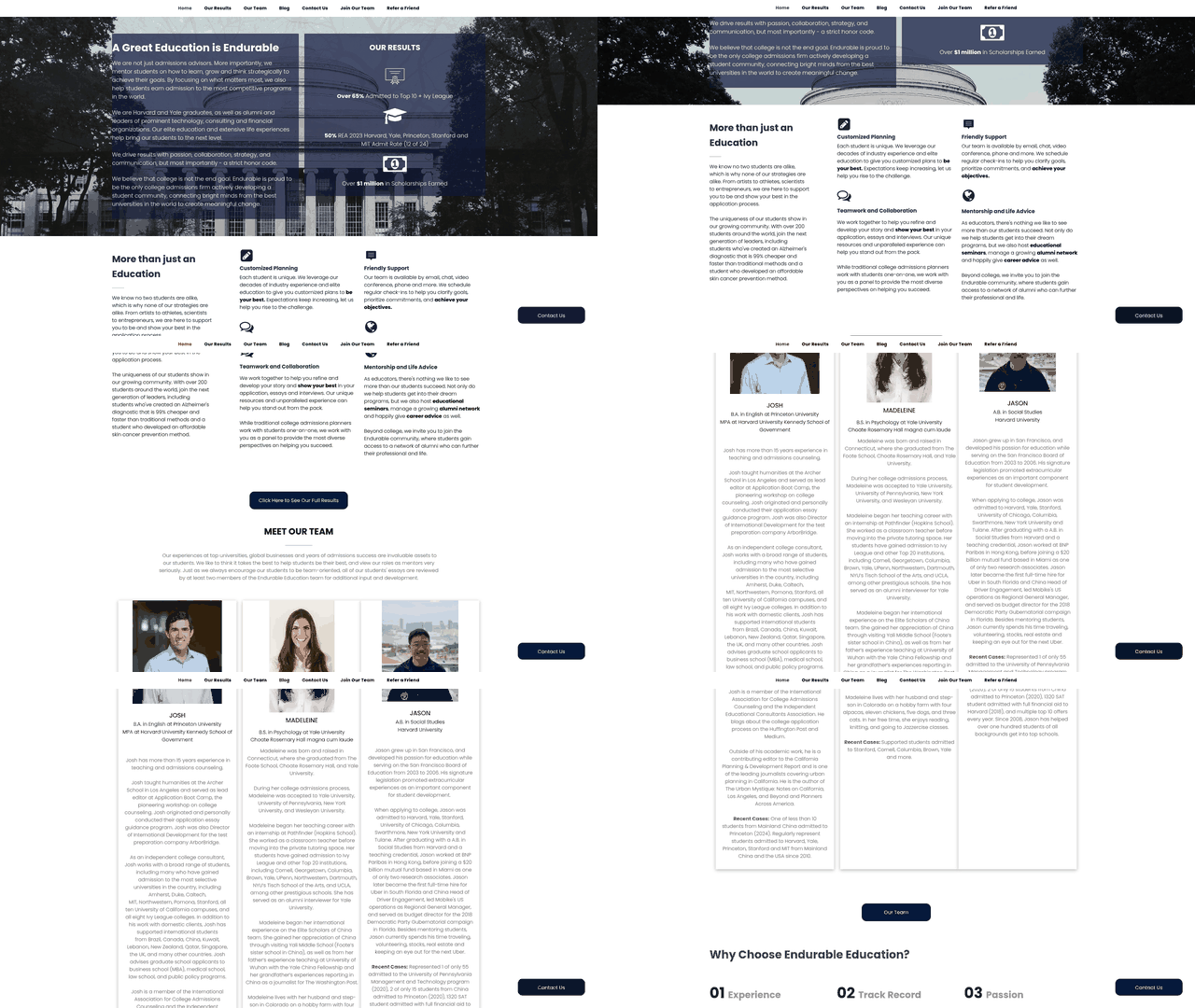
It depends entirely on who the consultant serves. Coach a student who'd otherwise apply to zero reach schools, and you're correcting a class-based information gap. Coach a student who already has legacy status and a dedicated college counselor, and you're stacking advantage on advantage.
Judge Allison D. Burroughs noted in the Harvard admissions lawsuit that "the process would likely benefit from conducting implicit bias trainings for admissions officers." Until schools deal with the unconscious cues that essays and interviews leak about class background, consulting stays the practical workaround. Our firm has helped students from the US, China, UK, Canada, Hong Kong, and Mexico earn spots in top programs, with over 65% admitted to Top 10 and Ivy League schools. We build customized plans around each student's strengths, and we set aside a handful of scholarships each year for students from low-income families.
How to Play a Game That Doesn't Announce Its Rules
Getting anywhere here means dropping the emotional read and working the structural one. Admissions isn't a mystery lottery. It's a highly structured, data-driven sorting process. Once you understand how the internal evaluation actually functions, you can line up preparation with the criteria committees really use, and take a lot of the guesswork off the table.
Build from the index up, not the story down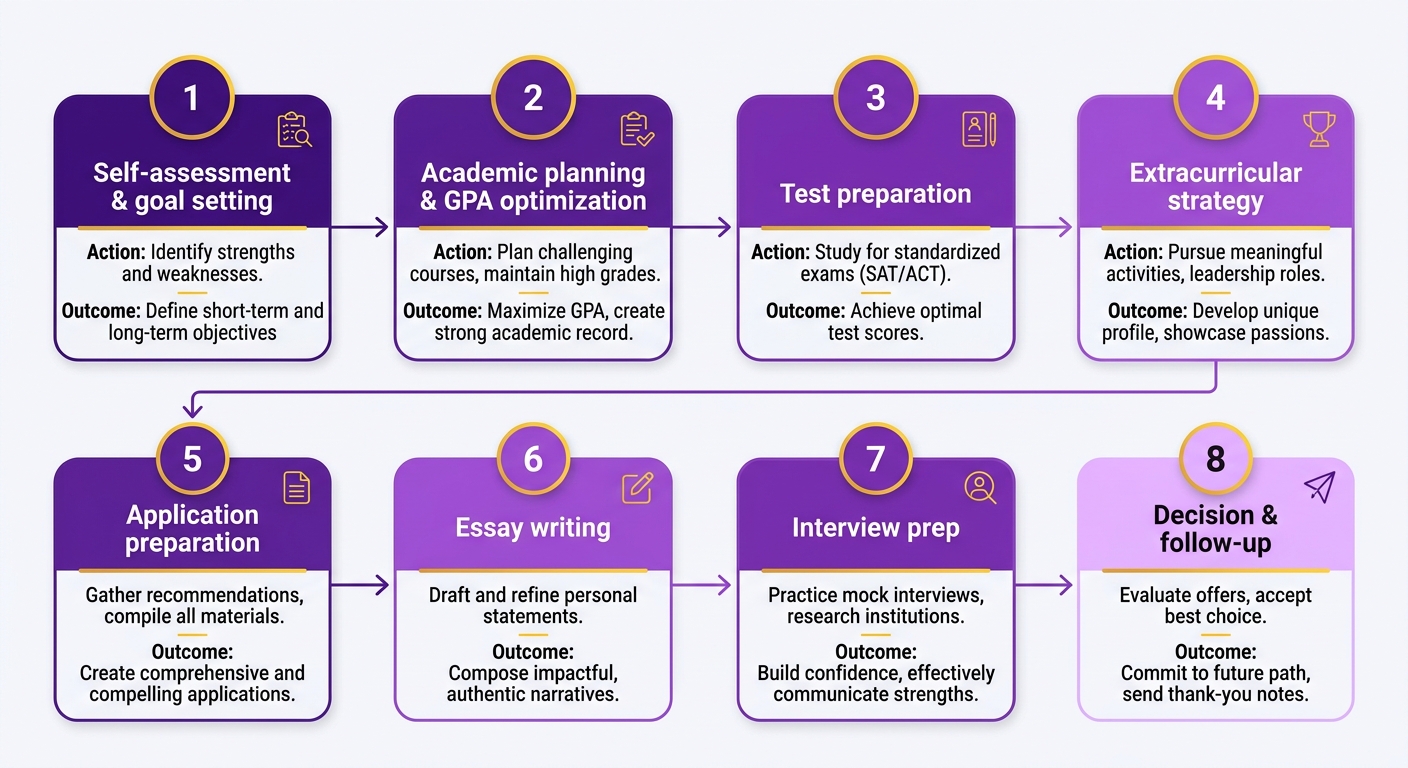
Too many applicants polish the narrative early and neglect the quantitative baseline that gets the file read at all. Elite schools run internal scoring scales, often 1 to 9 or 1 to 5, to grade academic credentials. Fall below the threshold and even a brilliant personal statement won't get a full reading. So we sequence guidance in two phases: a long-term development phase that builds rigorous academic credentials, then a targeted application phase. The order matters, because it's what ensures a student's work actually reaches the committee.
The essay counts, just not the way families expect. Officers spot a genuinely strong essay fast, even buried in tens of thousands. What stood out in one case: a student who wrote about their family's experience with drug violence, up against dozens of interchangeable sports-achievement essays. Specific lived experience beats polished-but-predictable every time. If your draft could describe anyone at your high school, rewrite it.
Mind the class signals your application leaks
Something schools won't tell you: computational models can predict an applicant's household income with 74% accuracy and gender with 79% accuracy from essay text alone. Holistic review was supposed to replace pure test-score ranking and level the field. Instead it let class bias back in through a side door. Word choice, topic, even sentence structure leak demographic data that a reviewer may act on without meaning to. This isn't an argument against writing about hardship. It's an argument for specificity over vague appeals to resilience. Name the obstacle. Describe what you did. Skip the tidy lesson-learned wrap-up that every essay guide pushes.
For applicants without institutional advantages, the whole strategy is maximizing what you control. No family ties to the school? Then the profile has to show real intellectual depth and clear fit with a specific department. Instead of leaning on standard achievements, unhooked applicants should develop a sharp, specialized niche that makes them useful to a specific incoming class.
Treat it as risk management, not a single-shot bet
Smart applicants run their list like a portfolio, not a coin flip. Build a list that spans several tiers of selectivity, and make sure every school on it is one the student would genuinely be happy to attend. Misjudging a school's difficulty is the classic mistake. Even a candidate with perfect marks has to treat elite schools as reaches, because the volume of qualified applicants far outstrips the seats.
The emotional side needs managing too. A waitlist or a rejection can feel like a personal verdict when it's really a statement about institutional capacity. Steady mentorship and regular check-ins help students ride those swings. Keep the focus on growth and the long-term value of the work, and confidence holds up no matter what shows up in the spring.
Skip the cookie-cutter profile
Schools push students toward a well-rounded archetype: the right sport, the right club leadership, the right summer program. That conformity is the trap. Officers read thousands of applications featuring Model UN, debate, and hospital volunteering. Differentiation comes from depth in one area, not thin participation in ten. A competitive musician should go deeper into performance and composition, not tack on a charity 5K to round out the resume. Essays built on singular focus outperform generic well-roundedness, as long as the focus reveals character and commitment.
We also watch families over-invest in test prep and under-invest in actual curiosity. Schools want students who'll add to campus intellectual life, not just fill a seat. Read widely in your intended field. Talk to faculty on campus visits. Ask questions that show you've thought about how this school's specific resources fit your goals. That kind of specificity carries more weight than generic enthusiasm.
What I'd Actually Tell Your Family
The frustration around elite admissions is a fair response to a system that runs on institutional priorities more than individual merit. When selection favors structural advantage over raw talent, even accomplished students end up on the outside looking in.
What the alumni success stories leave out
The promo materials feature exceptional journeys, which quietly implies admission is a straight payoff for hard work. Those stories skip the seat math. Between athletic recruits, legacy applicants, and development cases, a large chunk of the class is spoken for before regular review. Unhooked applicants compete for a fraction of the advertised spots.
Seeing those constraints clearly is oddly freeing. Once a family understands that a rejection reflects institutional capacity and priorities, not a verdict on a kid's potential, the anxiety eases and the decisions get sharper.
What should students and families do?
Put the energy into growth and authentic achievement. You can't change what a school prefers, but you can develop deep intellectual interests and present a real voice instead of a manufactured archetype.
The short version of what we tell families:
- Focus on long-term development. Interests cultivated over years make far stronger applications than a resume assembled in senior fall.
- Diversify the list. Include a real range of schools where the student can thrive rather than betting everything on one selective brand.
- Look hard at public options. Flagship publics often deliver comparable academics, strong networks, and excellent career outcomes.
- Read the aid fine print. Aid policies vary widely, and net price calculators regularly surprise families who assumed they wouldn't qualify.
If your student is thriving on a non-elite path, skip the arms race. Forcing an Ivy-shaped profile onto a kid who doesn't want it produces exactly the cookie-cutter application officers reject anyway.
What needs to change at the institutional level?
The push for reform is increasingly coming from inside the academy. Internal reports keep calling for more transparency in how classes get built and how money gets allocated. That kind of pressure points to a legitimacy problem no PR campaign can paper over.
Real equity means dismantling the legacy preferences and subjective scoring that systematically favor affluent applicants. Expanding financial aid helps, but it has to come with a genuine overhaul of the admissions filters themselves.
The honest takeaway: play the game with clear eyes, refuse to let one admissions office define your future, and keep pressing the institutions to fix what their own faculty admit is broken. Students who understand the rules and keep their options wide come out ahead, whatever envelope arrives in the spring.
Additional Resources
To read this environment well, get past the promotional materials and into the structural and historical forces shaping higher education. That's where the actual logic of how classes get assembled lives.
So build a reading list beyond the alumni-success-story genre. The books below trace how selective admissions became a sorting system, and the glossary at the end hands you the vocabulary to read an admissions office on its own terms.
What should you read first?
Start with the history, because the current rules make more sense once you see where they came from. The Chosen documents how the "Big Three" reengineered admissions to control who got in, and how that machinery still shapes seat allocation today.
Pair it with Creating a Class, which sits inside a real admissions office and shows the human judgment calls behind the numbers. For the sociology of who actually lands on these campuses, Elite Destinations maps the pathways that funnel certain students in.
Want the argument in plain language? Watch David Brooks lay out the system. It's a quick way to get parents on the same page before you sit down to plan. We also keep working notes and planning guides on our education blog for families who want practical next steps.
Where can families connect online?
Parent forums and communities are useful for logistics and morale, less so for strategy. Use them to compare notes on timelines, financial aid quirks, and interview experiences. Treat any "here's exactly what got my kid in" post with suspicion, because one admit tells you nothing about the thousands of qualified applicants who had the same profile and got rejected.
Read forums for support and calendar reminders. Don't reverse-engineer your strategy from a stranger's anecdote.
Glossary of key Ivy League admissions terms
Academic Index: A quantitative metric that rolls a student's high school grades and standardized test performance into a single score for initial screening.
Holistic review: An evaluation approach that weighs qualitative factors like essays, extracurricular commitments, and recommendation letters alongside the quantitative metrics.
Legacy preference: An admissions boost for applicants related to alumni.
Yield: The share of admitted students who enroll. Protecting yield shapes who gets an offer in the first place.
Read the history, learn the vocabulary, then judge every success story by the odds it hides.
References
[1] Ivy League Admission Isn't Random - https://www.ivycoach.com/press/the-huffington-post/ivy-league-admission-isnt-random/
[2] I Was Rejected From Ivy League Colleges - https://www.businessinsider.com/rejected-ivy-league-colleges-what-i-did-wrong-2025-1
[3] Ivies in Crisis - https://mindingthecampus.org/2025/01/03/ivies-in-crisis/
[4] Salah: Ivy league admissions process unfair - https://temple-news.com/salah-ivy-league-admissions-process-unfair/
[5] Inside the Ivy League admissions process - https://www.brookings.edu/articles/inside-the-ivy-league-college-admissions-process/
[6] Yale report savages Ivy League schools for destroying American ... - https://fortune.com/2026/04/15/yale-committee-report-problems-higher-education-ivy-league-schools/
[7] Elite Destinations: Pathways to Attending an Ivy League ... - https://www.researchgate.net/publication/263420765_Elite_Destinations_Pathways_to_Attending_an_Ivy_League_University
[8] The Hidden History of Admission and Exclusion at Harvard ... - https://www.researchgate.net/publication/236787064_The_Chosen_The_Hidden_History_of_Admission_and_Exclusion_at_Harvard_Yale_and_Princeton_review
[9] College Admissions and the Education of Elites (review) - https://www.researchgate.net/publication/254961866_Creating_a_Class_College_Admissions_and_the_Education_of_Elites_review
[10] Diversifying Society's Leaders? The Determinants and ... - https://www.researchgate.net/publication/397079817_Diversifying_Society's_Leaders_The_Determinants_and_Causal_Effects_of_Admission_to_Highly_Selective_Private_Colleges
[11] AI and Holistic Review: Informing Human Reading in ... - https://arxiv.org/pdf/1912.09318
[12] “How Ivy League Admissions Broke America:” David Brooks Explains | Amanpour and Company by Amanpour and Company - https://www.youtube.com/watch?v=uR0eAJYcYYc
Frequently Asked Questions
1. How many colleges should I apply to when targeting the Ivy League?
While there is no single magic number, successful applicants typically distribute their submissions across a balanced range of selectivity tiers. Rather than focusing exclusively on highly selective institutions, candidates should ensure their list includes several schools where their academic profile is well above the median, allowing them to secure viable options while still pursuing reach opportunities.
2. Will Yale's move to eliminate tuition improve my odds of getting in?
No. Financial aid expansions make elite institutions more affordable for admitted students, but they do not alter the selection criteria. The structural filters that govern who receives an offer of admission, such as athletic recruitment and subjective non-academic evaluations, remain separate from financial aid policies.
3. Does going test-optional help low-income applicants get admitted?
Not necessarily. While test-optional policies remove a standardized barrier, they often shift the evaluation weight to other qualitative components of the application, such as essays and extracurricular portfolios. Because these qualitative elements are highly influenced by access to private counseling and specialized school resources, the underlying advantages for affluent applicants persist.
4. Should I write my essay about personal hardship?
A personal statement focusing on challenges can be effective, but only if it emphasizes concrete actions and intellectual growth. Admissions readers look for evidence of problem-solving and resilience rather than passive descriptions of difficult circumstances. Focus on detailing your specific responses to obstacles rather than relying on standard narrative templates.
5. Are state universities a genuine alternative to the Ivy League?
Yes. Many public flagship universities offer honors programs, extensive research facilities, and massive alumni networks that rival those of elite private schools. Furthermore, public institutions typically use more transparent, merit-based admissions criteria, making them highly attractive options for top-performing students.
6. Does hiring an admissions consultant just reinforce advantages the wealthy already have?
Professional guidance can either widen or narrow the opportunity gap depending on how it is used. When used to demystify the complex requirements of highly selective admissions for underrepresented students, consulting acts as an equalizer. Conversely, when used to further polish already highly advantaged profiles, it maintains the status quo.
7. If I'm not a legacy or recruited athlete, is applying even worth it?
Yes, but it requires a highly strategic approach. Unhooked applicants must recognize that they are competing for a smaller pool of unallocated seats. To stand out, these candidates must present an exceptionally strong academic foundation paired with a highly specialized, non-traditional extracurricular profile that demonstrates unique value to the campus community.