5 Questions That Tell You If You Actually Need an Admissions Consultant
August 28, 2026

Key Takeaways
- Top universities post single-digit acceptance rates. Caltech sits near 3%, and the Ivies hover around 4%, per MassMutual's analysis.
- A consultant's real value is relationships and strategic access, not essay polishing or cosmetic editing.
- Some advisors have schools reaching out to them for students with specific academic interests, which widens the options.
- Admissions readers get skeptical of over-polished essays when the writing clashes with the rest of a student's profile.
- A study of 50 independent educational consultants found that too-refined essays can undercut a student's authenticity.
- With 96 of 100 applicants rejected at the top schools, a misaligned application costs a student the seat.
- One featured firm reports over 65% of its students admitted to Top 10 or Ivy League schools, with $1 million+ in scholarships earned.
Why an Admissions Consultant Earns Their Fee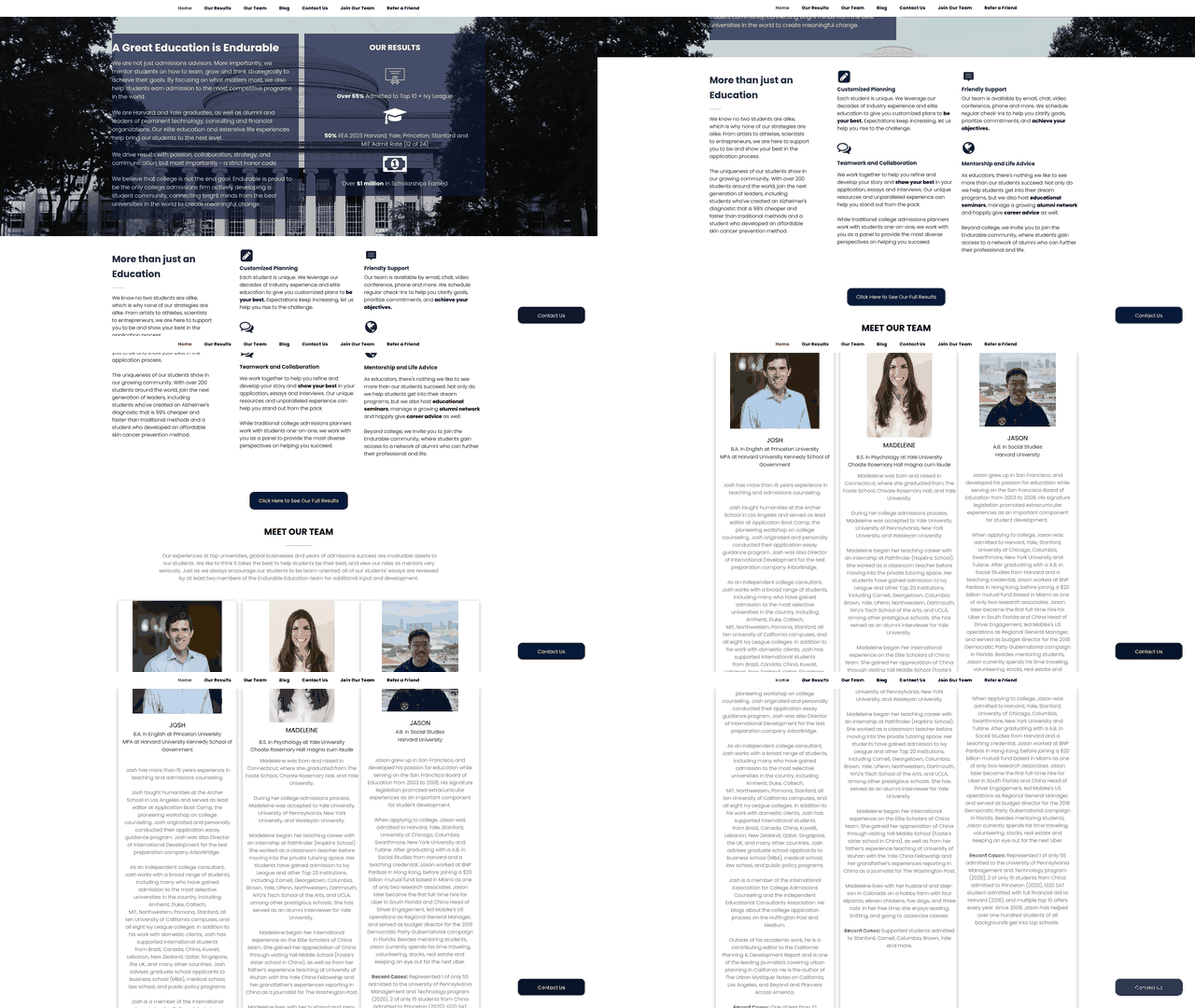
The math is brutal. Selective admissions has reached the point where a flawless academic profile still gets routine rejections, per MassMutual's analysis. When most applicants are turned away, one misaligned application isn't a small oversight. It can end the whole thing.
That's why admissions consulting has moved from luxury to strategic decision for competitive applicants. Here's the honest part most firms won't say out loud: the value isn't in the essay polish. It's in what a consultant knows, and who they know.
What professional guidance actually changes
Good advisors don't obsess over surface edits. They help families read institutional priorities. Experienced ones keep direct lines to admissions offices, as Edward Vosganian describes, and that advocacy matches a student's specific academic niche with departments actively looking to fill those exact roles.
The research backs this up. When an essay feels overly curated, admissions officers often catch the mismatch between the written voice and the student's broader record, per this ResearchGate analysis. The goal is aligning the narrative, not sanitizing it.
One more tell: a base-plus-bonus fee tied to client satisfaction says something. A consultant whose pay reflects how happy you are with the process is invested in your experience, not just their red pen. Ask which one you're actually buying.
Is the "free alternative" really free?
For some students, yes. For most, no. The usual advice is that a parent or teacher can review the application and you skip the paid help. That works if your support network already has college experience.
But the same 50-consultant study found that higher-income students produce essays with greater lexical diversity and complexity, because they already have writing support at home. So the "free" reviewer is really a proxy for existing advantage. For a first-gen student, a consultant is an equalizer, not a splurge.
When should you bring one in?
Earlier than most families think. Most students start sophomore or junior year, and for certain groups that timing is already too late, as How to Pay for College notes.
Student-athletes face a hard deadline. The 2025 House v. NCAA settlement cut scholarship limits, and coaches can start recruiting after June 15 of sophomore year. Fewer spots, earlier clocks, higher stakes. The families who most need early guidance are usually the ones least likely to know the timeline exists.
Use these checkpoints to see if the pressure applies to you:
- You're targeting sub-5% schools, where a single mis-positioned application ends the race before interviews start.
- Your home support network lacks admissions experience, which makes the "free reviewer" a hidden disadvantage, not a real substitute.
- You're a recruited athlete facing the post-settlement scholarship squeeze and the June 15 window.
- The process is straining the household, since a consultant can cut the nagging and stress at home, as Pam Rambo points out.
- You want proof, not promises. A fee tied to client satisfaction, rather than a flat upfront charge, keeps a consultant genuinely invested start to finish.
Skip a consultant if your target schools are non-selective and your family already knows the ropes. The evidence doesn't justify the cost there. For everyone else, the five questions ahead are how we separate real need from marketing noise.
The 5 Critical Questions – Diagnostic Deep‑Dive
From Self-Assessment to Enrollment: Your Next Steps
Print this page. It turns the five questions into a decision you can act on today.
How to score your five answers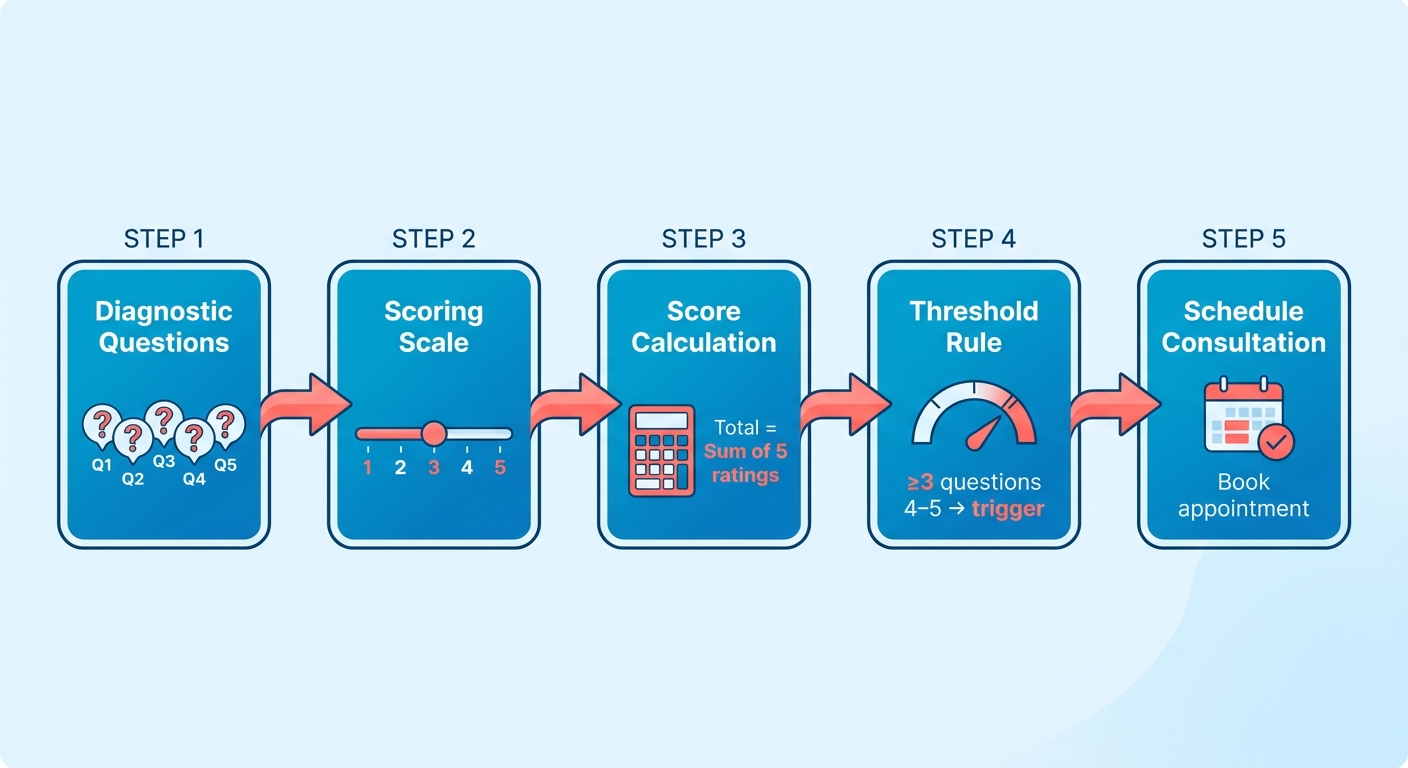
Rate each of the five diagnostic questions on a 1‑5 scale, where 1 means "handled, no help needed" and 5 means "high‑risk, I'm stuck." Add them up. A total of 3 or more questions scored 4‑5 is your trigger to book a consult.
Why the threshold matters: if you scored low across the board, you likely have an educated support network at home, and a parent or teacher review can genuinely lift your application, as College Essay Guy notes. Skip the paid consultant in that case.
For families without direct experience in modern admissions, going it alone often adds unnecessary risk. A structured evaluation bridges the information gap and helps your application meet what highly selective committees actually expect.
- Score each question 1‑5 and total your points
- Book a consult if 3+ answers land at 4 or higher
- Student-athletes: prioritize early planning for the accelerated recruiting timelines and reduced roster spots from the 2025 House v. NCAA settlement
What to bring to the first call
Prepare four documents before your first consultation, so the meeting produces a real assessment instead of small talk. The goal is to map your starting point in one sitting.
- Current transcript with GPA and course rigor, so gaps get flagged early
- Full activity list with hours and leadership roles for narrative planning
- Any SAT, ACT, or AP scores to set a realistic testing strategy
- A short list of dream schools, so you can weigh fit against real acceptance odds
During that first call, watch how the consultant handles school list building and financial aid strategy. A strong approach looks for schools where the student's profile matches specific institutional needs, rather than handing back generic feedback on essay drafts, as detailed in the MassMutual analysis.
What the first 30 days look like
Your first month runs on three milestones: assessment, roadmap, then execution. Weekly check‑ins keep the plan honest and cut the household stress of nagging about deadlines.
- Week 1: Full profile assessment and goal‑setting session
- Weeks 2‑3: Draft roadmap with your college list and activity narrative
- Week 4: Essay first draft plus mock interview scheduled
- Ongoing: Weekly check‑in tracking draft counts, application progress, and deadline coverage
On fees, be clear-eyed. Full-service consulting is a real financial commitment, often reaching up to $8,000 at many firms. For accountability, look for fee structures that align the advisor's incentives with your family's satisfaction, rather than an entirely upfront, non-refundable commitment.
Our guidance aims at both admission outcomes and merit-based aid. By focusing on strategic positioning and institutional fit, we help students land placements at highly competitive universities while improving their aid packages. Reach out to schedule a first consultation, and read more on the Endurable Education blog.
References
[2] When Should You Engage a College Admissions Consultant? - https://howtopayforcollege.com/blog/when-should-you-engage-a-college-admissions-consultant
[3] College Admissions Counselor: Factors to Consider and Questions ... - https://www.collegeessayguy.com/blog/college-admissions-counselor
[4] Translating Authentic Selves into Authentic Applications - https://www.researchgate.net/publication/375103215_Translating_Authentic_Selves_into_Authentic_Applications_Private_College_Consulting_and_Selective_College_Admissions
Frequently Asked Questions
1. Can an admissions consultant guarantee I'll get into a top school?
No, and any firm making such a claim should be avoided. The admissions process at highly selective institutions involves numerous variables beyond any applicant's control. Instead of guarantees, look for consultants who offer transparent, performance-aligned fee structures that prioritize client satisfaction and process milestones.
2. Will polishing my essay hurt my application?
It can if the final draft sounds like it was written by an adult. Admissions officers are trained to spot writing that does not align with a student's age, test scores, or academic history. An effective consultant helps you clarify your own voice and structure your experiences compellingly, rather than rewriting your work to the point of losing its authenticity.
3. I'm a recruited athlete. Why should I book earlier than other students?
Athletic recruitment operates on an accelerated timeline compared to standard admissions. Because roster spots and athletic funding have become increasingly competitive due to recent collegiate sports reforms, establishing a strategic plan early is essential for positioning yourself to coaches before key recruitment windows close.
4. Is a free parent or teacher review just as good as a paid consultant?
While a parent or teacher can provide excellent feedback on grammar and clarity, they may lack up-to-date knowledge of specific institutional priorities, regional admissions trends, and portfolio requirements. A professional consultant provides specialized strategic insights that go beyond basic proofreading.
5. How much does full-service admissions consulting typically cost?
Pricing varies widely across the industry, with comprehensive packages often requiring substantial upfront investments. When evaluating costs, families should look for firms that offer flexible pricing models or structures that tie compensation to specific service milestones and client satisfaction.
6. How do I know if my situation actually warrants hiring a consultant?
If you are targeting highly selective universities, navigating complex recruitment pathways, or finding that the application process is causing significant household stress, professional guidance can be highly beneficial. Assessing your specific needs and confidence levels across key areas of the application will help you determine if external support is necessary.
7. What should I prepare before my first consultation call?
To get the most value from your initial meeting, organize your academic records, standardized test results, and a comprehensive list of extracurricular involvements. Having a preliminary list of target colleges and any initial essay ideas ready will also help the consultant provide immediate, actionable feedback.