Ask for a Fee Waiver Without Sounding Like a Template
September 7, 2026
Planning markdown and link text fixes
Refining tone for conciseness

Key Takeaways
- Federal fee waivers usually require household income at or below $50,000, Pell Grant receipt, free-lunch eligibility, or public assistance.
- Schools using the CSS Profile often set higher income cutoffs, roughly $75,000 to $100,000, wider than the federal line.
- A family earning $85,000 might miss a FAFSA-based waiver and still qualify under a school's more generous CSS thresholds.
- Special-circumstance waivers cover cases the income tables don't reach: recent job loss, medical emergencies, undocumented status.
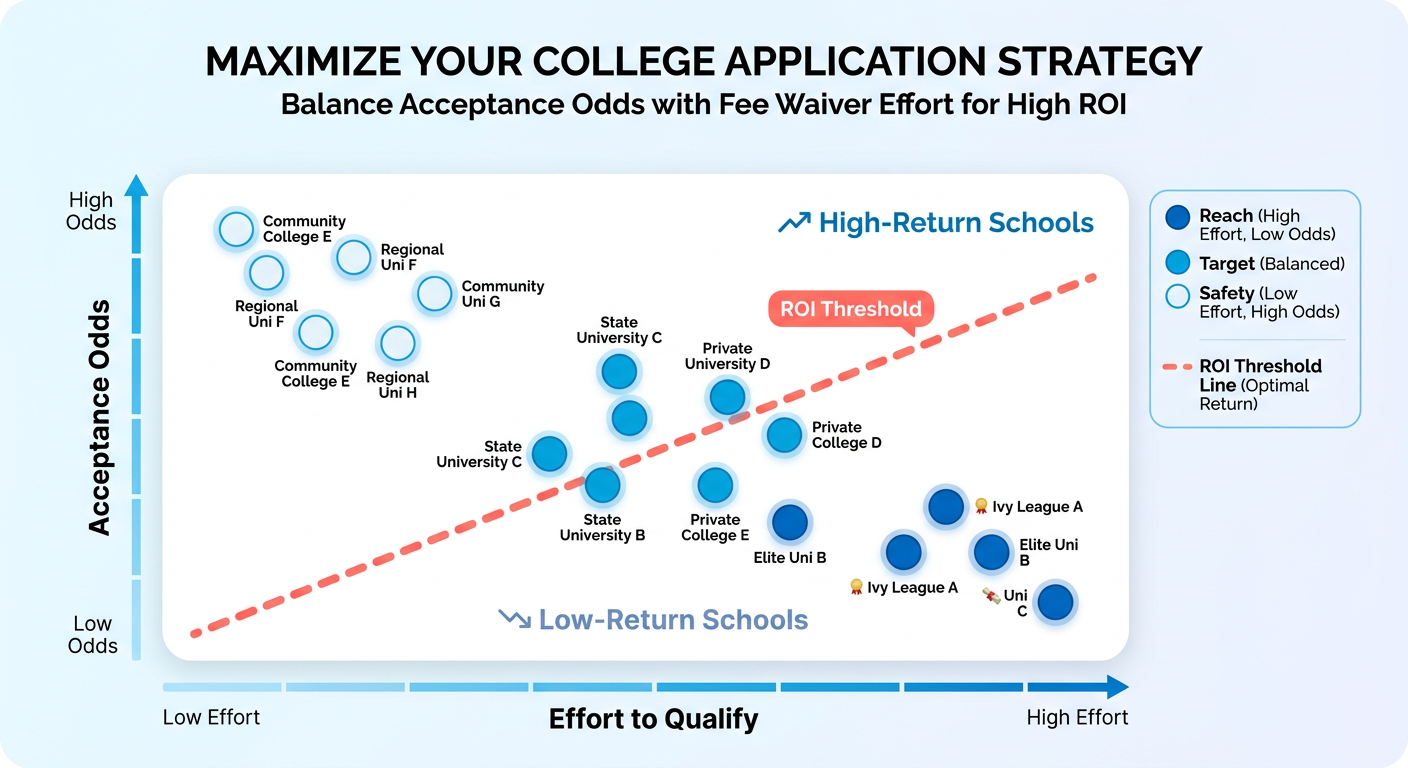
- Weigh acceptance odds against qualifying effort. A waiver at a 4% reach school offers little return.
- A simple checklist, one row per college with its threshold and required form, prevents the most common failure: missing a criterion you actually met.
Figure out which waivers are even worth chasing
Before you draft a single request letter, ask whether the waiver is worth the effort. We tell students to run their list through a simple return-on-effort test. Weigh the school's acceptance odds against the work of qualifying. A waiver at a reach school with a 4% shot offers little return. A waiver at a target you'll apply to anyway is high return.
First, decode the two eligibility tracks. Then write the letter only for schools that clear the math.
Do you meet the standard triggers?
Most waivers hinge on a federal or institutional financial marker. Household income at or below $50,000, or a federal Pell Grant, meets the baseline the Common App and Coalition App recognize. Free or reduced lunch and public assistance count too.
More selective schools run their own numbers through the CSS Profile, and many set cutoffs in the $75,000 to $100,000 range. That gap matters. A family earning $85,000 might miss a FAFSA-based waiver but qualify at a school reading CSS figures.
Build a checklist before you apply. Use one row per college. Include its income threshold, which form it reads, and whether it accepts a school official's supporting statement. This avoids the most common failure: missing a criterion you actually met.
What if you don't fit the income boxes?
Special-circumstance waivers cover what the tables miss. Recent job loss, a medical emergency, undocumented status. These cases need a short explanation, and that's where a strong letter helps.
An international student whose family business closes mid-year is the classic case. Prior tax filings looked fine, so no income-based waiver applied. A special-circumstance request, backed by documentation of the closure, can still clear the fee at several schools.
To find each policy, check the admissions site's Financial Aid tab first. If the language is vague, email the office and ask. Admissions staff would rather answer a question than watch a strong applicant skip a school over a fee.
Our planning maps your financial profile against every school on your list, so you skip waivers that won't clear and spend effort where the return is real.
Get your paperwork in order before you write a word
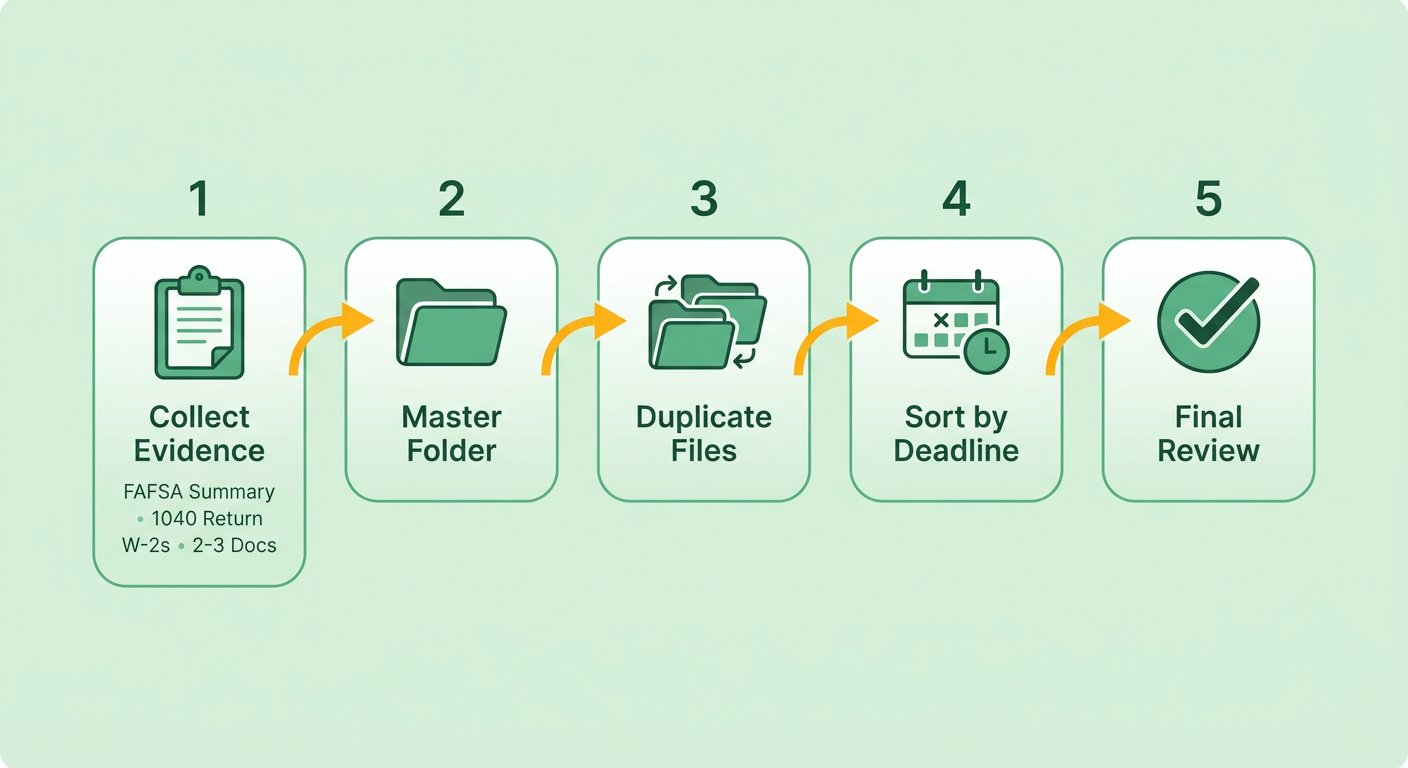
Once the math says a school is worth pursuing, gather documents for those schools only. Build one master evidence folder, then copy the relevant files into each college's folder. Your request letter is only as strong as the paperwork behind it.
At your high-return targets, complete documentation removes the friction that gets a waiver denied. Sort by deadline and start with the earliest closings, because some schools stop accepting waivers weeks before the general application cutoff. Match the effort to the return.
What actually backs up a waiver request?
Core documents: your FAFSA Submission Summary, the most recent 1040 tax return, W-2s, two or three recent pay stubs, and a current bank statement. These four prove household income at a glance, which is what most reviewers check first.
Supplemental evidence: add these only when your situation calls for it. Medical bills, an unemployment determination letter, an eviction notice, or a signed letter from a counselor or community leader can fill gaps the standard forms miss. One clear hardship document often carries more weight than five redundant income files.
International students face a different obstacle. You'll need official transcripts and an income verification letter from a parent's employer or a local bank, both translated into English. Start these early. Turnaround from overseas institutions runs long, and a missing translation stalls the whole submission.
How should you name and protect your files?
Use a consistent naming convention so a reviewer never hunts for anything: LastName_FamilyIncome_2023.pdf or LastName_TaxReturn_2023.pdf. Keep each PDF under 5 MB so uploads don't fail.
Structure your folders like this:
/FeeWaiver
 /CollegeName
 /EligibilityDocs
 /PersonalLetter
Before anything leaves your hands, redact. Black out your full Social Security number, bank account numbers, and any dependent's identifiers. Reviewers need income totals, not the digits that expose you to identity theft.
Our regular check-ins are built for steps like this, so nothing slips before submission. Build your own version of that habit, and you'll catch the small errors that quietly sink otherwise eligible requests.
Write a letter that reads like you, not a template
A strong waiver request letter does one thing generic templates can't: it makes a busy admissions reader believe it applies to you. Templates get skimmed. Specifics get remembered.
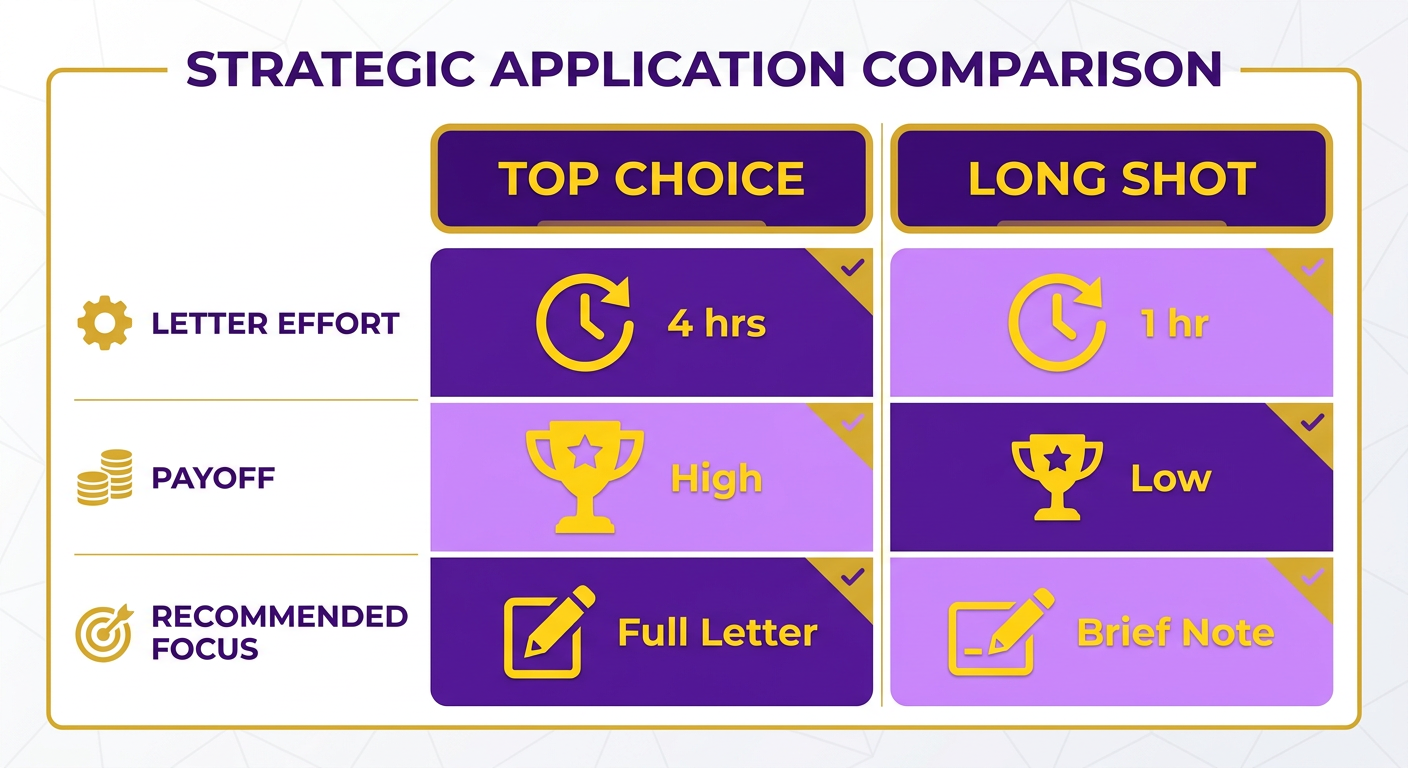
Match the effort to the payoff. A top-choice school where you're competitive deserves the full letter below. A long-shot school with a token fee barely justifies a note. Don't spend hours on a letter for a school you'll probably never attend.
What goes in a non-template letter?
Structure: open with the school, state the hardship with real numbers, tie it to your academic plan, close with thanks. Four moves, no filler. Keep the whole thing under 200 words for most schools.
Open by naming a specific program or initiative at that college, not a canned line about "your prestigious institution." Show you did the homework.
Then give the arc quickly. One sentence of backstory, one clear turning point, one line on current need. Skip the sob story. Skip the apology.
How specific should your numbers be?
Exact. Vague need reads weak. Concrete figures read true.
Anchor each claim to a number the reader can picture:
- Tie the fee to a competing bill: "The fee equals two weeks of groceries for a household of five."
- Show the squeeze in hours, not just dollars: "I work 22 hours a week to help cover our utilities, which cuts into study time."
- Point to a fixed obligation: "Half my monthly paycheck goes straight to rent before any school costs."
Timing matters. Events inside the last 12 months carry more weight than old history. A recent job loss lands harder than a struggle from three years back.
Name the ripple effects too. Explain how the hardship blocked test prep or forced you to skip interview travel. That shows the fee sits inside a larger squeeze.
Our tone rule: respectful, sincere, forward-looking. Not demanding. Not groveling. You're a serious applicant who needs one barrier removed to compete.
Submit it right, then follow up where it pays
Submission is where the effort either pays off or leaks away. Once the request letter is written, get it into the right portal, confirm it landed, and follow up only where the return justifies your time. At a high-odds target, chase confirmation hard. At a long-shot school, submit once and move on.
Some colleges push waivers to you automatically; others make you request one yourself. College Essay Guy notes that some schools send waivers directly, while Spivey Consulting points out that applicants skipped by an automatic database can still request one on their own. Check for an auto-waiver first, then ask only if none arrives. If a fee code already appears in your portal, skip the direct ask entirely.
Where do you submit, and by when?
Submit through the same portal you apply on, by the application deadline. The Common Application and Coalition Application each carry a dedicated fee-waiver section inside the profile, per College Essay Guy's guide. School-specific portals live on the college's own admissions or financial-aid page.
Deadline alignment is simple: most schools want the waiver by the same date as the application. Some accept a late request with a short explanatory note, so a missed portal toggle is recoverable if you email fast.
Difficulty here is a 2 out of 5. Budget one to two days per school. The friction is finding where each portal hides its waiver field, not the submission itself.
How do you confirm it landed?
Capture three things every time: a screenshot of the submission receipt, the confirmation email, and a saved PDF of your request. These prove the waiver went through if a fee later posts to your account by mistake.
Log each one in a tracking spreadsheet: college name, submission date, confirmation received, follow-up date, status. It shows at a glance which high-value schools still owe you a reply. When you're managing a large application list, that single missed confirmation is exactly what costs real money.
When should you follow up without sounding pushy?
Send a two-line thank-you within 24 to 48 hours, then a polite status check after 7 to 10 days of silence. Concentrate this on schools where an offer is realistic. If a target has already gone quiet twice, a third email rarely changes anything and eats time you could spend confirming other portals.
Route escalations correctly. General questions go to the admissions inbox; a stalled or contested waiver belongs with financial aid. Andrew Moe, a Director of Admissions quoted by College Essay Guy, says students shouldn't hesitate to ask admissions offices for help. Through our mentorship process, we work students through each phase, from clarifying goals to following up on submitted materials. Visit our expert tips blog for more on staying organized through the process.
The five mistakes that sink good requests
The fastest way to sink a fee waiver request letter is one of five mistakes we watch students repeat each cycle. Each is avoidable in a few minutes, and each quietly raises your odds of a flat denial no matter how strong your underlying case is.
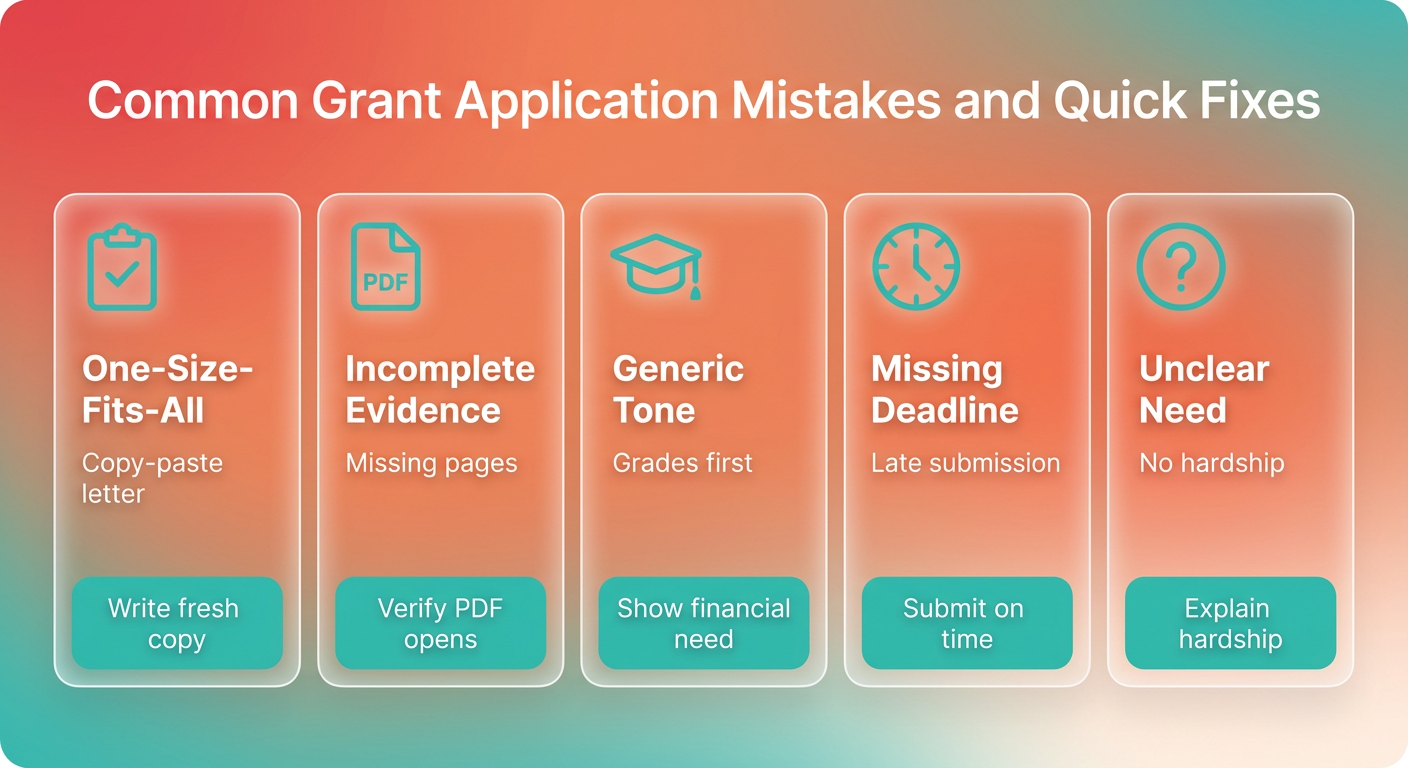
- One-size-fits-all copy-paste. Reusing the same letter word-for-word reads low effort and gets discounted. Write a fresh version for the schools that matter most.
- Incomplete or corrupted PDFs. A waiver stalls when a file won't open or a page is missing. Verify every document opens before you attach it.
- Leading with grades, not need. Waivers turn on financial hardship, not your GPA. Academic merit belongs in the application, not the waiver ask.
- Late with no reason. Submitting past the deadline without explaining why signals disorganization. If you're late, name the cause plainly.
- Ignoring school-specific instructions. Some colleges want a separate essay; others want a short attached note. Skipping the format they asked for is an easy denial.
What do the ones that clear look like?
Strong requests share three traits: tight personalization, complete documentation, and strict adherence to each college's policy. Three redacted examples, drawn from the profiles we work with, that cleared the bar:
Domestic low-income student. Led with a recent parental job loss, attached an employer verification letter, and stated the household's monthly shortfall in dollars. The specificity made the hardship legible in seconds.
International applicant from China. Currency devaluation had cut the family's purchasing power hard. The student explained the exchange-rate shift, attached recent bank statements, and connected the numbers to why the fee was a real barrier.
Student managing a chronic illness. Ongoing treatment costs drained the family budget. A physician letter plus an itemized summary of medical expenses did the work no template could.
The pattern holds across all three: real numbers, matching paperwork, and a format that follows each school's rules. Reviewers process these in bulk, so the ones that answer their questions before they're asked tend to move fastest. Put your strongest effort into the letters that carry the most weight for you, and keep the rest clean and complete.
References
[1] College Application Fee Waivers: Who Qualifies and How to Get Them - https://www.collegeessayguy.com/blog/college-application-fee-waiver
[2] Law School Application Fee Waivers: Part 2 - https://www.spiveyconsulting.com/blog-post/law-school-application-fee-waivers-part-2
Frequently Asked Questions
1. What if my family income falls between the federal and CSS Profile thresholds?
Private colleges using institutional forms often evaluate financial need with greater flexibility than federal guidelines allow. They frequently adjust their calculations to account for regional cost-of-living differences, high housing costs, or family size. This means middle-income families who do not qualify for federal assistance may still receive institutional waivers directly from the school.
2. Does requesting a fee waiver hurt my chances of admission?
Seeking financial assistance has no bearing on your likelihood of acceptance. At the vast majority of institutions, admissions committees evaluate academic portfolios independently of fee waiver requests, and the staff reviewing your application typically do not have access to your financial documents. The process is designed to ensure that financial circumstances do not influence admissions decisions.
3. Should I mention my GPA or achievements in the waiver letter?
The waiver letter should focus exclusively on explaining the specific budgetary constraints or unexpected expenses that make the application fee a barrier. Admissions committees already have access to your transcripts, test scores, and activities list within the main application. Repeating academic achievements in a financial request can distract from the core explanation of your current financial circumstances.
4. What happens if I miss the fee waiver deadline?
If you realize you have missed a deadline, contact the admissions office immediately to explain the delay and ask if they can manually apply a waiver code to your portal. Many institutions are willing to accommodate late requests if the application is still under review, though administrative flexibility varies by school.
5. How do international students prove income for a waiver?
International students can demonstrate financial need by providing localized financial records, employer salary statements, or certified letters from school counselors detailing the family's financial context. It is essential to ensure all documents are clearly translated and that all financial figures are converted to the currency of the country where the school is located.
6. Do I always need to write and submit a waiver request myself?
Before drafting a formal request, review your applicant portal and email correspondence for automatic waivers or promotional codes. Some institutions grant waivers based on mailing list participation, geographic location, or high school partnerships, which can save you the effort of submitting a separate request.
7. Is it worth requesting a waiver at every school on my list?
Because compiling documentation and writing personalized letters requires significant effort, you should prioritize schools where your academic profile strongly aligns with their typical admitted student profile. Focus your energy on target and safety schools where you have a high probability of enrollment, rather than spending hours on low-probability reach schools.