How Asian High Schoolers Can Decode U.S. College Admissions
September 8, 2026

Key Takeaways
- A study of 685,709 applications found Asian American applicants had 28% lower odds of admission than comparable white applicants.
- South Asian applicants faced an even wider gap, with 49% lower odds of attending 11 highly selective colleges.
- The gap holds even after adjusting for test scores, GPA, and extracurriculars.
- Legacy preferences that disproportionately help white applicants are a structural driver of the disadvantage Asian applicants face.
- UCLA law professor Jerry Kang describes "negative action," where implicit bias reads Asian applicants as less charismatic or less likely to lead.
- Stacking transcripts with AP classes and dual-enrollment credits does not close the residual gap.
- Knowing where the gap comes from helps families spend wisely.
What Asian High Schoolers Are Actually Up Against
For Asian high schoolers, decoding U.S. admissions means accepting one hard truth: strong academics alone do not level the field. A PMC analysis found a substantial gap in admission odds between Asian American applicants and white peers with comparable profiles, and it is wider for South Asian students. That should change how families budget for test prep, essays, and dual enrollment.
Many families assume a higher GPA and a stacked transcript will bridge the divide. But when you adjust for academic metrics and extracurricular involvement, the disparity remains. Knowing the root causes helps families spend where it matters.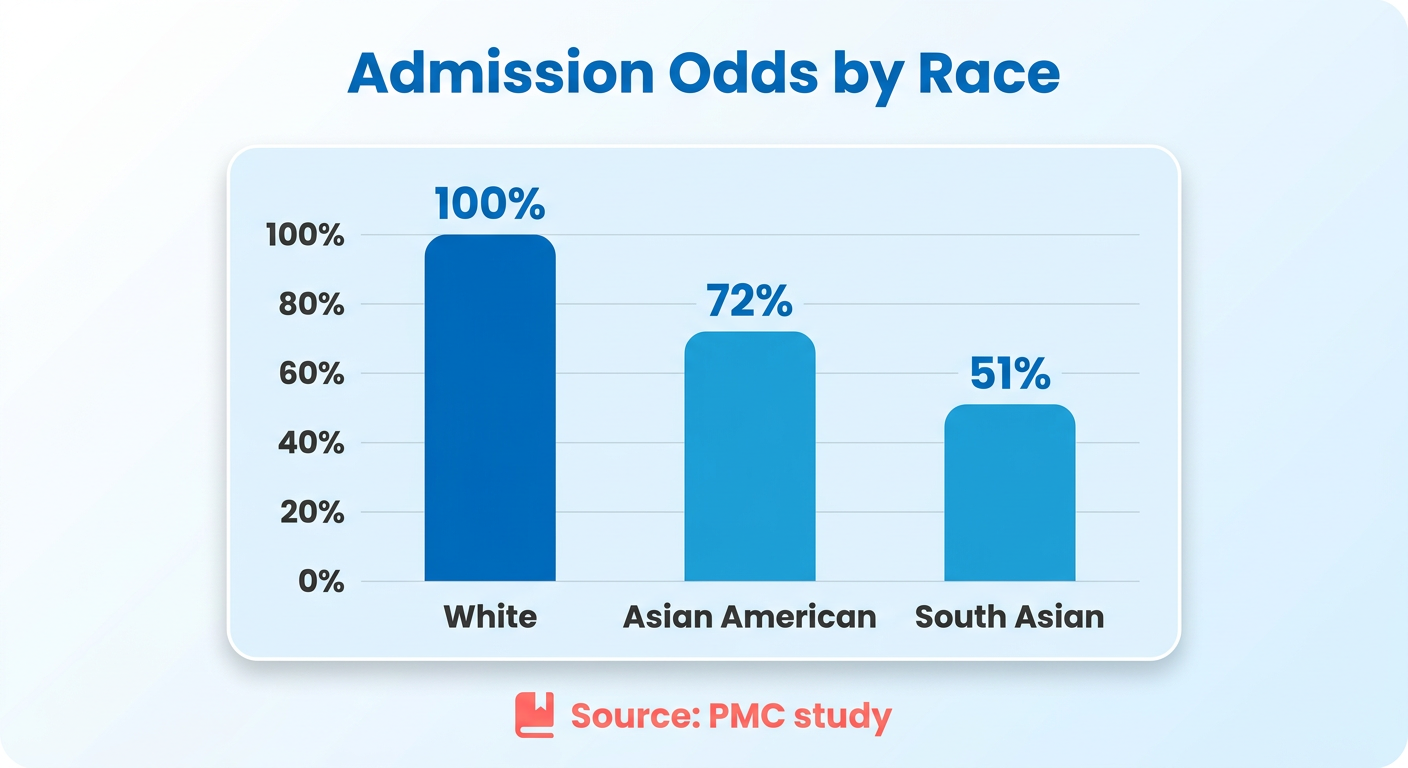
Why doesn't a perfect transcript close the gap?
Because the barrier is structural, not academic. The odds gap persists after controlling for academic strength, which means the drivers sit elsewhere: legacy preferences that disproportionately benefit white applicants, and what one legal scholar calls "negative action."
UCLA law professor Jerry Kang argues Asian Americans are treated worse than comparable white students. He says implicit bias can read them as less charismatic or less likely to be leaders, per his UCLA Law commentary. Many families assumed the 2023 Supreme Court ruling helped Asian applicants. The data says otherwise: in the Fall 2024 cycle, white admissions rose more than Asian admissions at certain schools. So don't treat the end of affirmative action as a tailwind.
Where should test-prep dollars actually stop?
Test prep has a ceiling. Scores matter, but only up to the competitive band. Past a strong score, extra prep buys little. The Harvard admission rate dropped from 18% in 1990 to 5% in 2020, which shows how little one high number changes when everyone clears the bar.
Once your score reaches the competitive band, shift the budget toward narrative and leadership. Those pieces directly counter the "less charismatic, less leader" read. The essay and interview are the levers. That's why our team reviews every essay with at least two members. Strong essays sound personal, specific, and real.
Does location help or hurt you?
It's a tradeoff, not a simple rule. Students from oversaturated hubs like Silicon Valley face fierce competition, with too many applicants chasing the same Computer Science and Engineering programs. A student who builds a robotics club from scratch in a small town can stand out more than one leading an established club in a crowded district.
But those same hubs offer cultural belonging that thinner, less diverse areas may lack. Don't relocate for admissions math alone. Build the "big fish" effect within your own context by starting something, not joining it. Because no two students are alike, we build customized plans around each student's context. That is what a clear strategy delivers.
Building a Distinct Profile: Coursework, Tests, and Extracurriculars
Building a distinct academic profile means changing how families view standardized testing and advanced coursework. These are necessary parts of an application, but they function as entry requirements, not differentiators.
Start with the baseline. Research by Espenshade and Radford indicates self-identified Asian applicants historically needed roughly 140 more SAT points to reach the same admission probability as white peers with equivalent profiles. Scores are a threshold. High scores plus a heavy load of advanced courses, by themselves, won't secure admission.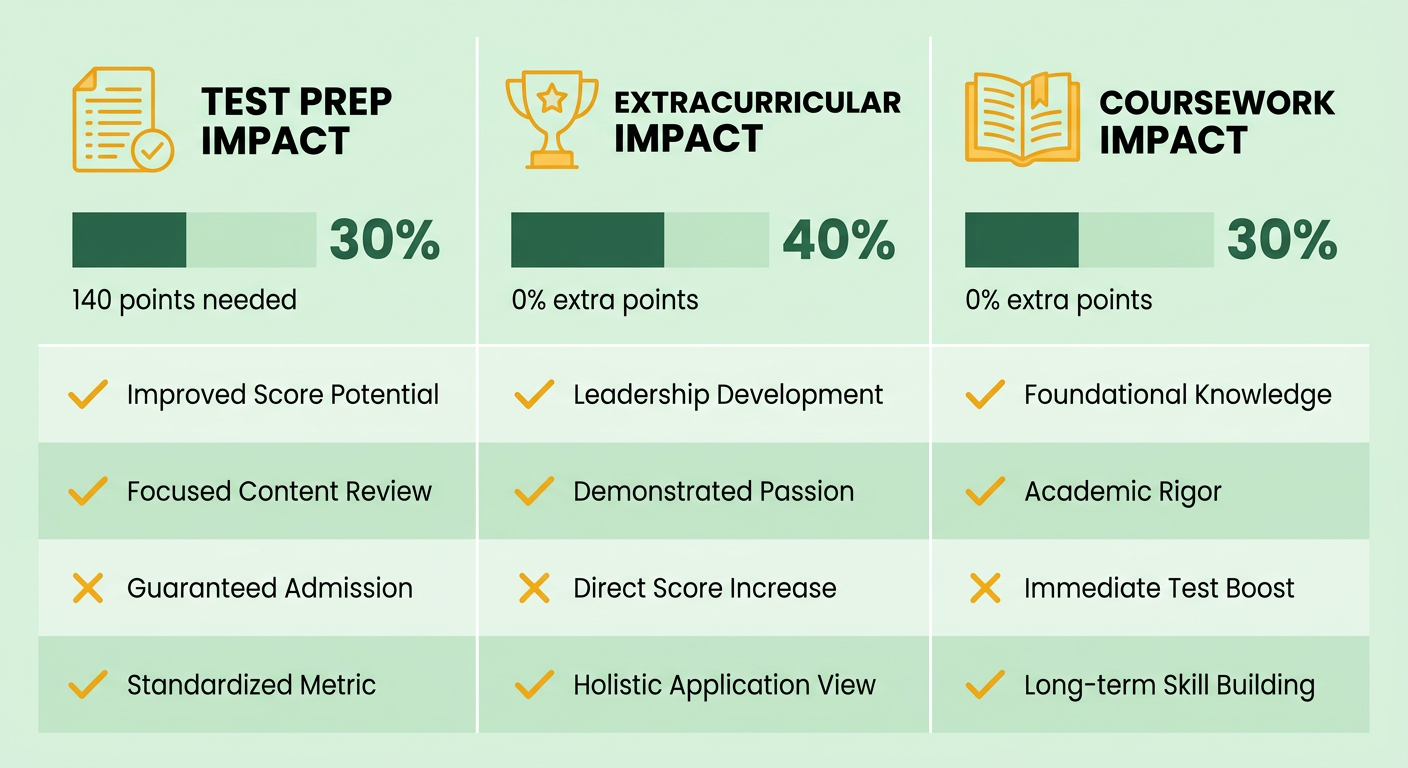
How much test prep is enough?
Once a student lands within the middle 50% range of target schools, more test prep has diminishing returns. At that point, extra hours are better spent building a personal narrative.
Rather than chase a perfect score, focus on activities that show leadership and initiative. Those speak directly to the qualitative criteria admissions committees actually use. That pivot keeps students from spending time on small score gains that do not change the decision.
What extracurriculars actually counter the bias?
To stand out, activities need to show genuine initiative, not passive membership in established organizations. Admissions officers look for projects that reflect personal drive and community impact.
An applicant who starts a new local initiative in a less-saturated environment often reads as more compelling than one holding a standard leadership title in a hyper-competitive district. As one admissions officer put it, on the crush of competition in the tech hubs:
"Sometimes I feel like the best advice I could give a talented kid from Cupertino is to tell their family to move to Ohio for high school."
Relocating is rarely practical or necessary. But the lesson holds: distinguish yourself within your local context by starting something that reflects your interests.
Where does the narrative fit?
Your essay is the main lever against leadership bias, not a soft add-on. Vulnerability plus proof of growth outperforms polished, sophisticated writing.
Skip the fancy words. A student who wrote about helping after a natural disaster showed a change in worldview, not just a resume line. As Phung Ninh puts it in Apex for Youth's guide, the story does not need to be extraordinary; it needs to reveal values. That reflection is where extra budget pays off.
Writing a Personal Narrative That Reads Like You: Essays and Interviews
The personal narrative is where an application becomes human. Numbers establish academic ability. The essay and interview show character, values, and intellectual curiosity.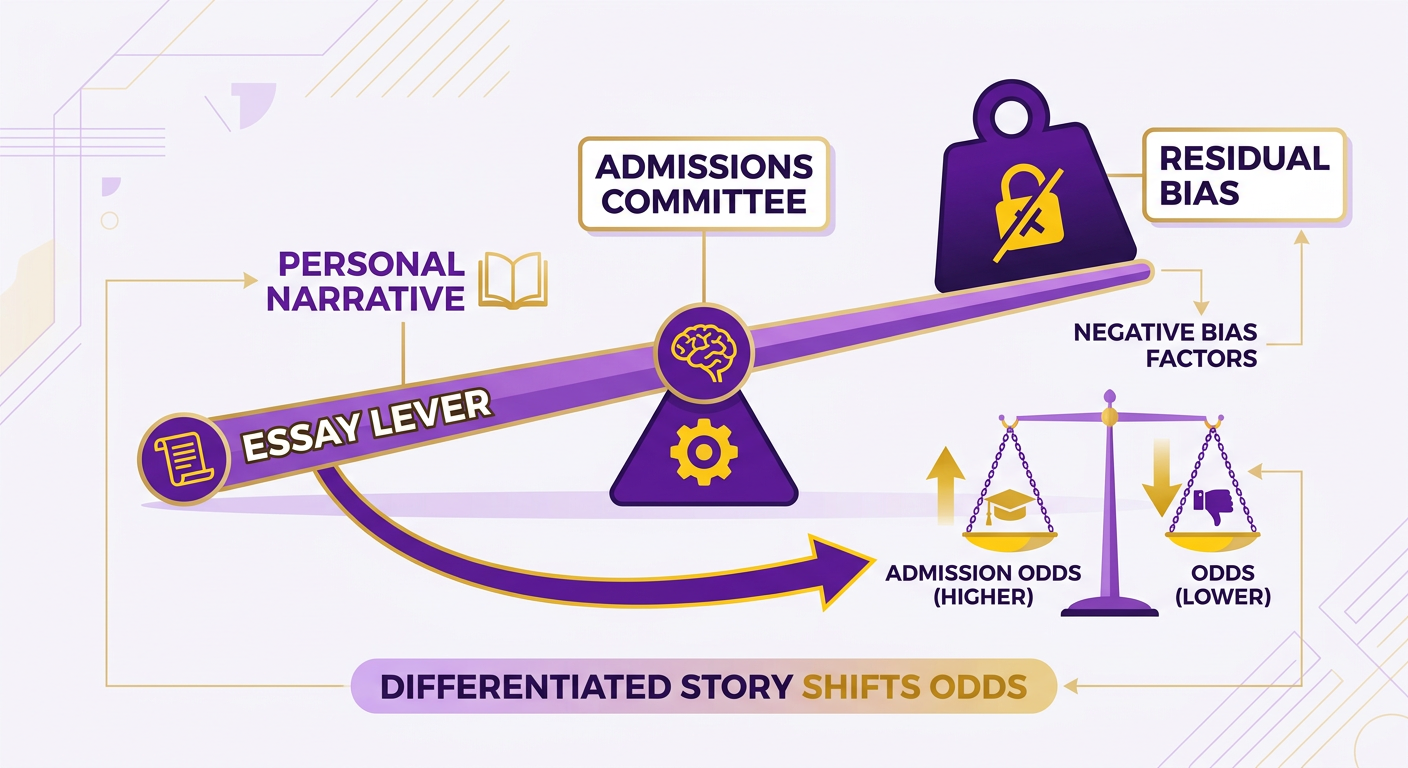
What actually makes an Asian applicant's essay stand out?
Authentic self-reflection and a clear voice. Rather than cataloging achievements, the narrative should show how specific experiences shaped the applicant's worldview.
Writing about a modest, everyday experience with real insight beats describing a prestigious summer program with no reflection. The goal is to give the committee a clear sense of the applicant's character and intellectual vitality, beyond a transcript's flat metrics.
Should you lean into or away from your cultural context?
Cultural context is a strong asset when it comes through in specific, personal detail. What matters most is the distinct story it reveals.
Avoid broad generalizations. Focus on the unique parts of your upbringing and community. Rather than worrying about regional competition, explain your individual perspective and how your background shapes your goals.
Common pitfalls to cut before you submit
- Over-indexing on achievement. Listing awards is what your resume already does. The essay's job is character.
- Generic cultural references. "My grandmother's cooking taught me discipline" gets read a thousand times a cycle. Make it unrepeatable.
- Polished-to-death prose. If it doesn't sound like you talking, cut it.
- Skipping interview storytelling. Prep the same narrative muscle for the interview; rehearse one specific story per value you want to show.
Do the "Resume vs. Reality" exercise from that Silicon Valley guide: list what you actually care about against what you think colleges want. The gap between those two columns is your essay.
Using Mentorship, Networks, and Consulting Services
Highly selective admissions often need guidance beyond the high school counseling office. Structured mentorship and advisory networks help students find opportunities and stay focused across four years of high school. Starting early lets students explore interests deeply and build a cohesive profile over time.
The support exists, and many students underuse it. Middle school mentoring, high school opportunities programs, and college-and-career success staff all appear in the Apex for Youth guide for a reason. Each one catches a different weak spot. Starting in middle school gives you years to build a story worth telling, instead of a scramble in senior fall.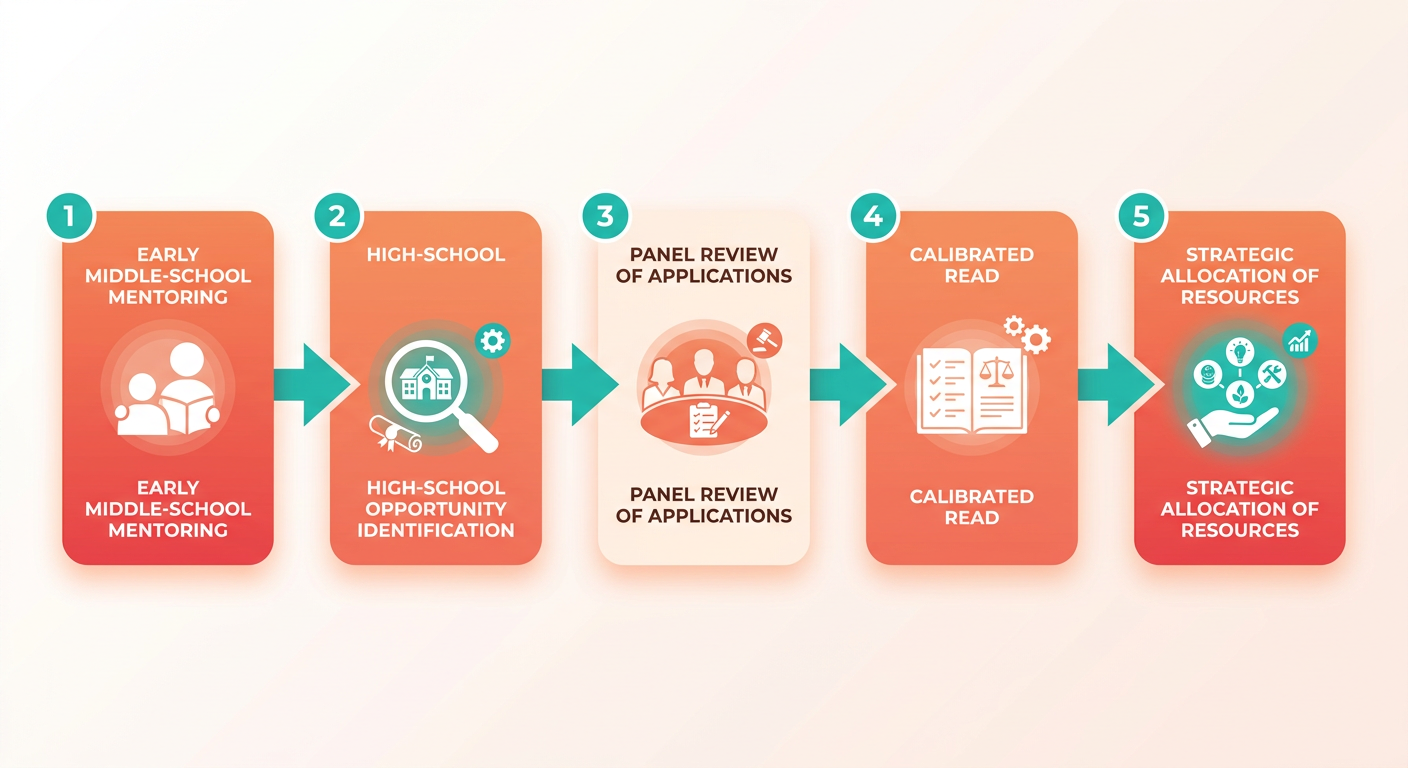
Why does a panel beat a single advisor?
A collaborative model gives a more balanced read than one consultant. Different advisors bring different expertise. Some specialize in narrative development, others in extracurricular strategy or institutional fit.
Reviewing a profile together, a panel can catch subtle gaps and check whether the portfolio holds up to a diverse admissions committee. It simulates how a real committee operates, surfacing concerns before you submit.
How do mentors amplify your narrative?
Mentors help students refine personal statements and interview skills. They also act as an objective sounding board, helping applicants figure out which personal stories matter most. Mentors can help students read college essays, find schools that fit, and feel less alone.
That support keeps students grounded and focused on authentic self-expression, instead of writing what they think admissions officers want to hear.
When should you skip paid consulting?
Skip it if you can already answer three questions honestly: what makes you different, where your scores plateau, and which schools fit rather than just impress. If your school counselor and family network cover those, a DIY path works fine.
But most students in over-represented hubs cannot answer them alone. The same achievements read as less distinctive in a dense applicant pool. A mentor who understands context arbitrage steers you toward best-fit and less-saturated targets instead of the brand-name cluster everyone in your zip code applies to.
Alumni networks add a second layer. They give real accounts of fit, interview norms, and campus culture that no ranking captures. Endurable's panel of Harvard and Yale graduates, who have read applications across the US, China, UK, and other markets for years, brings that same calibrated read to how these decisions actually get made. The point holds: spend on the lever that moves your odds, not the one that already hit its ceiling.
Building a Balanced School List and Timeline
A balanced school list is a core part of any admissions strategy. Given how competitive the pool is, families need a clear read on institutional priorities and admission trends across tiers.
Spreading your options across categories keeps viable enrollment choices on the table while you still aim at highly selective schools.
How do you sort reach, match, and safety?
A well-built list mixes reach, match, and safety schools to manage risk. Apex for Youth's guide emphasizes that a diverse list across these categories cuts both acceptance risk and stress.
For many applicants, a practical split is roughly two safety schools, three to four matches, and two to three reaches. Any school with a single-digit acceptance rate belongs in the reach column, no matter how strong the credentials. That honest categorization keeps students focused on viable options.
Does location help or hurt your application?
Geographic diversity matters to admissions offices building a varied class. Applicants from regions packed with competitive high schools may face a tougher read.
Rather than trying to change geography, students should show how their local environment shaped their perspective and achievements. That reframes a local challenge as evidence of individual growth.
When should you use Early Action or Early Decision?
Apply early only when a school is a clear top choice and your application is fully ready. Early decision is binding, so save it for your single strongest reach where the fit is genuine. For international students, demonstrated interest and timeline discipline matter. Use a color-coded planner to track each deadline and aid form, as Apex advises.
Map the whole list on a spreadsheet before you commit. Track program, location, aid, and demonstrated-interest requirements for each school. Through regular check-ins and feedback, we help students clarify goals, prioritize commitments, and stay on track as the plan takes shape. "Best fit" over "top schools" isn't settling. It's focusing effort where the odds move.
Staying Sane Through the Process
The application process can be a real source of stress for students and families. Protecting mental health matters for well-being and for the application itself.
When students feel supported and are encouraged to pursue genuine interests, anxiety drops. The application also becomes more authentic and more compelling.
Why does the "perfect applicant" myth cause so much anxiety?
The pressure to fit an idealized profile leads to burnout. When students join activities solely to impress committees, they lose the chance to pursue what they actually care about.
That compliance-driven approach produces a generic application that fails to convey personality or potential. Recognizing that colleges value diverse perspectives and authentic experiences is the first step toward lower stress.
How can parents support without adding pressure?
Parents help most by encouraging their kids to pursue activities they genuinely like, rather than fixating on resume-building. Open conversation about goals and expectations eases anxiety.
By validating their child's real interests and achievements, parents build the confidence a student needs to present an authentic self-portrait to colleges. Shifting focus from external rankings to personal growth serves both well-being and the application.
Does location add to the pressure?
Students in highly competitive districts often feel stronger peer pressure. In those environments, it is especially important to set clear boundaries between schoolwork and personal life.
Regular breaks and non-academic hobbies help maintain mental clarity and resilience. That, in turn, supports a more balanced and authentic application. Protecting well-being helps students approach their applications with energy and focus.
References
[1] The disparate impacts of college admissions policies on Asian ... - PMC - https://pmc.ncbi.nlm.nih.gov/articles/PMC10891048/
[2] UCLA Law professor says Asian Americans are disadvantaged in ... - https://law.ucla.edu/news/ucla-law-professor-says-asian-americans-are-disadvantaged-college-admissions-its-not-because-affirmative-action
[3] Applying to college as an Asian American student from Silicon Valley - https://www.collegeessayguy.com/blog/applying-to-college-as-an-asian-student-from-silicon-valley
[4] Admission Considerations in Higher Education Among Asian Americans - https://www.apa.org/pi/oema/resources/ethnicity-health/asian-american/article-admission
[5] How to Apply for College: 8 Essential Steps for Asian American Students - https://apexforyouth.org/news-and-announcements/apply-to-college/
[6] College Admissions Decoded - Apple Podcasts - https://podcasts.apple.com/sg/podcast/college-admissions-decoded/id1469569875
[7] Applying to US Colleges from China: Step-by-Step Guide - https://www.collegeessayadvisors.com/chinese-students-applying-to-us-colleges/
Frequently Asked Questions
1. Did the 2023 Supreme Court ruling on affirmative action improve admissions odds for Asian applicants?
Initial data after the ruling shows no uniform increase in admission rates for Asian American students. At several highly selective institutions, enrollment figures for other demographic groups shifted, which shows the landscape remains highly competitive. Qualitative evaluations and institutional priorities still play a major role.
2. If test scores hit a ceiling, why should I still invest in prep at all?
Standardized test scores function mainly as a qualifying threshold for highly selective universities. Reaching a score within an institution's competitive range is necessary for full consideration. But once a score meets that benchmark, further gains do not significantly raise admission odds. At that point, it is better to focus on other parts of the application.
3. How many schools should be on an Asian applicant's list, and how should they split by tier?
A balanced college list usually includes safety, match, and reach schools. Counselors often recommend a modest number in each category so each application gets enough attention. Spreading options across tiers lowers risk and keeps viable enrollment choices open.
4. Is any school with a single-digit acceptance rate automatically a reach?
Yes. Universities with extremely low acceptance rates must be treated as reach schools for all applicants, regardless of perfect academic records or high test scores. Because these institutions receive far more qualified applicants than they can admit, the process includes qualitative factors that make outcomes hard to predict.
5. When should a family skip paid admissions consulting entirely?
Families may choose to handle the process on their own if they have strong school counseling and a clear plan for a distinctive personal narrative. When an applicant can choose schools and show unique strengths without outside guidance, professional consulting is unnecessary.
6. What's the difference between a single advisor and a panel review for applications?
One advisor gives a single point of view, which may reflect personal preferences or specific expertise. A collaborative review uses multiple readers. That multi-perspective approach helps simulate how an admissions committee works, identify concerns, and make sure the narrative reaches a broader audience.
7. How does over-scheduling AP and dual-enrollment courses affect mental health?
Too much academic pressure can lead to chronic stress and burnout, which often harms performance and application quality. A manageable course load lets students engage more deeply with their subjects and keep the energy needed to write thoughtful essays.