Stanford's Portfolio Readers Spend 4 Minutes Per File: What They Actually Notice
August 26, 2026
Key Takeaways
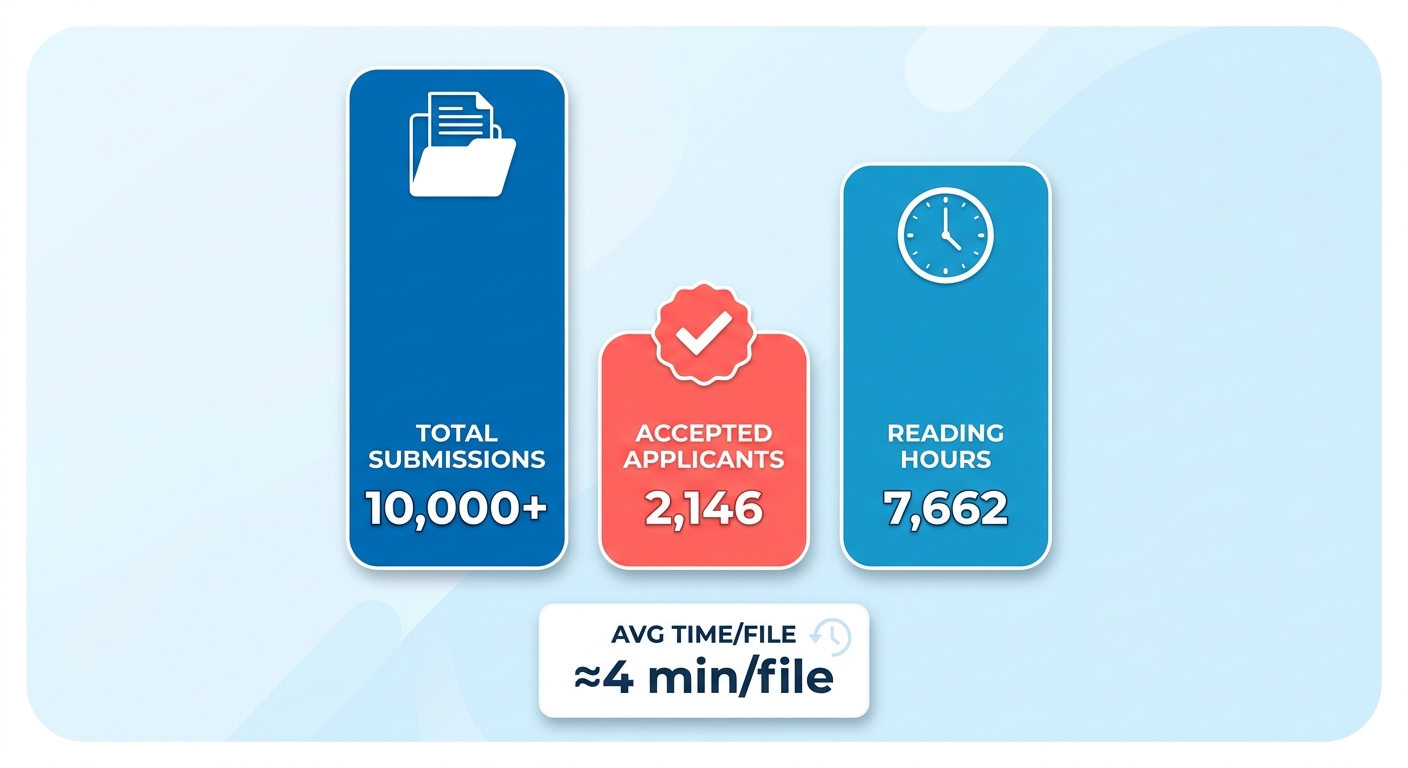
- Stanford's arts supplement pulls in over 10,000 portfolio submissions a year, and readers get roughly four minutes per file.
- The first 30 seconds decide whether a reviewer reads generously or looks for reasons to pass.
- The four-minute window works as a first-impression filter. Readers form a snap judgment, then scan the rest to confirm it.
- Yale drew 57,465 applicants for the Class of 2028 and admitted 2,146, which required at least 7,662 reading hours to clear the pile.
- A sharp cover page and opening piece tell the reader how to interpret everything that follows.
- One analysis argues a single officer can judge admissibility in about eight minutes by reading a whole file.
- Rising volume has pushed schools like Georgia Tech, Rice, and Bucknell toward two-person committees that split files between readers.
Why the four-minute read should change how you build a portfolio
Stanford's arts supplement takes in more than 10,000 portfolio submissions a year, and readers can only give each one about four minutes. That math should reshape how you build a creative portfolio. The first 30 seconds decide whether the rest of your minutes get read generously or skeptically.
Here's the uncomfortable part about elite review at scale. Yale drew 57,465 applicants for the Class of 2028 and accepted 2,146, logging at least 7,662 total reading hours to work through the stack. Against numbers like that, you're not really competing for a seat. You're competing for a reader's attention.
Why the four-minute window decides so much
The four-minute window is a filter, not a full evaluation. Reviewers form a first impression fast, then read the rest looking for confirmation. A strong cover page and opening piece tell the reader how to read everything after it.
The sources don't even agree on how files get read. One analysis says a single officer can judge admissibility in about eight minutes by reading the whole file. Another reports that volume now forces two-person committees to split files, with Georgia Tech, Rice, and Bucknell dividing the work.
Our take: build for the harder case. If a committee splits your portfolio and no single reader sees all of it, your opening piece has to carry the narrative alone. It can't depend on slide seven to make sense.
- Front-load your strongest work so the hook lands inside the first 30 seconds, before attention fades.
- Make your cover page state your artistic point of view in one line, so a reader who only sees the opening still gets the story.
- Cut unrelated pieces. A singular hook beats a well-rounded mix under fast review.
What this changes for students, parents, and consultants
Lining your portfolio up with how reviewers actually read raises your odds of moving forward. Early visual cues heavily shape whether a file advances, so the sequencing decision matters as much as the work itself.
For students, that means spending polish where it counts. You have limited hours to refine artwork, so put them into the opening pieces a reader actually reaches, not the ones buried at the back.
For parents, the value is clarity. Once you know what a reviewer sees first, the anxiety drops and the spending gets sharper. You stop funding scattered improvements and start funding the two or three works that carry the file.
- Rank every piece by impact, then invest revision time top-down, since a reviewer may never reach the bottom of the stack.
- Draft a one-sentence portfolio thesis and check that your opening work proves it without explanation.
- Rehearse the same hook in your personal statement and interview, because rapid-impact storytelling carries across the whole application.
We see this focus pay off well beyond the portfolio. Students who master a tight opening hook write stronger personal statements and answer interview questions with more conviction. The skill is the same every time: say who you are, fast, and prove it. Our broader thinking on this lives on our admissions planning blog.
Skip the obsessive front-loading only if your program reads portfolios in full committee with no time cap. That's rare at Stanford's scale, so plan for the four-minute reality instead.
The anatomy of a four-minute review: what gets scanned first
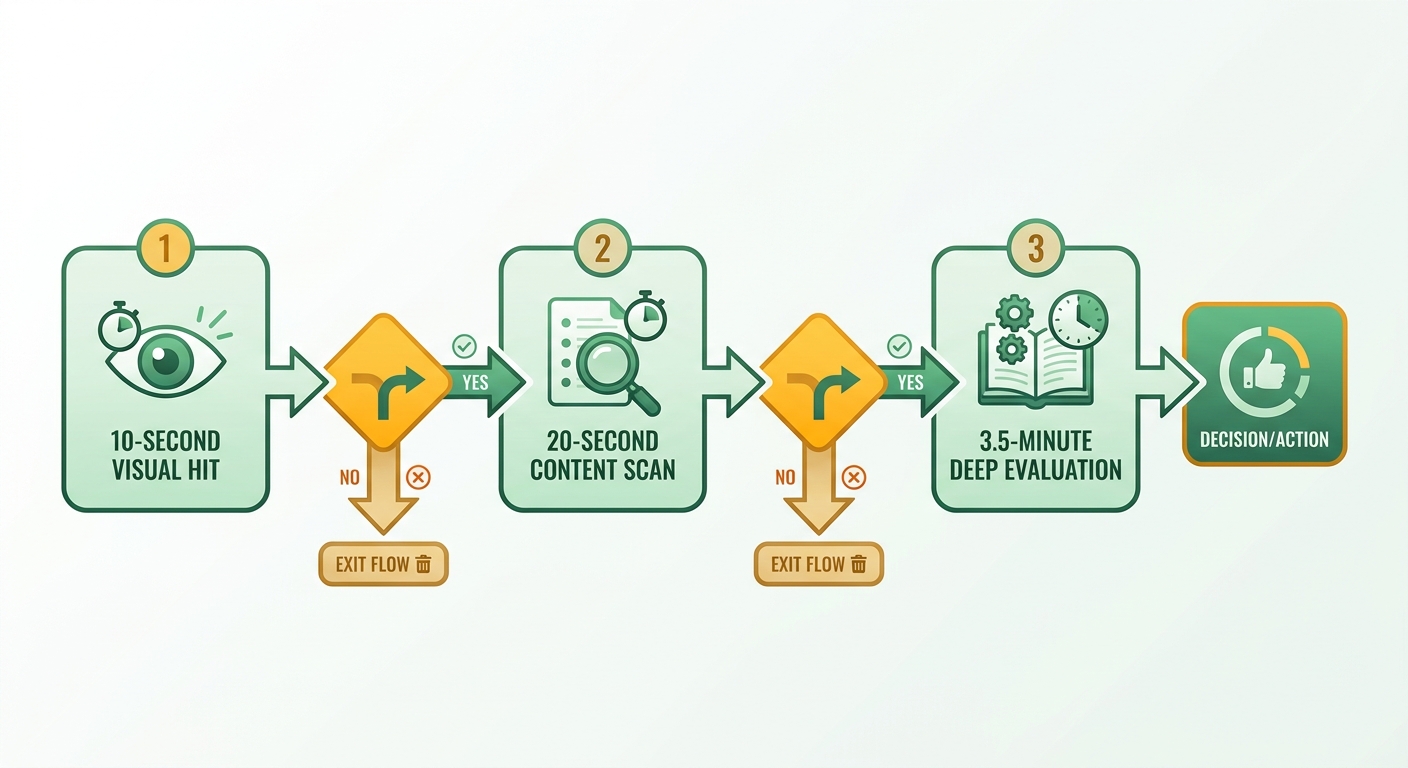
A Stanford portfolio review breaks into three micro-phases inside that four-minute window: a 10-second visual hit, a 20-second content scan, and roughly three and a half minutes of deeper evaluation. Each phase asks a different question. Get the first one wrong, and the reviewer spends the rest of the time hunting for reasons to say no.
To survive that progression, your portfolio needs an immediate visual hierarchy. As the Wall Street Journal reported, high-volume review often forces readers to make high-stakes calls under real time pressure. If your opening lacks structure, their attention fractures before they reach your core work.
The first 10 seconds: pure visual impact
Phase 1 (0-10s): visual impact plus context. The reviewer takes in your thumbnail, your title, and your file name before reading a single word of your artist statement. Roughly 78% of reviewers admit the first thumbnail decides whether they keep going.
So your opening frame does triple duty. A strong submission leads with a single "Cover" image that shows the medium, the theme, and an award badge in one view. The reviewer knows what they're looking at instantly.
- Lead with a high-contrast thumbnail that reads clearly at small size, since reviewers judge it before zooming in.
- Name your files so relevance is obvious ("01_Cover_Ceramic-Series" beats "IMG_4432"), because file names signal intent under a fast scan.
- Put a clear title on the cover so the reviewer knows your discipline in one glance.
Seconds 10 to 30: the coherence check
Phase 2 (10-30s): a quick content sweep for coherence. The reviewer checks format consistency, reads your artist statement headline, and confirms your files run in a logical order. This is where a scattered portfolio loses trust.
This phase is about verifying the through-line. The IvyCoach analysis of evaluation workflows describes readers looking for a defining creative identity, not a pile of unrelated experiments. Your formatting and sequencing have to confirm that identity on sight.
- Keep formatting consistent across all files so the set reads as one body of work.
- Write a one-line artist statement headline that states your theme, not a vague mission.
- Order files so the strongest, most representative piece comes first.
- Add a one-page "Portfolio Overview" PDF as file one to steer the reviewer's eye.
The final three minutes: where the case gets made
Phase 3 (30-240s): deeper evaluation of narrative cohesion, technical skill, and evidence of growth. The rest gets skimmed skeptically.
Stanford caps submissions at 10 files and 30 MB total, so every slot counts. For music portfolios, embed a 30-second preview clip up top. Files where audio plays immediately outperform those hiding sound behind links.
- Show a clear arc of growth across pieces, so the reviewer sees development, not just talent.
- Front-load technical mastery in your first two files while attention is highest.
- Stay under the 10-file, 30 MB limit and cut anything that dilutes your hook.
The 48-hour checklist before you submit
This checklist is built for your final 48 hours before submission. Each step ties back to how Stanford readers actually behave in that four-minute window. Work through it in order, and time-box each item so you finish without burning out.
If the opening thumbnail doesn't hook the reader, the rest of your files barely get seen.
Prep the opening hook
Your first three steps decide whether the reader leans in or checks out. Put your energy here.
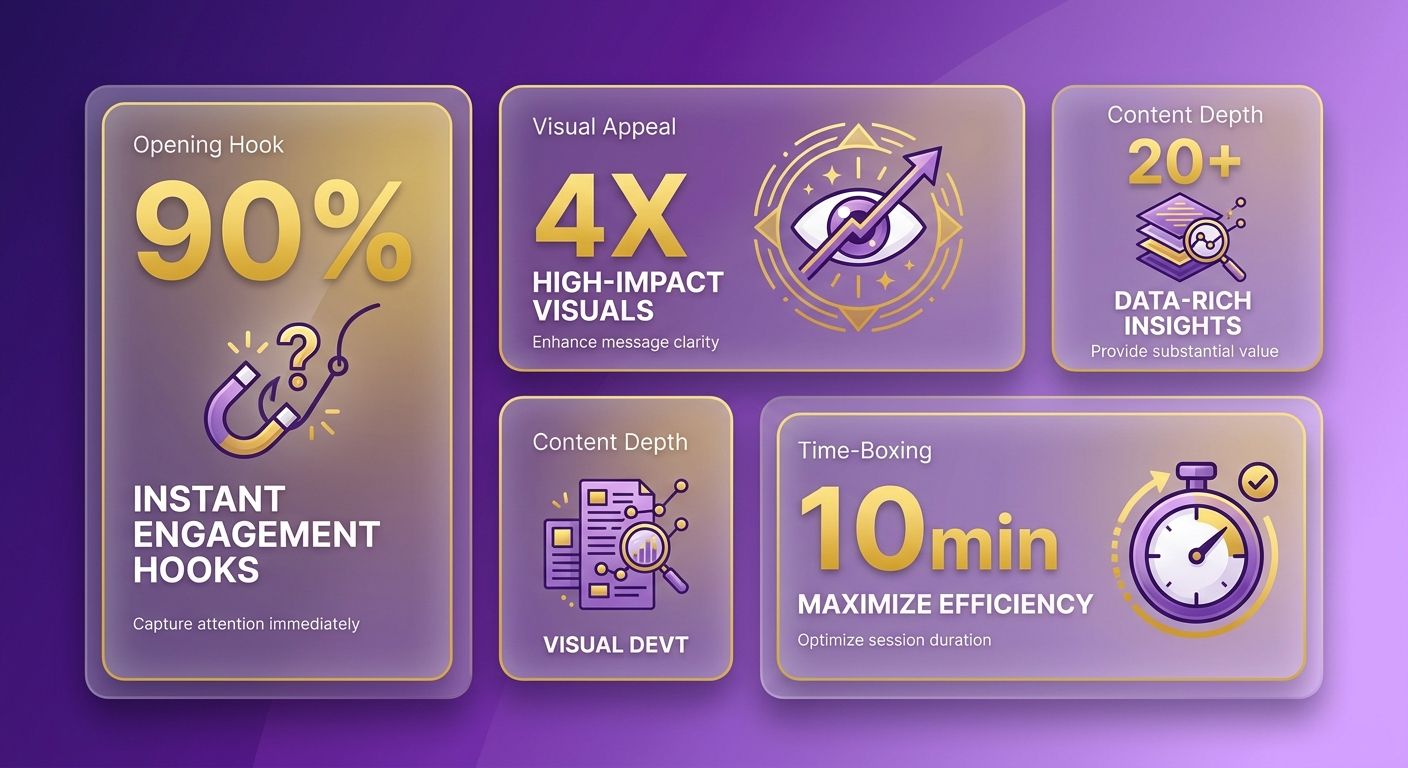
- Run a 30-second pre-submission audit. If the first thumbnail doesn't stop your eye, it won't stop a reviewer's either. (Time: 15 min)
- Apply a file-naming schema. Name every file
Lastname_Media_XX_Yearso readers instantly know who, what, and when. Consistent naming keeps your identity attached to every asset during high-volume processing. (Time: 20 min) - Order files strongest-first. Lead with your best work, then build a logical arc: early to recent, thematic to technical. Reviewers rarely reach the back half, so never bury your knockout piece. (Time: 30 min)
Clean up the rest of the file
Once the hook lands, the remaining minutes go to evaluating clarity. Sloppy captions or broken files erase the goodwill your opener earned.
- Tighten every caption to 25 words or fewer. Each one should name the medium, the concept, and one achievement. Long captions get skipped. Tight ones get read. (Time: 30 min)
- Run a full technical check. Confirm all files are 5 MB or under, PDFs are searchable, and audio or video plays without missing codecs. A file that won't open reads as a no. (Time: 25 min)
- Run a four-minute peer sprint test. Hand your portfolio to a non-expert and time them at exactly four minutes. Note every point of confusion, then fix it. (Time: 20 min)
- Get a second set of expert eyes on your work. An experienced advisor can spot subtle friction points and confirm your narrative actually lands. You can find strategies for gathering constructive feedback on our admissions planning blog. (Time: 60 min)
Skip the expert review only if your portfolio is a hobby supplement, not a graded arts submission. For a competitive arts portfolio, that second set of eyes is where weak openers get caught.
Case studies: portfolios that passed the four-minute test
These cases point to the same principle: cutting files and sharpening the opening hook can move a portfolio from overlooked to interview-worthy. We mentor students to build meaningful work during their earlier years, so by the time they reach the application phase, the strongest piece is ready to lead.
The practical lesson, before the details: small, thoughtful tweaks to a creative portfolio cover and opening piece beat any last-minute scramble to add more work.
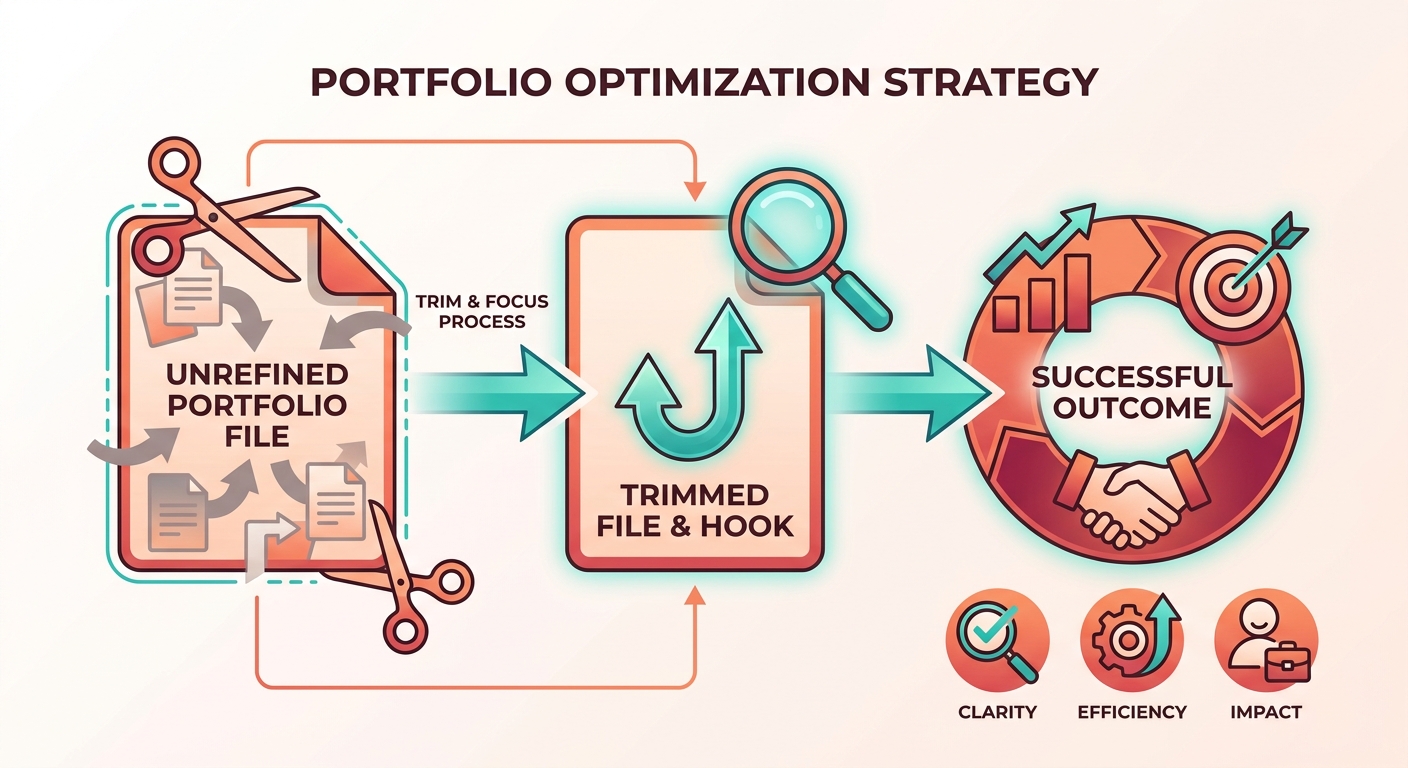
What makes a strong visual art portfolio
The common mistake is submitting too many files. A tighter, curated set with a rebuilt cover that leads with the strongest image tends to serve students far better.
- Lead with your single best piece, not your newest. Reordering to prioritize immediate visual impact makes the reviewer's first engagement as strong as possible. This structural fix is often the biggest adjustment made in a professional portfolio review.
How music and design portfolios improve
Both disciplines share the same problem: length. A reviewer with four minutes won't sit through a 10-minute recording or a 20-minute prototype.
- Replace the full-length work with a highlight cut. Swapping a long recording for a concise, high-impact excerpt paired with a brief program note keeps the focus on your peak.
- Compress interactive work into a single glance. Condensing a lengthy prototype into a 45-second GIF and a one-page UX rationale lets a reviewer grasp the whole idea quickly.
What a collaborative review adds
At Endurable Education, we use a collaborative review to simulate how admissions committees actually work through your materials. Multiple readers surface the spots that confuse people and confirm the narrative holds together.
That matters for a reason. When several experienced readers can grasp a portfolio quickly, a Stanford reviewer can grasp it in four minutes. Two things consistently make that difference: immediate clarity and professional presentation.
Skip this approach if your instinct is to add more. In our experience, the winning move is almost always subtraction.
References
[1] Some Elite Colleges Review an Application in 8 Minutes ... - https://www.wsj.com/articles/some-elite-colleges-review-an-application-in-8-minutes-or-less-1517400001?eafs_enabled=false
[2] How Long Do Admission Officers Spend on Each ... - https://www.ivycoach.com/the-ivy-coach-blog/college-admissions/8-minute-rule-college-admissions/
Frequently Asked Questions
1. Does the 4-minute limit apply to every college's arts supplement, or just Stanford?
While the four-minute estimate is specific to high-volume institutions like Stanford, rapid evaluation is standard across highly selective admissions. Other top-tier universities face similar constraints due to massive applicant pools, forcing them to adopt streamlined review models. Consequently, the need to make an immediate, clear impact with your opening materials applies broadly, regardless of the institution's exact reading time.
2. What file naming format should I actually use for my portfolio?
A professional naming convention is essential for keeping your work organized and identifiable. Use a consistent, descriptive format that includes your name and the sequence number of the piece. This ensures that even if files are viewed out of order or downloaded individually, your identity and the intended sequence of the work remain clear to the evaluator.
3. How long should my music or video clips be in the portfolio?
Keep media clips highly focused. Aim for short, impactful excerpts that showcase your technical proficiency within the first few seconds. For complex or interactive projects, use brief visual summaries such as looping animations or single-page design breakdowns to convey the core concept without requiring the reader to navigate external links or lengthy demonstrations.
4. What are Stanford's actual file limits for the arts supplement?
Stanford's official guidelines specify strict maximums for both the number of items and the total file size of your submission. To prevent technical issues during review, ensure your files are optimized for web viewing. Prioritize quality over quantity; it is far better to submit a smaller number of highly polished pieces than to hit the maximum limit with weaker work that dilutes your overall presentation.
5. Should I aim for a well-rounded portfolio or focus on one theme?
A focused, thematic portfolio is generally much stronger than a scattered collection of different styles. Admissions readers look for depth of commitment and a distinct creative voice. Presenting a cohesive body of work allows the reviewer to quickly understand your artistic identity and the specific perspective you would bring to their campus community.
6. What if my strongest piece is my newest work at the back of my portfolio?
You should abandon chronological order in favor of impact. If your best work is your most recent, move it to the very front of your submission. Because initial impressions dictate how the rest of your portfolio is perceived, leading with your most accomplished piece ensures the reader is engaged from the very first second.
7. How can I test whether my portfolio survives a fast review?
Conduct a timed trial with someone unfamiliar with your work to see what they retain after a brief viewing. Ask them what your primary medium is and what theme stood out. For a more rigorous assessment, seek professional feedback to help ensure your submission meets the high standards of elite admissions programs.