Three Lines Admissions Officers Read Before Opening Your Portfolio PDF
August 27, 2026

Key Takeaways
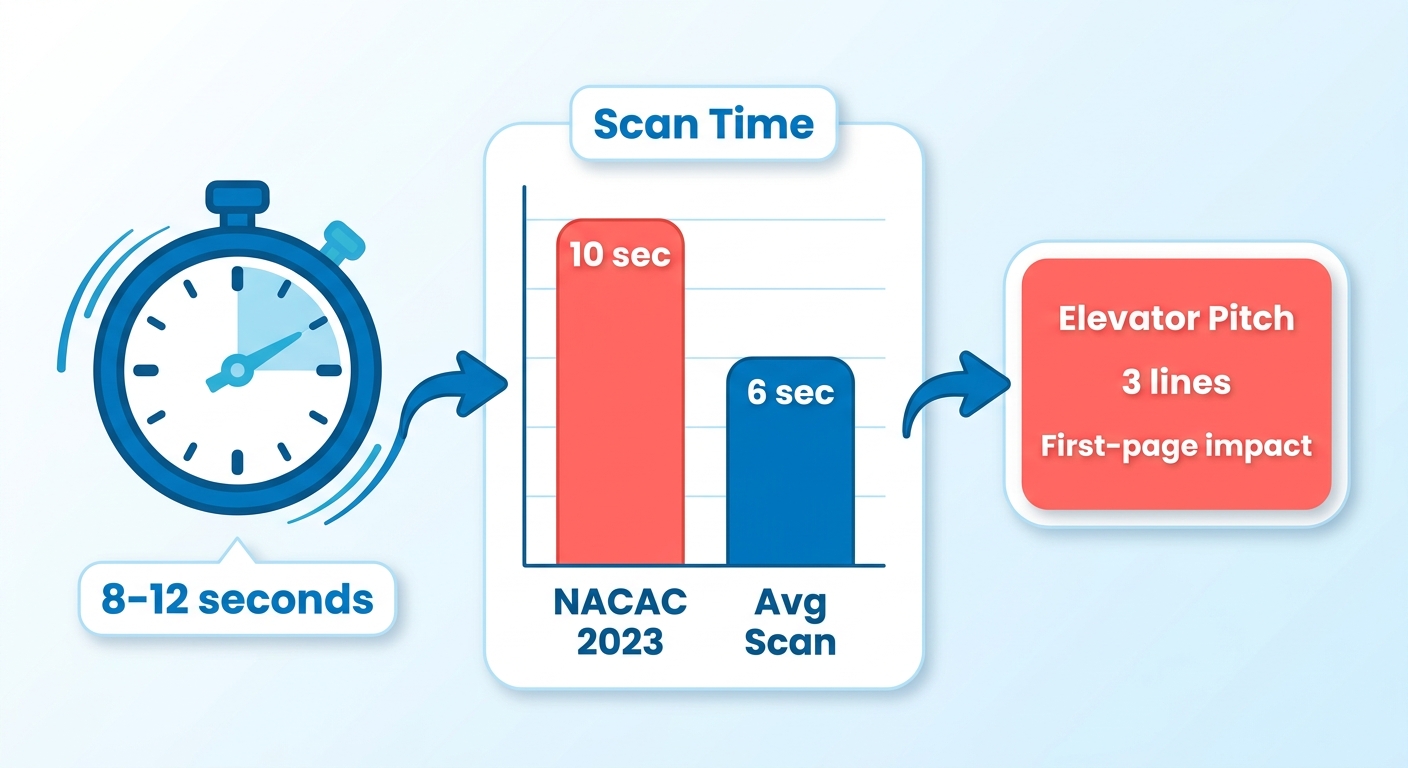
- Admissions officers make quick judgments about a portfolio's first page, and those initial impressions can be stubborn to revise.
- Research on thin-slicing shows people form accurate, stable judgments within seconds, and those snap impressions are stubborn to revise.
- Your opening three lines work like an elevator pitch: academic strength, school context, and accomplishments, all delivered before anyone reads a single essay.
- Line one leads with weighted GPA and class rank, formatted as "GPA 4.0/4.0 (Top 5%)" for instant strength and context.
- Course rigor reads best as "AP/IB: 10/12," advanced courses taken against what your school actually offered.
- Test scores gain clarity with subscores, like "SAT 1510 (Math 770, EBRW 740)." Test-optional applicants should just leave the line off.
- An apologetic note about missing scores raises flags. A clean absence reads perfectly fine to officers.
What Admissions Officers Actually Scan First
The top of your portfolio gets an unfairly short window. That first glance is a gatekeeper. It sets a cognitive anchor that colors how a reader reads every page after it. If those opening lines don't tell an officer who you are in seconds, the rest of your carefully built work may never get a close look.
A sharp three-line summary is often the difference between a full read and a quick pass. At Endurable Education, we tighten these lines during intake, leaning on decades of admissions experience and a panel-based read that catches what a single set of eyes misses. Here's what officers scan.
What belongs in each of the three lines
Each line answers one question, fast: How strong are you academically? What context did you earn it in? And what have you done with it?
Line 1. Academic Index — your hard numbers, ranked by weight.
- Lead with weighted GPA and class rank, shown next to your school's grading scale so the standing reads in context.
- List course rigor by comparing your advanced coursework against the total curriculum your school offered.
- State test scores with section breakdowns. Test-optional? Drop this line entirely and keep the focus on what you've done.
Line 2. High-School Context — officers read your numbers relative to your school.
- Name your school type (public, private, international) so the reader calibrates expectations.
- Include the graduating class average SAT/ACT and the percent of grads heading to top-50 colleges.
- Flag any notable program (STEM magnet, conservatory arts track) that frames your academic environment.
Line 3. Activities Snapshot — leadership and quantified impact, nothing vague.
- Open with a leadership title and a hard number:
Founder, 1,500-person fundraiseror200 service hours. - Name one talent or standout award no other applicant can claim.
- Cut the adjectives. Use symbols and clean abbreviations to save space and stay scannable.
Neglect these lines and your strongest essay never gets read. Get the three of them balanced and you've earned the reader's attention for everything that follows.
Writing Each Line So It Actually Lands
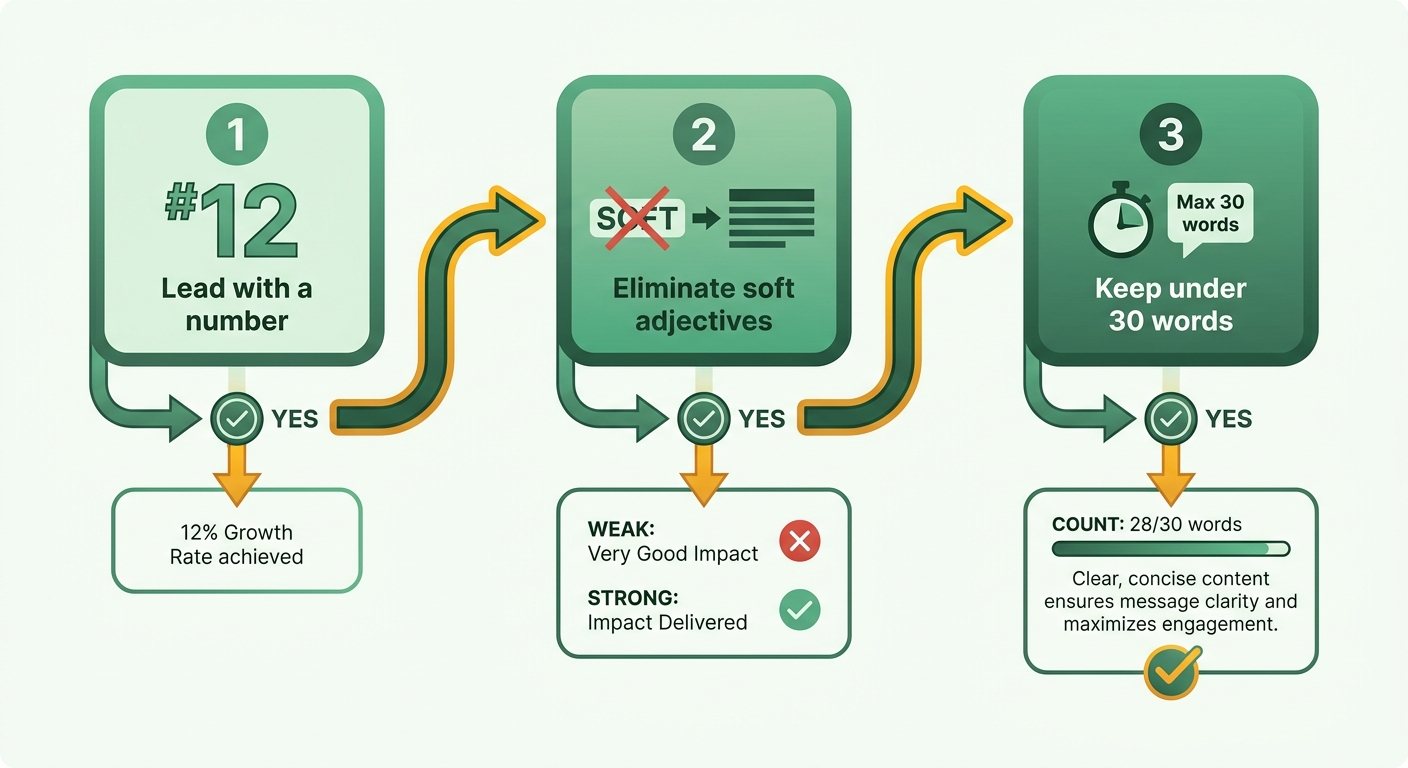
Each line wins or loses on word choice. The fix is unglamorous: lead with a number, cut every soft adjective, and keep each line under 30 words. That discipline is what separates a portfolio that gets read from one that gets skimmed and set aside.
Getting there takes a real drafting process, one that puts every word under scrutiny. A multi-stage review strips the fluff and leaves only the data points that pull weight. Below is a checklist you can run yourself. Work it in order, and don't skip the peer-review step.
What to gather before you draft
Pull your source documents first. You can't write a tight academic index from memory, and guessed numbers get caught in the interview.
- Official transcript with GPA, weighted GPA, and class rank. These three numbers anchor Line 1, so copy them exactly as your registrar lists them.
- School profile PDF showing your school's matriculation history and course offerings. This gives Line 2 the context an officer needs to read your GPA correctly.
- Activity logs and award certificates with hours, titles, and outcomes. Line 3 lives on specifics, so record the "40-member team" and "200 hours," not just the club name.
How to draft and refine each line
Use these three templates as a skeleton, then swap in your real numbers. Each answers a different question an officer asks in those first seconds.
- Line 1 – Academic Index: "GPA 3.96 (Weighted 4.2), Rank 2/350, AP 8/10 (Score 5+), SAT 1480." Budget 3 to 4 hours here; it's the hardest line to get right.
- Line 2 – School Context: "XYZ International (IB-MYP), average class GPA 3.4, 85% matriculation to four-year institutions." This tells the officer how hard your 3.96 actually was to earn.
- Line 3 – Activities: "President, Robotics Club (led 40-member team, 2 national qualifiers); Volunteer, 200 hrs at City Hospital (implemented triage protocol)." Start each entry with an active verb.
Your peer-review protocol
- Verify every number against your official records. One mismatched rank undermines the whole page.
- Cut filler adjectives like "amazing" or "dedicated." Numbers and verbs carry the weight.
- Read each line aloud. If you stumble, it's too long. Tighten until all three flow in one breath.
The Five Mistakes That Get You Skimmed
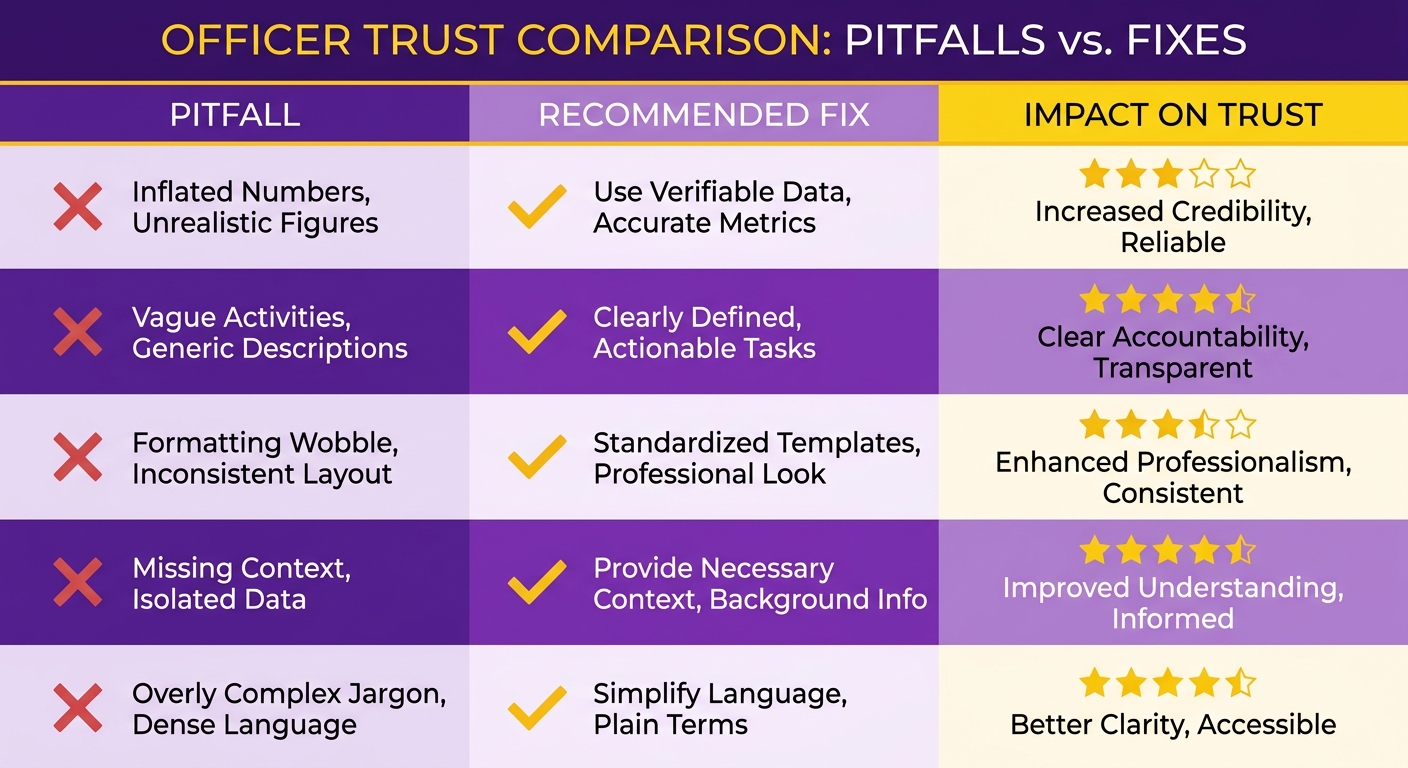
Most portfolio rejections trace back to five fixable mistakes in the first three lines. Fix them and your creative portfolio stops getting skimmed and starts getting read.
The pattern is consistent. Officers lose trust the moment a number looks inflated, an activity reads vague, or the formatting wobbles. Spend your editing energy on these and the application earns a full read instead of a quick pass.
Which mistakes cost you the read
These five do the most damage per word. Work through each one and confirm your top three lines are clean.
-
Stop rounding your GPA. A 3.87 written as a 3.9 reads fine until an officer cross-checks your transcript. Then every other claim looks suspect. Pull the exact figure from your official school report and use it verbatim.
-
Kill vague activity labels. "Member of Debate Team" tells an officer nothing about your impact. Quantify instead: hours logged, dollars raised, people reached. "Captain, Debate Team (led 12-member squad to state finals, raised $3,500 in sponsorships)" wins the scan.
-
State your test context. When a school is test-optional, officers guess why a score is missing. Add a short qualifier so nobody has to. Something like "SAT-optional at my school; self-reported 1490" removes the doubt in one line.
-
Hold each line under 30 words. Long lines trigger scrolling fatigue in a window that lasts seconds. Run a word-count tool on all three and trim adjectives until each one fits.
-
Pick one style and stick to it. Mixing bullets, commas, and slashes across your three lines looks careless. Choose a single punctuation standard, like the Chicago Manual, and apply it identically to every line.
Small, honest edits move the needle here. Catching these before they reach an officer matters more than you'd think. Focused hours on these three lines beat polishing pages a reader may never reach.
Final Checklist and Timing
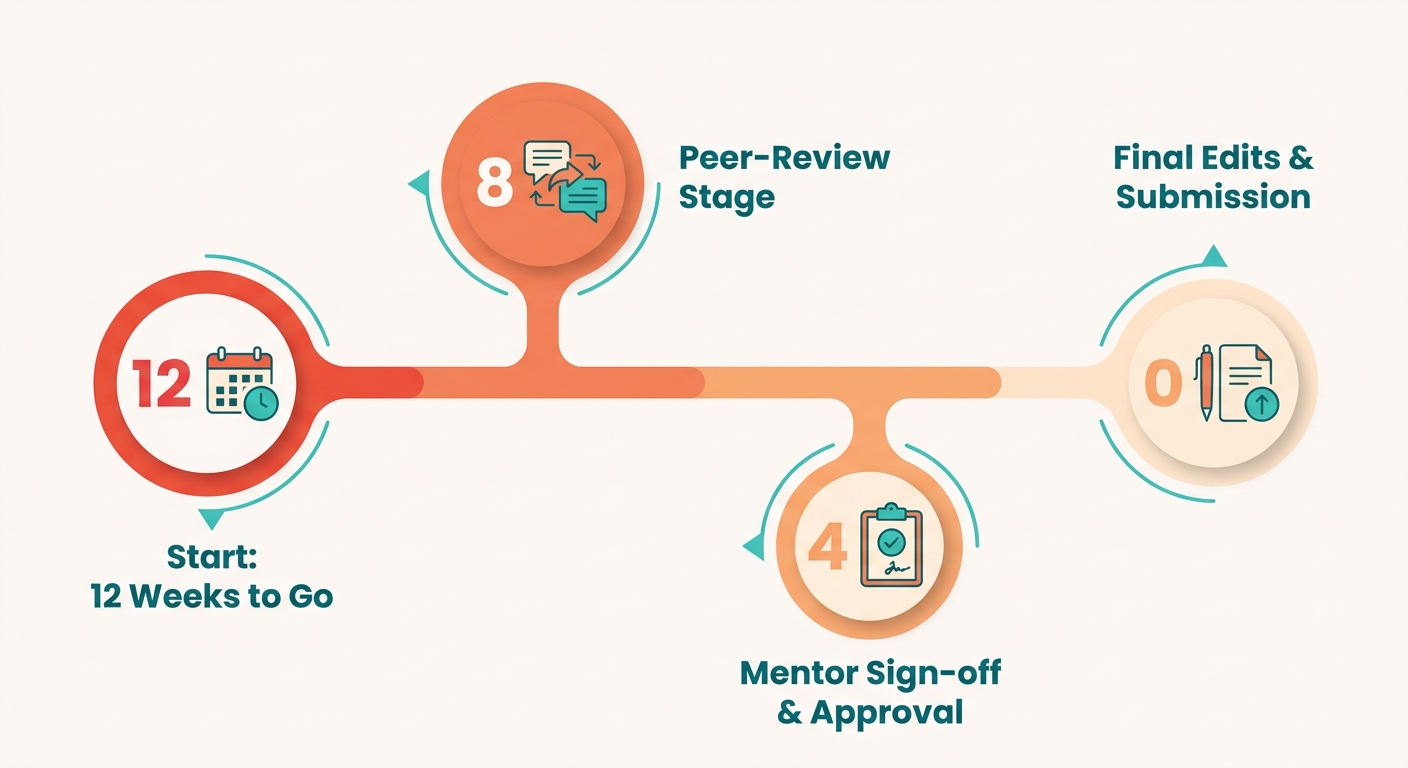
Your three lines aren't finished until they survive a deadline-driven checklist. Start twelve weeks out. Aim for an opening that reads in under five seconds. Below is a sequence, mapped to weeks before your submission date.
Work it top to bottom. Skipping the peer-review or mentor sign-off is where most portfolio openings quietly fall apart.
Your week-by-week checklist
Each item ties to a specific week so nothing gets crammed into the final scramble. Verify the data first, draft second, and don't touch formatting until the words are locked.
- Week -12: Collect and verify your data. Pull GPA, class rank, and test scores from official records so no number gets challenged later. Build a spreadsheet with formulas that auto-calculate weighted GPA and class-rank percentile. It kills manual math errors before they reach a reader.
- Week -10: Draft all three lines. Write the first version cold, lead each line with a number, keep every line under 30 words.
- Week -8: Send it for mentor review. A second set of eyes catches the vague activity and the inflated stat you stopped seeing. An outside reviewer spots the logical gaps and formatting slips early.
- Week -6: Make the final edit. Cut soft adjectives, tighten phrasing, confirm each line still earns its place.
- Week -4: Run the PDF embed test. Open the file on a phone, a laptop, and a printout to confirm your lines hold.
How to pass the final PDF audit
This last pass checks presentation, not content. A clean file signals care. A wobbly one signals rushing.
- Confirm font consistency and even line spacing across all three lines.
- Set the PDF metadata title to include your name, since officers sort files by that field.
- Keep a plain-text backup for quick copy-paste into Common App or Coalition forms.
Time your read aloud. Under five seconds means the lines are ready.
References
[1] Judgmental accuracy from thin slices of the behavioral ... - https://www.researchgate.net/publication/247316908_Toward_a_histology_of_social_behavior_Judgmental_accuracy_from_thin_slices_of_the_behavioral_stream
Frequently Asked Questions
1. Should I include class rank if my school doesn't officially rank students?
Omit rank entirely if your school doesn't report it, rather than estimating. Guessed numbers get caught during interviews and undermine every other claim on your page. Instead, strengthen Line 2 with other context from your school profile, such as the average number of advanced courses taken by graduates or historical matriculation trends.
2. What if my GPA is strong but my test scores are weak?
Lead Line 1 with your GPA and course rigor, then decide on scores case-by-case. If you choose not to submit scores, simply leave that space blank. Admissions officers prefer a streamlined presentation over explanations that inadvertently highlight what is missing.
3. How is a portfolio's opening different from a resume?
A portfolio's three-line opening acts as a high-level summary designed for rapid evaluation, focusing strictly on high-impact metrics and essential context. A resume lists activities in full detail across a page. The opening lines compress that into a scannable header that encourages the reader to dive deeper into your creative work.
4. Can I use the same three lines across different application platforms?
You can repurpose the core data across various application portals to maintain consistency. However, always verify how the text renders on different screens and devices, as layout shifts can disrupt the visual hierarchy of your portfolio's first page.
5. How many hours should I realistically spend on these three lines?
Expect to dedicate significant focus to refining your academic index, as condensing complex transcripts requires careful editing. Spreading the drafting, verification, and review process over several weeks before your deadline ensures you have ample time to catch errors and polish the phrasing.
6. What punctuation style should I use to keep the lines clean?
Maintain absolute consistency in your formatting choices. Mixing different separators across your lines can look disorganized. Selecting a uniform system for dividers and abbreviations ensures the layout remains clean and professional, signaling attention to detail.
7. Is it worth getting outside help to refine these lines?
An objective reviewer can identify vague descriptions or minor inconsistencies that you might overlook after working on the draft for weeks. If you are self-editing, try reading the lines aloud to check the flow and double-checking every metric against your official school documents.
At Endurable Education, we believe a portfolio should showcase your creative work—your projects, your mediums, your artistic voice—not just your test scores. The three-line summary above is designed to earn you the read, but the heart of your application lives in the work itself. Make sure your portfolio leads with what you've made, and let the numbers support the story your art tells.