Why Admissions Consulting Should Follow You Past the Acceptance Letter
August 31, 2026

Key Takeaways
- ACT scores and high school GPA predict admission. They do not predict continued enrollment. Self-efficacy and mentorship do.
- A survey of 237 freshmen found that self-efficacy and mentorship best predicted students' intent to persist.
- Summer melt rates for low-income students range from 8% to 40%. Many paid deposits but never enrolled.
- Summer melt usually reflects financial and informational barriers, not motivation. Common barriers include aid comparisons, missed deadlines, and unfamiliar paperwork.
- Most admissions consulting ends at acceptance, before the highest-stakes months begin.
- FAFSA verification, housing forms, and enrollment tasks pile up during summer, usually without a counselor's help.
- After offers arrive, long-term mentorship helps more than another round of test preparation.
The acceptance letter is the starting gun, not the finish line
The acceptance letter feels like the end. It is not. It begins financial and enrollment decisions that affect whether students thrive or drop out. Most admissions consulting stops at "you got in." The highest-stakes work follows during the next few months.
The key gap is this: admissions metrics predict admission, not persistence. A survey of 237 freshmen found that college self-efficacy and mentorship best predicted intent to persist. ACT scores and high school GPA did not significantly affect that outcome. This is why long-term mentorship can matter more than another test-preparation session after offers arrive.
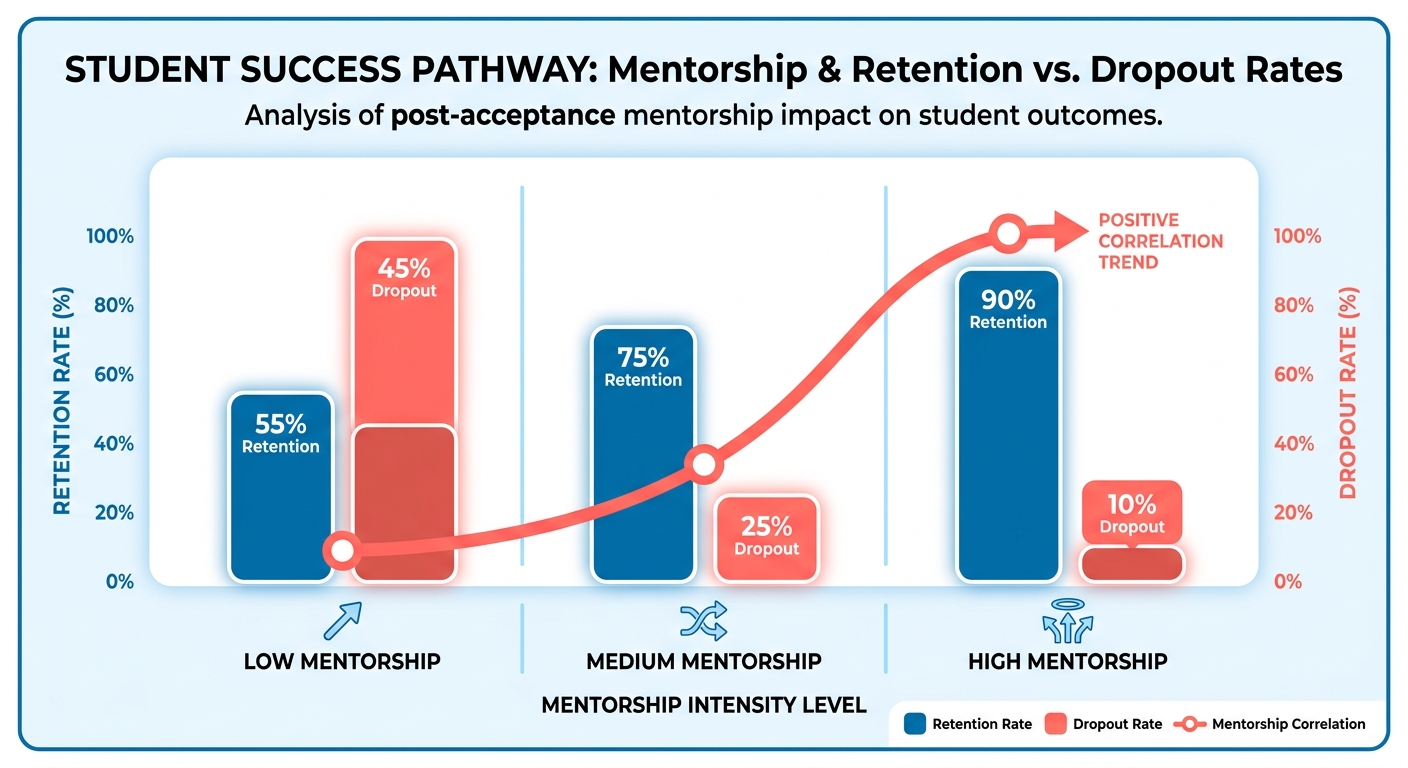
What happens between acceptance and enrollment
Summer melt happens when students who intend to enroll never arrive. This can happen even after they pay a deposit. Research on college-intending graduates puts summer melt rates for low-income students at 8% to 40%.
The barriers are financial and informational, not motivational. Families must compare aid packages and meet deadlines. FAFSA verification, housing forms, and enrollment tasks accumulate during summer without regular reminders.
This is where families can lose money. Missing a post-acceptance deadline can forfeit thousands in offered aid. We view college as more than the end of admissions. That is why our mentorship continues after acceptance.
Does post-acceptance counseling actually work?
Yes. It is one of the highest-return interventions in education. An experimental summer intervention made students 14 percentage points more likely to enroll immediately. It also made them 19 points more likely to keep their senior-year plans.
The Forgotten Summer study found that two to three hours of counseling cost $100 to $200 per student. That support increased enrollment by 5 to 14 percentage points.
By comparison, full admissions consulting packages cost up to $19,999. The overlooked opportunity is the summer, not the application phase. The most expensive package does not guarantee the largest post-acceptance gain. Timely, limited support can make a difference.
Who benefits most, and which problems it solves
First-generation and low-income students benefit most. 1 in 4 students drop out after the first year. First-generation students face higher risk because they often lack guidance through the transition. One mentorship program reported that students were 47% more likely to persist.
The same factors that support enrollment also support persistence. Mentorship and self-efficacy help students move from acceptance to enrollment. They also help students remain enrolled beyond freshman year. One continuous relationship can address summer melt and first-year dropout together.
Skip the premium application package if transition support is the greater risk. Evidence points to the period after acceptance. Endurable students can later join the community for an alumni network, seminars, and career advice.
What actually goes wrong after "you got in"
The acceptance letter starts a wave of paperwork and deadlines. These tasks can derail students quietly. This is the gap that much college admissions consulting overlooks. Application support ends, leaving students to manage housing, aid, and enrollment tasks with financial consequences.
May through August is a vulnerable period. Students may stop checking email, miss portal notices, or delay time-sensitive forms. The tasks are often unfamiliar rather than difficult. Without a counselor's reminders, students may not act. Post-acceptance consulting helps address this gap before students lose a seat or scholarship.
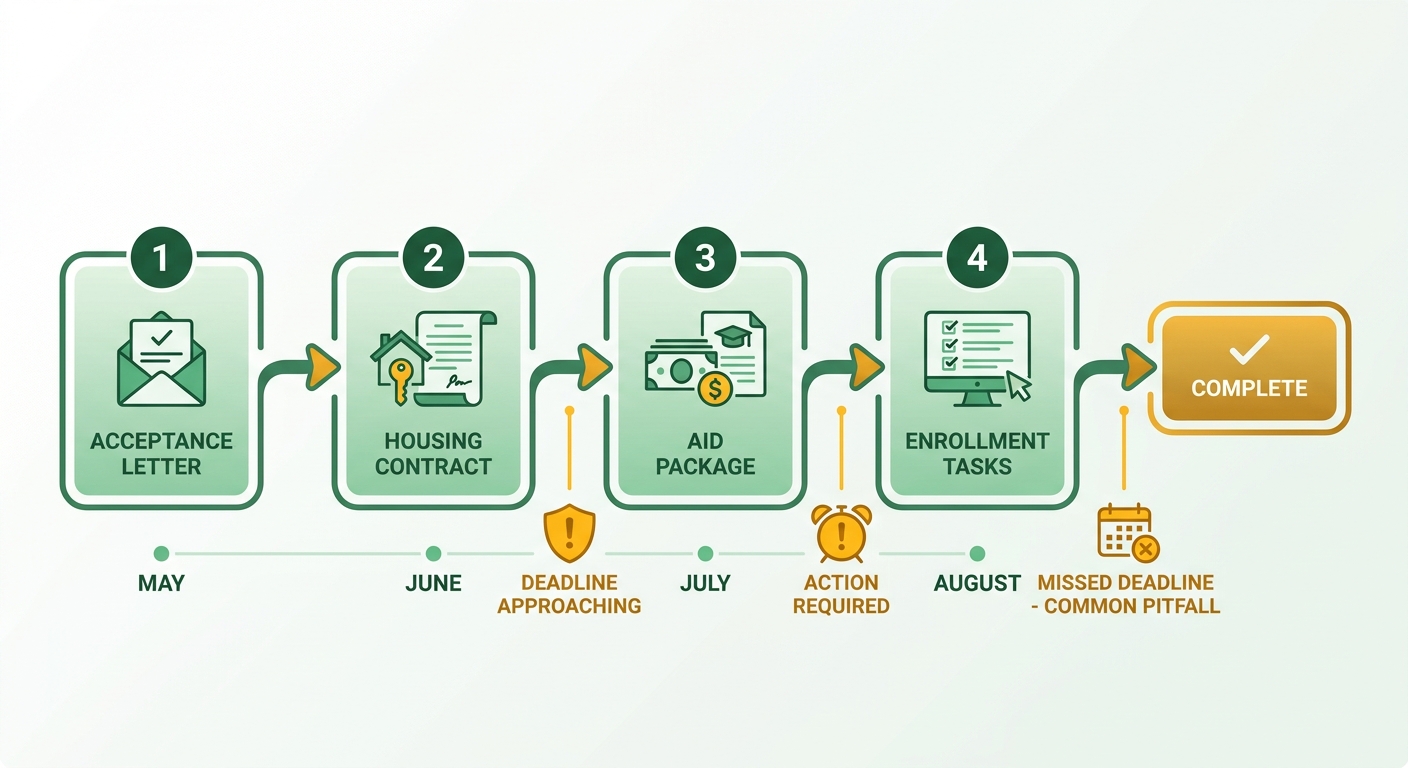
The costliest mistakes are missed deadlines
Housing contracts, meal plans, health insurance waivers, and work-study applications follow early-summer deadlines. Missing one can cost money or financial aid.
A missed housing deadline can move a student into more expensive overflow housing. That change can add thousands to annual costs. It can also consume a merit award the family worked to secure. The paperwork, rather than the admission, becomes the failure point. This can affect international students as well.
International students face additional visa and immigration filings. These documents can determine the timing of other steps. Work-study and campus research positions also fill quickly. They can affect aid packages in ways families may not anticipate. The sequence matters: confirm aid, secure housing, then pursue work-study. Doing this out of order can cost money.
Why the summer after acceptance matters
Summer is when silent attrition occurs. Light-touch support can reduce that risk. Important tasks cluster within a short period. Students who miss those deadlines may not recover lost money or placements.
Many students intend to enroll and already have the required grades and admission. They still fail to complete the steps that turn acceptance into attendance. Text-message reminders and one point of contact can reverse much of that drift. Early intervention also costs less than application-phase support. Summer check-ins can protect committed funds. This is when scholarship money is confirmed or lost.
How to survive the first month without burning out
Campus life replaces a structured high school routine with independent academic management. The first few weeks establish belonging and academic habits. Both affect long-term retention.
Before arrival, complete this checklist:
- Housing contract signed and payment confirmed
- Health insurance waiver or campus plan decided
- Tech setup and student portal access working
- Aid package locked, with any negotiated scholarship in writing
Then build essential habits early. Attend office hours during week one. Join a study group by week two. Keep the initial workload manageable. Before registering, identify core requirements and major prerequisites. This prevents spending a semester on courses that do not apply. An experienced guide can align those choices with the graduation timeline.
Ongoing mentorship: essays, interviews, and summer opportunities
The mentorship that helped students gain admission can also help protect their funding. Admission is only the first step. Keeping the aid that makes attendance possible requires continued planning. Guidance can help students manage the academic and administrative requirements attached to funding.
A steady advisory relationship supports the transition from high school to college. It carries application momentum into the first semester. Without that connection, students may face isolation and academic confusion.
How continued essay coaching protects funding
Scholarship renewals and fellowships require essays, not test scores. Most merit awards require renewal applications. External scholarships and department fellowships also require new writing each cycle. An essay coach helps students prepare polished drafts before deadlines.
Every essay receives review from at least two Endurable team members. The team works as a panel rather than one-on-one. Students receive different perspectives on fit, narrative, voice, and award strategy. The team maintains quick turnaround to help students meet department deadlines.
The potential benefit appears in financial aid. Endurable students have earned over $1 million in scholarships. Ongoing scholarship writing is one reason for that result.
The summer program selection matrix
A strong summer program should meet four criteria: fit, prestige, cost, and skill development. Prestige alone is not enough. A famous program without meaningful skill development may add little beyond a résumé line.
| Axis | Question to ask |
|---|---|
| Fit | Does it advance your stated academic direction? |
| Prestige | Will a committee recognize it without explanation? |
| Cost | Does the aid or stipend cover it, or is it a net drain? |
| Skill | Do you leave with a concrete output, such as research, a portfolio, or a publication? |
Our life-preparation phase helps students build experiences and skills before applying. The same panel approach used for college essays also applies to summer program applications. Our students have pursued significant projects. One built an Alzheimer's diagnostic that is 99% cheaper and faster than traditional methods. Another developed an affordable skin cancer prevention method. The academic record matters, but the panel-refined essay can determine the opportunity.
Why interview preparation continues after acceptance
On-campus jobs, research positions, and graduate-school applications often require interviews. Interview skills can decline without continued practice. Regular check-ins help students clarify goals and prioritize commitments. Alumni can also attend seminars such as "How to Impress in an Interview."
The stakes are concrete. A funded research assistantship can provide a stipend worth thousands per semester. The interview may be the deciding step between a qualified student and that position. Competitive summer internships present similar stakes. Structured behavioral interviews predict job performance better than unstructured conversations. Committees increasingly reward specific examples.
Intensive summer coaching may be unnecessary when a student already has a faculty mentor and funded position. Evidence for additional coaching is limited. Mentorship dollars may be more useful during renewal cycles, when essays affect aid.
Using alumni and consultant networks for the long haul
The acceptance letter opens access to a network. Admission and persistence are different challenges. Persistence often depends on relationships. Our post-acceptance model connects students with alumni and near-peer mentors because those relationships can support persistence after enrollment.
Persistence develops over the following two years. Early enthusiasm fades as academic demands increase. Students who feel connected to someone with similar experience may be more likely to return in the fall. Belonging can distinguish enrollment from completion.
How we structure the alumni community
Our growing alumni network connects students from top universities worldwide. More than 200 students around the globe participate. Mentors and former students meet regularly to exchange advice and support younger students. This community model extends beyond one senior counselor's capacity.
A single overloaded advisor may provide less contact as caseloads grow. A distributed network offers access to people with relevant majors, locations, and industries. The alumni network serves as a support layer rather than a single-advisor replacement. This allows broader contact without reducing its relevance.
What ongoing mentorship looks like
After admissions, we provide career advice, host seminars, and connect students with the Endurable community. Students can use an alumni network to support professional and life goals. Our mentors include people with experience at companies such as McKinsey and Uber. They remain engaged beyond the acceptance letter.
This relationship provides a consistent sounding board. A mentor may help a student evaluate an internship offer. The same mentor may also discuss a difficult academic period. The relationship can continue from undergraduate study into early career.
Informational interviews and network mapping
Treat networking as a tracked system. Students should record each contact, field, last touchpoint, and next step. We also establish a regular follow-up schedule.
The etiquette rules are straightforward:
- Lead with a specific ask, not "pick your brain." Ask about one decision or path.
- Keep it to 20 minutes and respect the time. Send the calendar invitation yourself.
- Follow up within 48 hours with thanks and one concrete action.
- Log every touchpoint so relationships do not go cold.
The goal is at least one meaningful alumni connection. Students with strong professional networks at home may not need this layer. Most students do not have that access. For students starting from zero, our life-planning blog explains the first outreach in detail.
Keeping momentum: check-ins, goal-tracking, and accountability
Students who check in monthly with a mentor graduate at higher rates than students who disappear after enrollment. Structured accountability supports that contact. Many services end once the deposit is paid. Regular reviews help protect aid and keep academic progress on pace.
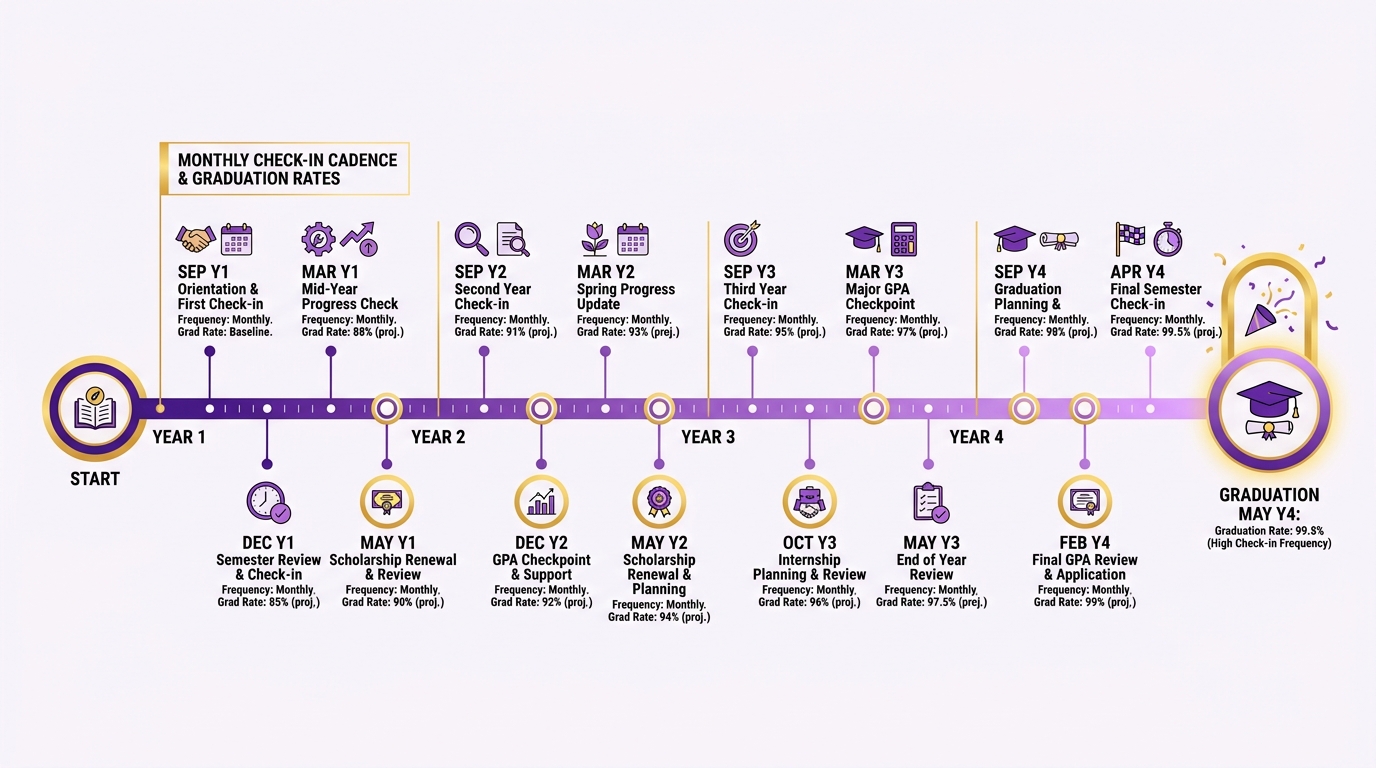
What a monthly check-in tracks
A monthly check-in reviews three areas: academic progress, financial standing, and well-being. These meetings help students manage time and competing demands. GPA affects scholarship renewal. Credit pace affects graduation timing. Well-being can indicate whether a student may leave before anyone notices.
We track these areas on a simple dashboard:
| Metric | Target | Why It Matters |
|---|---|---|
| Term GPA | Above scholarship minimum | Most merit aid renews on a GPA floor |
| Credits earned | On pace for a four-year finish | Extra semesters cost real money |
| Scholarship balance | Fully applied each term | Unused awards get clawed back |
| Skill milestones | 1 per quarter | Builds the résumé aid renewals reward |
The financial metric matters most. Falling below a merit-aid GPA floor can cost thousands. Regular contact surfaces that risk early, while course correction remains possible.
How accountability partners keep students on track
We match each student with mentors who graduated from top institutions. These advisors are tutors and role models. They understand the academic demands of elite universities. Knowing that a trusted mentor tracks progress creates accountability during difficult semesters.
Accountability also affects behavior between meetings. Students may be more likely to attend office hours or submit scholarship applications on time. Consistency, rather than intensity, drives this effect.
"Mentorship offers consistent, personalized support that can help students stay grounded through the college transition." - Monica Selagea, High School Teacher and Program Director for OneGoal
Mentorship that extends past admissions
Our support includes professional and life questions after enrollment. We help undergraduates turn academic achievements into early career opportunities. This includes guidance during the move from classroom learning to professional environments.
Working with peers and older students who share similar ambitions supports long-term growth. That environment can help undergraduates remain motivated throughout college.
Measuring the ROI of post-acceptance consulting
The return on post-acceptance consulting compares its cost with scholarship dollars, retained aid, and an on-time degree. These gains are measurable. In our experience, they exceed the fee. Focusing on the transition protects time and money already invested in the application.
Transition-month attrition can affect well-prepared students. A modest counseling investment can protect a deposit and a year of planning. It can help turn acceptance into attendance.
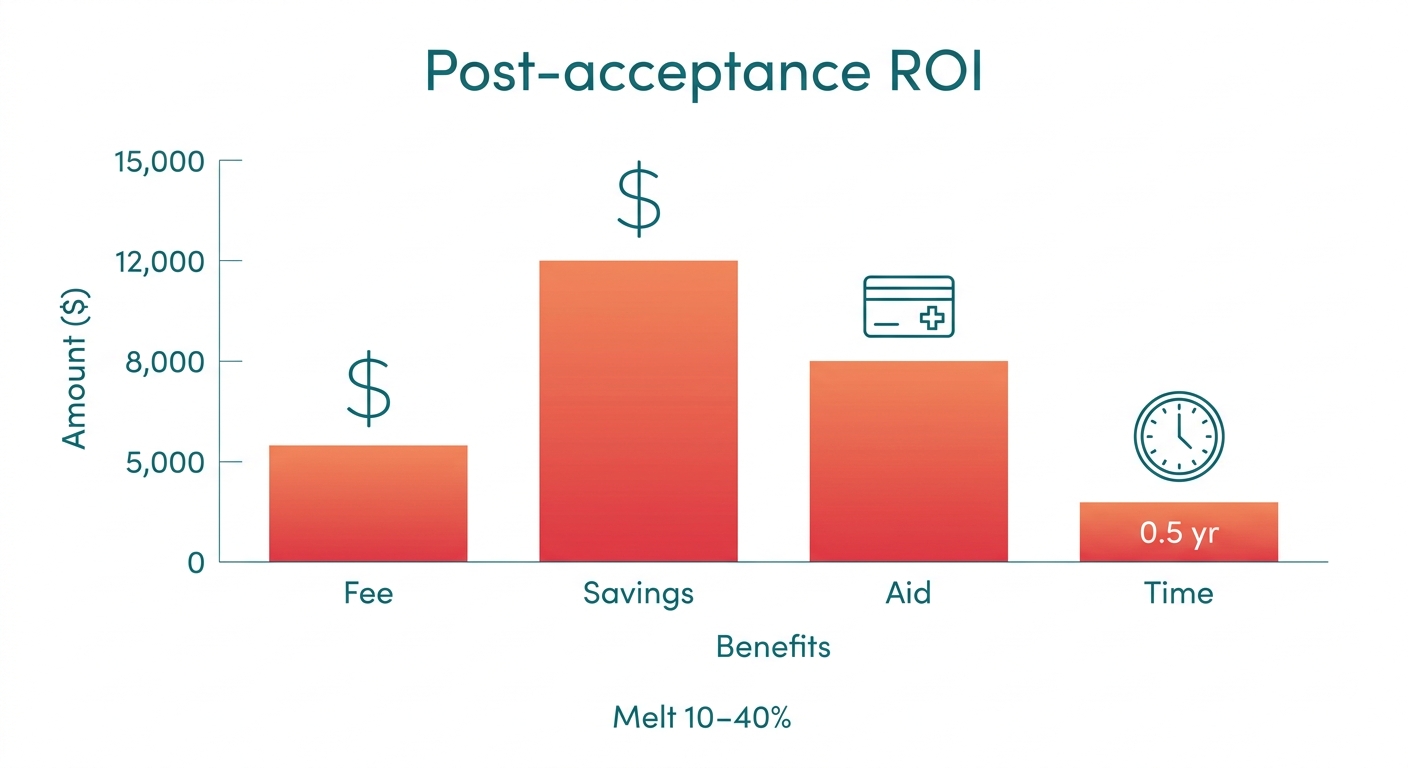
The metrics that measure post-acceptance ROI
Track four numbers: scholarship dollars locked or negotiated, summer enrollment, GPA maintained for merit-aid renewal, and on-time graduation. These outcomes help connect a consulting fee with financial gain. Admissions-rate multipliers do not measure them.
That distinction matters. Many firms market acceptance rates and top-school admission percentages. Those figures predict admission, not persistence. A student may enroll but lose a scholarship in the second year. That produces a strong admissions statistic but a weaker financial outcome.
Enrollment retention is the anchor metric. A student who leaves after one semester loses tuition already spent and aid that could have continued. One lost renewal can erase tens of thousands in projected support. Counseling that supports enrollment and eligibility protects those funds.
How families should run the cost-benefit math
Compare the consulting fee with the net financial gain. Count negotiated scholarship dollars, aid renewed across four years, and the cost of avoiding a dropped semester. If secured aid exceeds the fee, the ROI is positive before counting the degree.
A simple template works for most families. List the fee, then list each protected dollar. Include the deposit that might otherwise be lost, the merit award tied to a GPA floor, and any appeal that added grant money. One scholarship renewal may cover the full cost.
Schools benefit as well. Institutions that retain high-performing students protect their retention rates and reputation. Proactive summer outreach can therefore help both sides.
Where post-acceptance services are heading
The field is moving toward prediction. AI-driven analytics can identify students most likely to melt or miss renewal deadlines. Mentors can then intervene earlier. Research supports this direction: a near-peer mentoring program in NYC produced a 7 percentage point enrollment gain through targeted summer contact.
Our view is that consulting will become one continuous mentoring relationship. It will span acceptance through graduation rather than end at "you got in."
References
[1] College Admissions Assistance - The Princeton Review - https://www.princetonreview.com/college-admissions/college-counseling
[2] A Trickle or a Torrent? Understanding the Extent of Summer “Melt” Among... - https://www.researchgate.net/publication/260279645_A_Trickle_or_a_Torrent_Understanding_the_Extent_of_Summer_Melt_Among_College-Intending_High_School_Graduates
[3] An Experimental Study of the Effects of Post-High School Summer... - https://www.researchgate.net/publication/232835613_Stemming_the_Tide_of_Summer_Melt_An_Experimental_Study_of_the_Effects_of_Post-High_School_Summer_Intervention_on_Low-Income_Students'_College_Enrollment
[4] Does the Offer of College Counseling After High School Mitigate Summer... - https://www.researchgate.net/publication/264577286_The_Forgotten_Summer_Does_the_Offer_of_College_Counseling_After_High_School_Mitigate_Summer_Melt_Among_College-Intending_Low-Income_High_School_Graduates
[5] Intent to Persist in College Freshmen: The Role of Self-... - https://www.researchgate.net/publication/305626023_Intent_to_Persist_in_College_Freshmen_The_Role_of_Self-Efficacy_and_Mentorship
[6] The Role of Mentorship in a Successful College Transition - https://www.onegoal.org/about/blog/the-role-of-mentorship-in-a-successful-college-transition/
Frequently Asked Questions
1. When should I start post-acceptance support if I have already paid my deposit?
Start immediately after depositing. The period between graduation and enrollment is vulnerable to administrative oversights. Students must finalize aid, complete verification paperwork, and secure housing. Missing deadlines can cause lost aid or canceled enrollment.
2. Is post-acceptance counseling worth paying for if I am not low-income or first-generation?
Yes. First-generation and low-income students face the highest attrition risk. However, students from all backgrounds encounter complex administrative tasks. Housing contracts, meal plans, and health insurance waivers carry financial consequences. Professional guidance can prevent costly mistakes when these tasks are unfamiliar.
3. How do I sequence post-acceptance tasks to avoid losing money?
First, finalize the financial aid package. This confirms that funding is secure. Next, arrange housing to avoid expensive overflow rates. Finally, apply for campus employment and work-study positions. These fill quickly. International students should secure visa documentation first because it controls subsequent timelines.
4. Does keeping an essay coach after acceptance pay off?
Many students do not realize that merit scholarships and departmental fellowships require ongoing writing. Renewal applications and fellowship proposals must be polished and submitted early. An essay coach can help protect funding throughout college.
5. How often should I meet with a mentor after enrolling?
A monthly schedule is ideal. Regular, brief check-ins support accountability better than occasional intensive meetings. Sessions should review academic performance, credit accumulation, graduation progress, and personal or social challenges.
6. What separates a strong summer program from a résumé filler?
Choose programs with hands-on skill development and tangible outputs. Examples include research papers, portfolio projects, and formal publications. Avoid programs based only on prestige. The best opportunities align with long-term academic goals and offer a clear return on investment.
7. How does an alumni network help more than one dedicated counselor?
A broad network provides specialized expertise that one advisor cannot match. Near-peer mentors can discuss specific majors, campus cultures, and career paths. This model gives students practical advice for different situations.