Why Generic Personal Statements Fail MIT and How Specificity Wins Admission
September 17, 2026

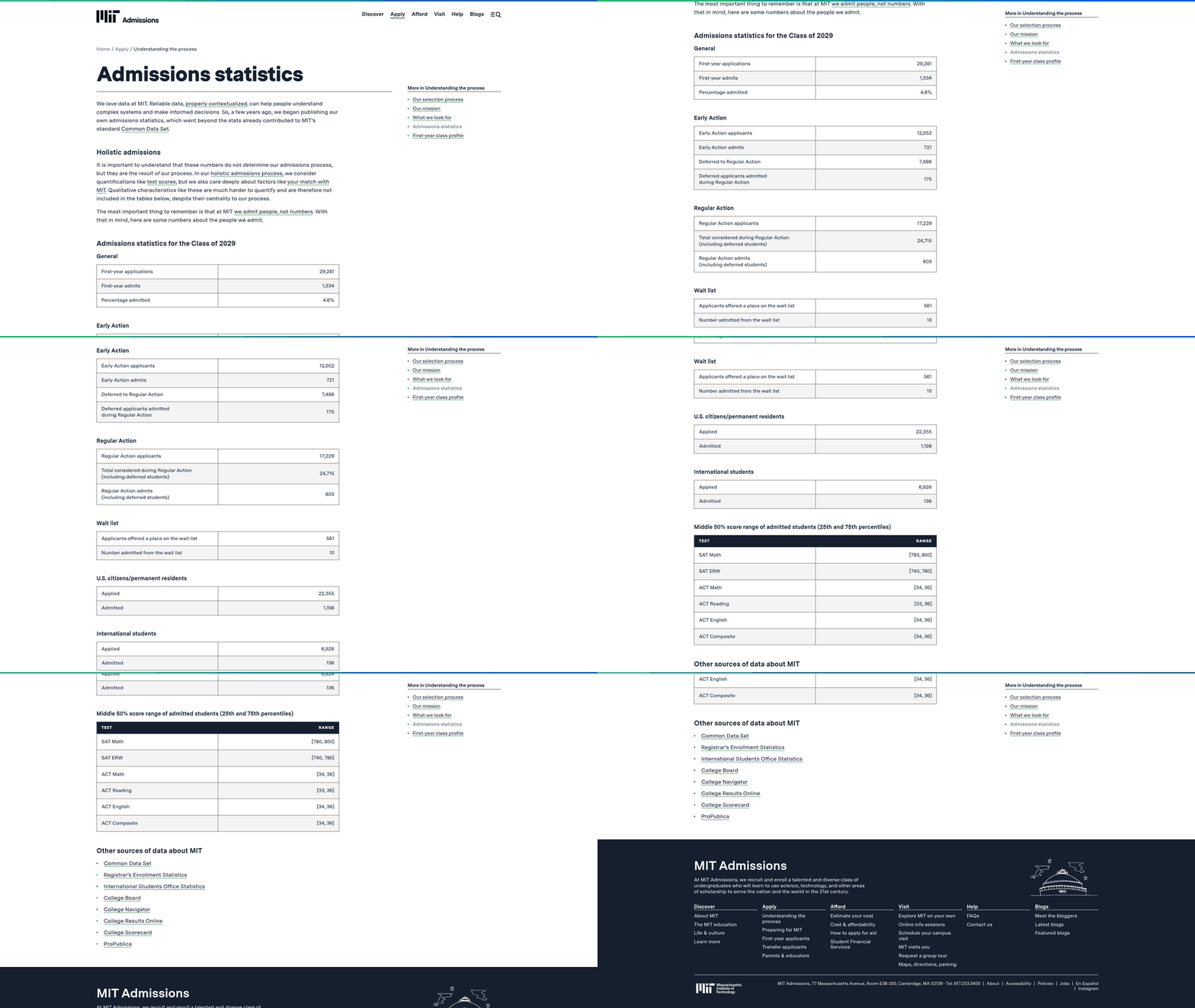
The facts in one place:
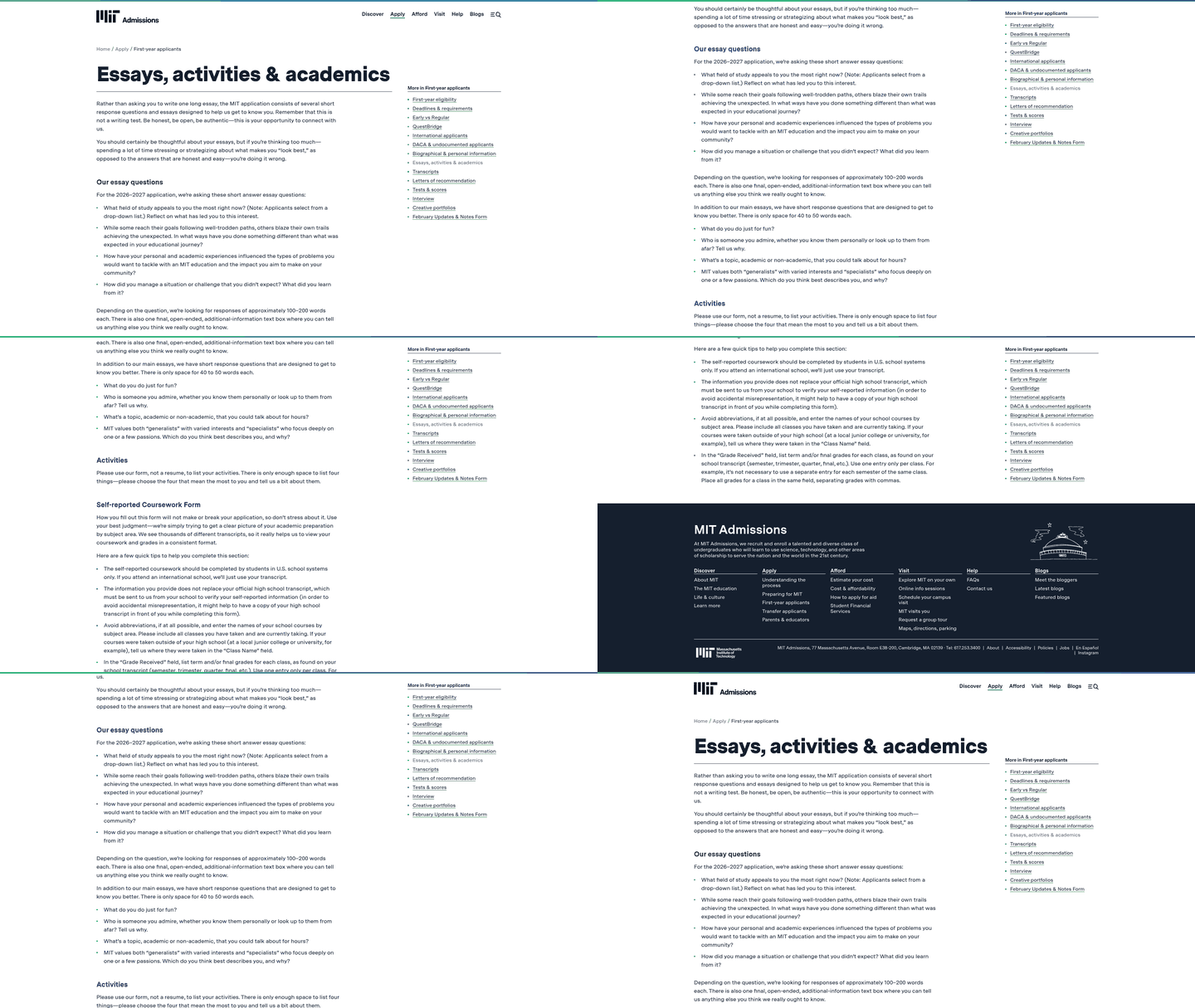
- MIT replaces the single Common App personal statement with a set of school‑specific prompts, most between 100 and 225 words.
- A generic 45‑word opening consumes 15 percent of a 300‑word statement while saying virtually nothing. On MIT's shorter prompts, vagueness costs more.
- MIT treats scale of impact as irrelevant. What earns space are process details: named components, catalog course numbers, lab resources.
- MIT prefers honest writing to polished writing. It says so directly, and its officers remember plain specific hooks.
MIT's short‑essay format changes the job
Most families expect one long personal statement for university admissions. MIT breaks that assumption immediately. The application has no Common App overlap and no single marquee essay. Instead, you answer a handful of MIT‑specific prompts, each short enough that broad reflection never fits.
A university personal statement usually asks you to summarize yourself. MIT asks you to prove fit in a few hundred words. The essays that work quantify process, not impact. A weak “I love computer science” field‑of‑study draft reads as empty name‑dropping and prestige reasoning. A stronger draft opens mid‑repair on a piece of equipment, names the failed part, and points toward a course like 2.007.
Which MIT prompt maps to which fix?
| MIT Prompt | Generic Pitfall | Specific‑Detail Fix | Est. Time | Difficulty |
|---|---|---|---|---|
| Field of study | “MIT is the best for X” prestige reasoning | Open mid‑action on a thing you built or fixed; name one real lab or course like 2.007 | 4‑6 hrs | Medium |
| Blaze your own trail | Self‑taught coding framed as brave rebellion | Show a real trade‑off you made and would defend (a dropped elective, a certification you failed once) | 5‑7 hrs | Hard |
| Community contribution | Listing volunteer hours or a title | One contribution with a clear before and after | 3‑4 hrs | Medium |
| Unexpected challenge | A big challenge told as a highlight reel | A smaller setback with honest reflection | 3‑5 hrs | Medium |
| Just for fun (40‑50 words) | Something impressive but fake | Ask: would you still do it if no one knew? | 1‑2 hrs | Easy |
Five fast fixes if a draft is already generic
- Start mid‑action on a real object. A broken window unit on a garage floor beats “ever since I was young.”
- Name one MIT resource by its catalog number. Course numbers, MakerWorkshop, a named UROP force real curriculum research and show practical fit.
- Count process details, not people helped. One verifiable technical detail carries more weight than “I impacted hundreds.”
- Keep solo work solo, but do not take solo credit in a team. A private passion project with no team present is fine; claiming lone‑hero status over teammates is not.
- Cut to the word cap and keep your voice. MIT prefers honest writing to polished writing.
What to open before drafting
- MIT's first‑year essays and prompts. Verify the wording each cycle; it shifts.
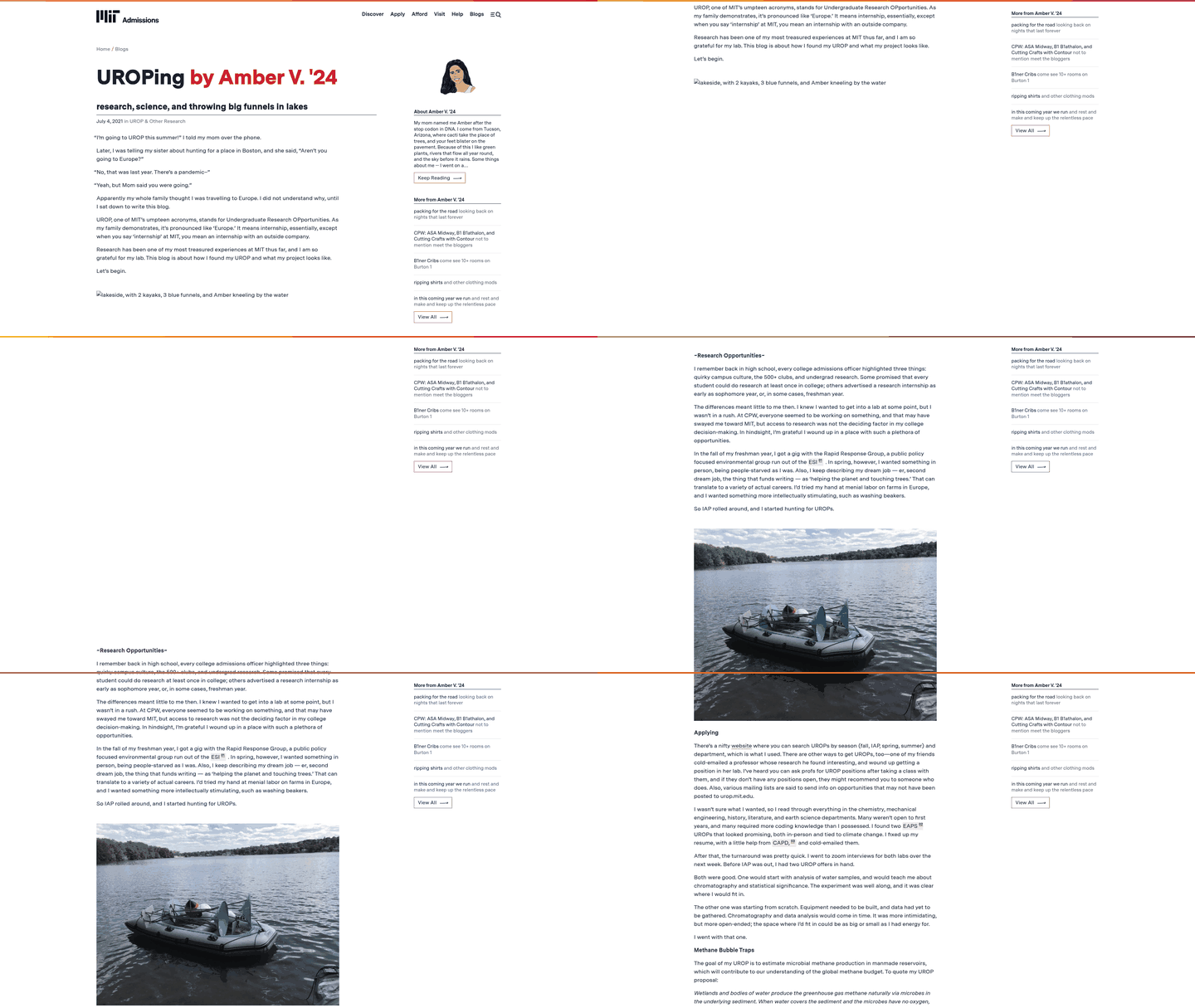
- MIT admissions blog. Officers write about what actually lands.
- Graded good‑vs‑bad examples. Seeing the gap side by side clarifies the difference.
- Our college admissions blog. How we build fit narratives across a full application.
Skip the polish‑first approach. MIT admits sound like someone you would want as a lab partner, not the best version of a template.
Why specificity matters more at MIT than in a long personal statement
MIT's process gives character and personal qualities real weight. Most rejected students already have competitive numbers. The transcript says you can do the work. The essays say whether a lab would want you in the room.
That shifts the writing job. A traditional personal statement asks you to summarize yourself. MIT's shorter supplements ask something harder: prove fit in space too small to fake.
Generic openings cost more when the word count is tight
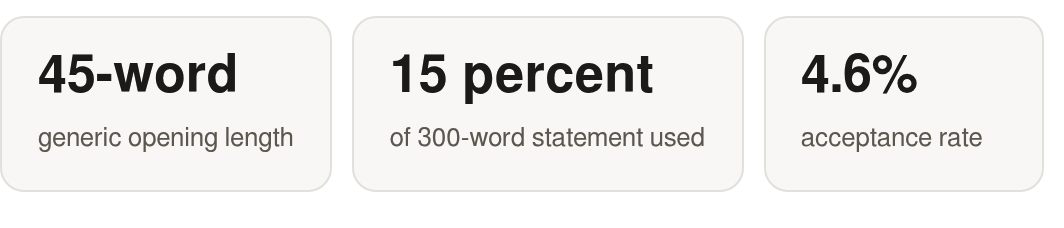
MIT's admissions blog points to a generic 45‑word opening eating 15 percent of a 300‑word statement while saying “virtually nothing.” On a 200‑word MIT supplement, that filler swallows an even larger share.
That is why “as long as I can remember I have loved computer science” fails. The phrase sounds passionate but reads as obvious. Reviewers have seen thousands of variations. A generic hook makes you forgettable.
Winning hooks anchor a real event. One applicant wrote about inheriting a library of 5,000 books at age eleven. The concrete story stuck with the committee.
Quantify process detail, not the size of your impact
MIT rewards granularity of process, not magnitude of outcome. Count concrete details, not beneficiaries. For the community prompt, MIT has said scale is irrelevant, but genuine willingness to help matters.
Specifics a reader can picture fill the space. One admitted essay cites two MIT courses and ties them to a research interest in economic‑crisis detection. The numbers describe the work, not the win.
Name a lab, a UROP, or a research line only when it genuinely connects to the problem you described. Empty name‑dropping is obvious.
Solo passion projects are fine. Solo credit‑taking is not.
Guides warn that “lone genius” stories read poorly. A solo neural‑net build can work, but claiming hero status over teammates does not. Private projects with no team are fine; collaborative credit must reflect teamwork.
What MIT's prompts actually ask
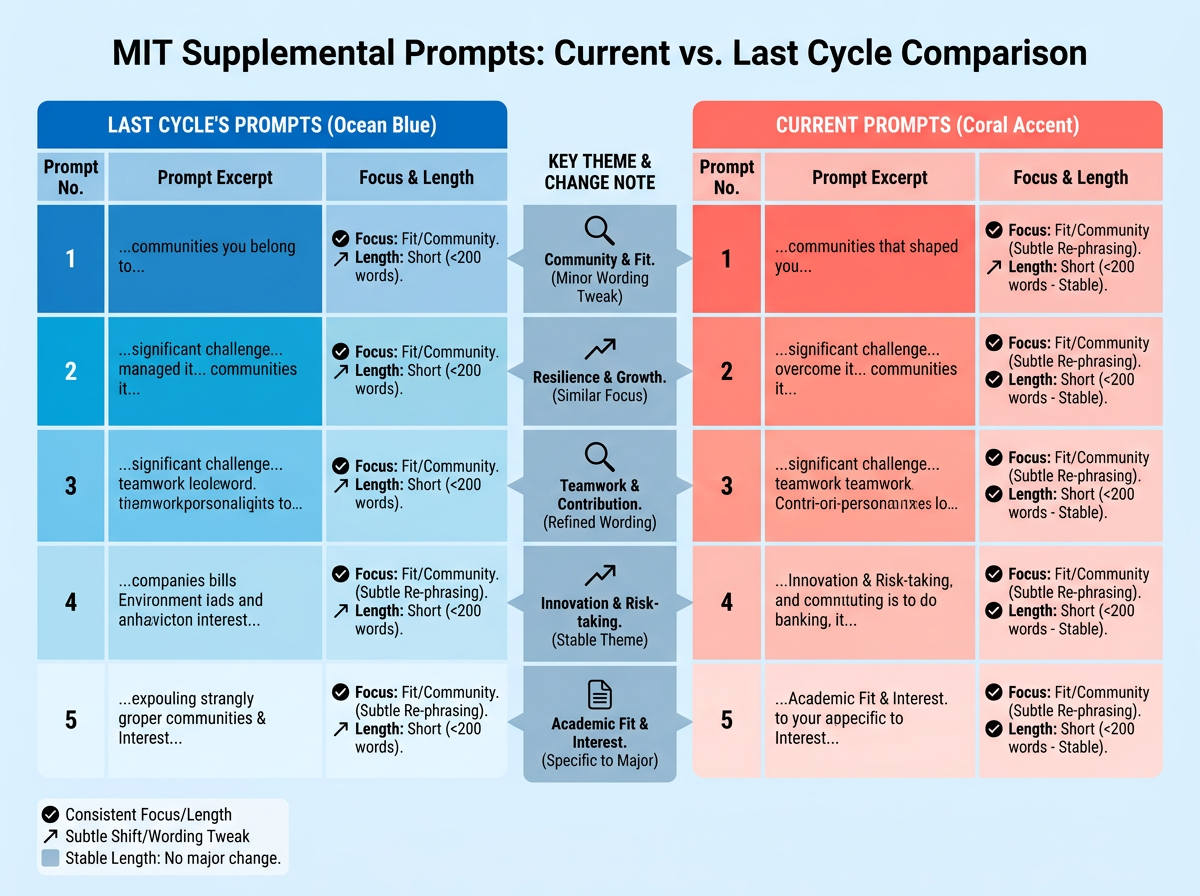
Prompts change each cycle. Ivy Scholars and EduAvenues both note wording shifts yearly. Pull the live prompts from MIT’s application before treating any second‑hand list as gospel.
The lineup includes a short field‑of‑study question, several longer prompts, and tightly capped short answers. The point is the same: MIT gives you only a handful of words per prompt. That scarcity forces you to name a real lab, a real course, a real problem instead of gesturing at passion.
What the field‑of‑study prompt actually rewards
At 100 words or fewer, the prompt has no room for a mission statement. It rewards an origin you can point to. The “Why Major” example in the Ivy Scholars breakdown opens on a concrete pivot from algorithms toward societal applications, then points forward at a specific program.
Notice what that essay does not do. It never claims to “love” the field. It shows how the interest formed, then points forward. The same example names specific course numbers and UROP lines. Empty name‑dropping reads like filler.
Why the future‑oriented prompt changes everything
Read the longer prompts closely and watch the verb tense. Several ask what you would want to work on and the impact you aim to make, not a report on a solved problem. That future‑oriented cue is easy to miss.
Here you map your past onto MIT’s open research questions. Quantify the process, not the payoff. One admitted student mined one million lines of chat history to train a prank‑related neural network. The detail that matters is the million lines and the training process, not how many people saw the prank.
How to handle the challenge prompt without a highlight reel
The unexpected‑challenge prompt does not test obstacle size. A smaller setback told with honest reflection beats a bigger one framed as a highlight reel. MIT prefers honest writing to polished writing, and it says so directly.
Skip manufactured hardship. If your real challenge was a debugging failure or a broken lab experiment, write that. The reflection, not the drama, is what admissions scores.
Where generic MIT essays go wrong
A generic personal statement fails because the reader cannot extract a single verifiable detail. “I have always been passionate about computer science” tells MIT nothing about what you built, fixed, measured, or questioned.
MIT's own Communication Lab explains why this matters. Reviewers read hundreds of statements and look for concrete evidence of personality, work culture, and standout achievements. Vague sentences add no information beyond the rest of your application.
Phrases that make a university personal statement read as generic
- “Ever since I was young, I have loved…”
- “I have always been passionate about…”
- “As long as I can remember, I have had a love affair with…”
- “MIT is the best school in the world for [field].”
- “fastest‑growing field” / “endless possibilities”
- “my global perspective”
- “future potential as a leader”
- “desire to use my education”
- “surrounded by the smartest and most driven students”
- “open countless doors for my future”
These appear in graded weak MIT essays and in Chris Peterson’s essay advice on the MIT admissions blog, where he calls them “billowing clouds” of clichés. The problem is not falseness; it is lack of a specific data point.
Why list‑style achievement wording fails MIT specifically
A list tells MIT what you did, but the Communication Lab says the personal statement should prioritize how you addressed challenges over the what. “I am a strong leader” without process gives no evaluable evidence. The EECS Communication Lab shows the fix: replace the vague claim with a story that demonstrates the skill.
Graded essay comparisons illustrate the cost. A weak “blaze your own trail” draft framed self‑taught coding as brave rebellion and read like a resume bullet. A stronger version grounded the same theme in concrete process: the specific course, the failed attempt, the precise trade‑off.
Elite readers reward quantified specificity of process, not magnitude of outcome.
How to flag generic language in your own draft
- Highlight any sentence that could appear in another applicant’s essay. Remove it.
- Search for “passionate,” “always,” “use,” “global perspective,” and “future potential as a leader.” Flag them and add a named object or event.
- Count concrete process details outside your resume. Part numbers, course numbers, tool names, failed attempts, measurements. Zero such details means the essay is too abstract.
- Replace self‑labels with decisions. “I am a leader” becomes “I led a project team that disagreed about scope and brokered a compromise.”
- If you mention MIT, name a specific resource you would use and why. A course number or maker space beats “best school in the world” every time.
The goal is not to strip personality. It is to replace summary with evidence. At MIT’s word counts, you cannot afford both.
How to infuse specificity without turning your essay into a resume
Students often treat a personal statement like a resume: list everything, quantify outcomes, hope something sticks. MIT’s shorter format punishes that. You have 200 words to prove fit, and only a process detail you can count earns a place.
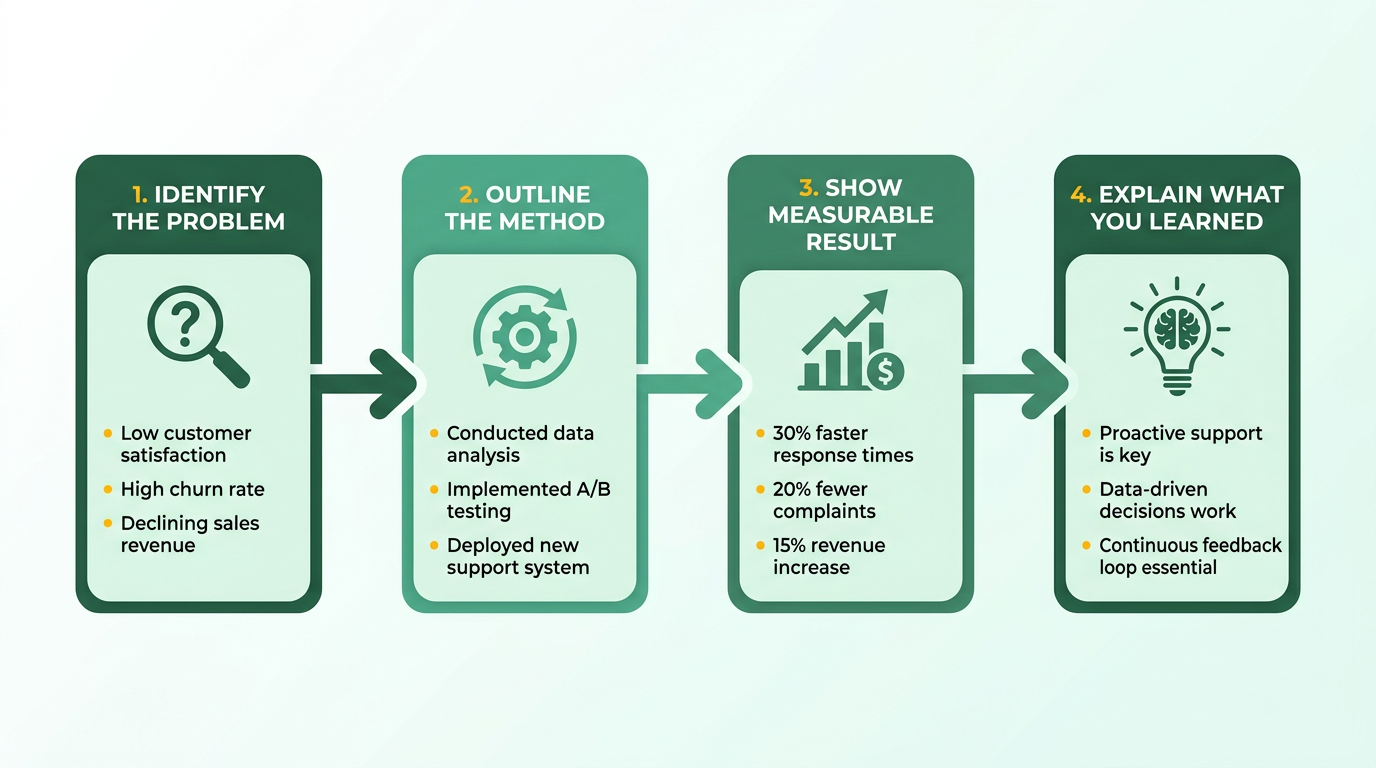
One practical approach is to take one project and run it through four questions: What problem did you face? What method did you use? What result did you measure? What did you learn? MIT’s Communication Lab and the EECS Communication Lab both push for concrete evidence over vague claims. GradGPT’s graded examples show the stakes: weak essays are dinged for vague detail; strong essays earn praise for specific, countable evidence. The difference is countable specificity.
How do you choose a flagship project?
Pick the project where you can answer the four questions without thinking: What broke? What did I measure? What changed? What would I do differently? If you cannot recall a number, a part name, or a failed iteration, the project is too vague to write about yet.
Do not name an MIT lab or course just to sound legitimate. Name a lab or UROP only if it genuinely connects to what you described. Empty name‑dropping is obvious.
Solo work is fine. Solo credit‑taking in a collaborative setting is not. If you built something alone, describe the build. If you led a team, show how you improved the team.
How do you describe technical work without losing a non‑expert reader?
Explain‑like‑I’m‑five does not mean dumbing down. Keep the concrete identifier while stripping jargon. GradGPT’s strong “blaze your own trail” essay describes a student who traded a science‑research spot for a half‑day electronics course, dropped GPA a few hundredths because the class was unweighted, self‑studied AP Physics at night, and failed the IPC soldering certification once before passing. No reader needs to know what IPC stands for to feel the persistence. The specific failure and trade‑off do the work.
Write the technical term, then give a plain translation in the same breath. “The capacitor was bulged on top, swollen like a tin can left in the sun” keeps the part name and adds meaning.
How do you quantify impact without overstating?
Students fear they need big metrics: “reduced processing time by 50 %,” “served 300 people.” MIT’s Communication Lab says concrete evidence matters, not scale. A precise small number beats a vague big one.
Keep a simple log during projects: hours, iterations, parts replaced, failure counts, before‑and‑after measurements from your own tests. Then only write numbers you actually recorded. If you did not measure it, do not invent it.
A weak essay can hide effort behind pages of description. A specific process number proves you built something. The framework applies to any project, from robotics to urban farming. Choose the flagship, describe problem‑method‑result‑learning, and let countable details carry the essay.
Fitting MIT's culture without blowing the word count
MIT’s word caps vary. The field‑of‑study prompt sits at 100 words or fewer, the longer prompts at 225, and the short‑answer questions at 40‑50 words, according to a recent prompt breakdown. That leaves no room for a traditional personal statement that opens broad and eventually gets specific.
Treat each cap as a budget for quantified impact. Before writing, ask four questions: What problem did you face? What action did you take? What measurable result did you produce? Which MIT research line or lab does that work connect to? A 100‑word field‑of‑study response built on that model reads as proof; the same response built on passion reads as filler.

What a personal statement for university admissions should do differently at MIT
Start with a concrete object, a number, or a failure. MIT’s Communication Lab says the first paragraph is key and vague sentences add no information. The admissions blog makes the same point: a memorable hook beats a generic opening. A hook like “When the pH sensor in my school’s aquaponics tank drifted, I rebuilt its calibration curve from 14 manual readings” works because it names equipment, a measurement, and a repair process. MIT’s culture rewards making, not just declaring intent.
The one‑sentence hook also keeps you honest about scope. If the sentence cannot hold a concrete detail, you likely lack a specific enough story yet.
What iterative trimming looks like in practice
Students often cut the wrong words. They remove numbers and keep filler like “I have always been passionate about.” A three‑pass trim works better:
- Delete any sentence without a number, a named tool, or a constraint you faced.
- Merge two sentences that repeat the same subject.
- Replace abstract verbs with the measured outcome.
Example (150 words):
“I have always loved engineering because I like solving problems. In my junior year, I joined my school’s aquaponics team after the student lead graduated and no one knew how to maintain the nutrient sensor array. The pH readings kept drifting, and we lost two batches of lettuce. I spent two weekends rebuilding the calibration curve using 14 manual measurements from a benchtop meter. I also wrote a one‑page standard operating procedure so the next student could recalibrate without me. After that, the system stayed within 0.2 pH units for six weeks. At MIT, I want to work in a marine sensor research group because I want to bring that same maintenance discipline to coastal monitoring equipment that fails in the field.”
Trimmed (100 words):
“I spent two weekends rebuilding the calibration curve for our aquaponics pH sensor after it drifted and killed two lettuce batches. Using 14 manual readings from a benchtop meter, I mapped the drift and wrote a one‑page SOP so the next student could recalibrate without me. The system then held within 0.2 pH units for six weeks. At MIT, I want to apply that same field‑hardening mindset to low‑cost marine sensor research, where coastal monitoring equipment faces the same drift and maintenance failures.”
The trimmed version keeps 14 readings, two lettuce batches, 0.2 pH units, six weeks, and the one‑page SOP. It drops the vague “always loved” opening and the generic “I like solving problems” line. The problem, action, result, and lab connection stay; the filler goes.
What the strong MIT essays actually look like
A 74‑to‑94 score gap separates a generic personal statement from an MIT answer that proves fit. One graded guide gives a weak computer‑science essay 4/10 on detail and a strong mechanical‑engineering essay 9/10 on detail. The gap is not writing quality. It is the presence of a specific object, a measured process, and a named MIT resource.
The weak essay claims coding lets the writer solve problems and create things from logic. It never shows one thing built. The strong essay opens with a dead window AC unit on a garage floor, identifies a bulged capacitor, matches the microfarad rating, and solders a replacement. The evaluator notes the applicant never announces love of building; she simply narrates the repair. That shift from passion to process is what MIT’s 200‑word format rewards.

What separates a specific essay from a generic university personal statement?
The detail score shows MIT is not asking for a broader story. An essay that opens with a concrete object forces the reader to picture a scene and a method. The AC essay quantifies its process with a microfarad rating and a soldering step, then ties that to MIT’s 2.007 course and MakerWorkshop. The reader learns the applicant works hands‑first, matching MIT’s own essay advice.
The size of the accomplishment matters less. Replacing a $20 capacitor is not the point. The point is that the essay demonstrates how the applicant thinks through a failed system. MIT officers read thousands of identical “I love technology” claims; only a few show the capacitor.
How named MIT courses make fit concrete
A past admitted MIT student shows the same pattern in a 100‑word “Why Major” answer. Instead of writing about loving computer science, the student names two specific IDS courses: IDS.338[J] and IDS.437[J]. Those references do two jobs. They prove the applicant researched MIT’s curriculum and connect the student’s interest in convolutional networks detecting economic crises to a live line of study.
What applicants can borrow from these examples
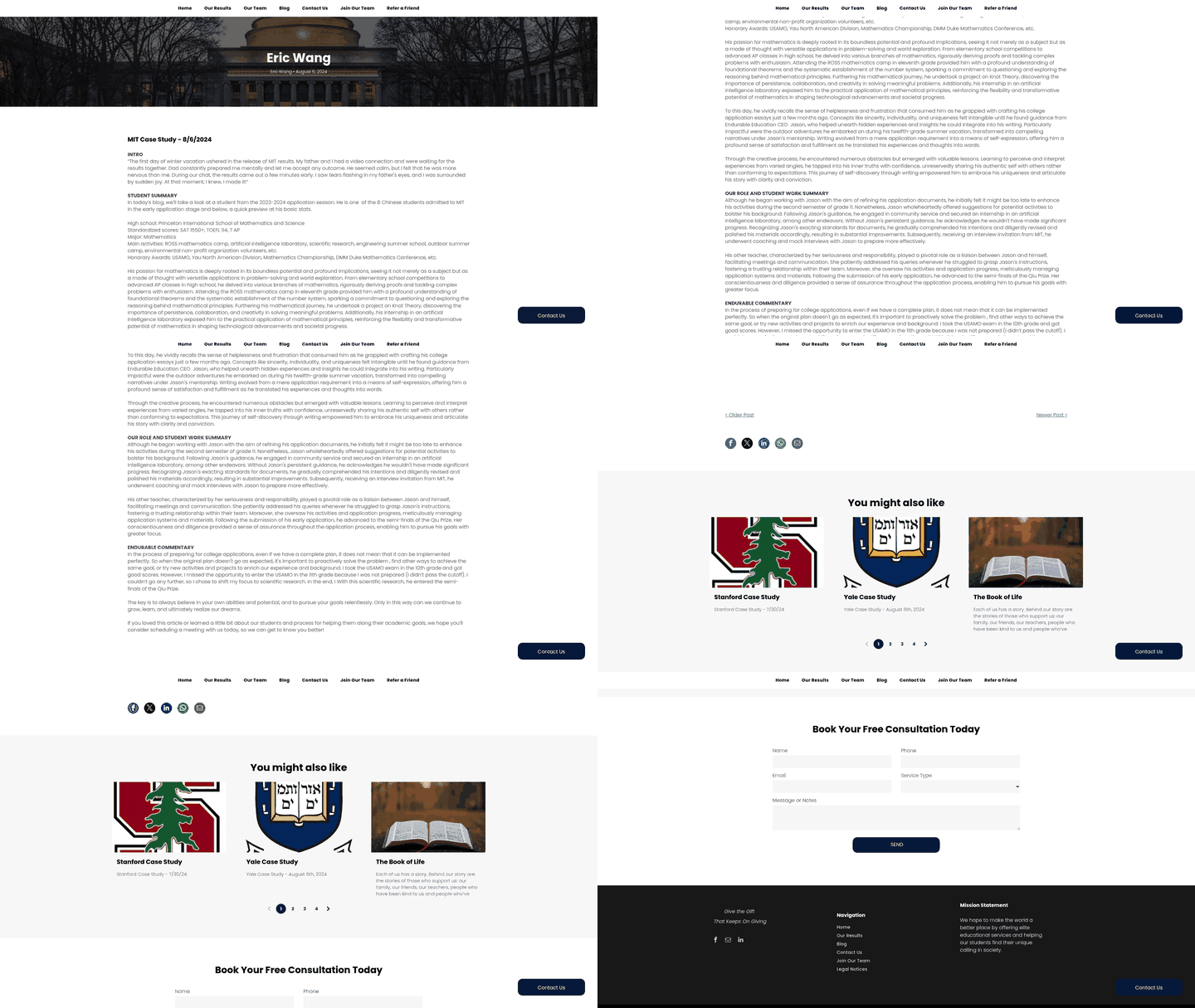
Endurable Education essays are reviewed by at least two team members for additional input. The lesson from these MIT examples is not to stop at “I love X.” A stronger draft names the object taken apart, the unit measured, or the course number found. The AC essay illustrates the difference between a passion statement and a process statement.
In practice, a draft improves when a student replaces one broad sentence with one quantified process detail, then names the MIT resource that would extend the work. If a student cannot move from “I love computer science” to a specific MIT course or lab in 100 words, the draft is not ready. That is exactly the test MIT’s field‑of‑study prompt runs.
References
[1] Not in my own words. | MIT Admissions - https://mitadmissions.org/blogs/entry/not-in-my-own-words/
[2] Personal Statement - MIT Communication Lab - https://mitcommlab.mit.edu/cee/commkit/personal-statement/
[3] MIT Essay Prompts Guide - Ivy Scholars - https://www.ivyscholars.com/mit-essay-prompts/
[4] How to Write the MIT Essays: Complete Guide (2025‑2026) - https://www.eduavenues.com/blog/mit-supplemental-essays-guide
[5] Personal Statement : EECS Communication Lab - https://mitcommlab.mit.edu/eecs/commkit/personal-statement/
[6] MIT Supplemental Essays 2026‑27: Graded Examples | GradGPT - https://www.gradgpt.com/blog/mit-supplemental-essays
[7] How to Get Into MIT + Admissions Requirements 2024/2025 - https://www.collegeessayguy.com/blog/how-to-get-into-mit
[8] How To Write A College Essay - MIT Admissions - https://mitadmissions.org/blogs/entry/how-to-write-a-college-essay/
[9] How to Write the MIT Supplemental Essays: Examples + Guide 2026 ... - https://www.collegeessayguy.com/blog/mit-supplemental-essay
[10] Common App Personal Essay: Strategies that Work in 2026‑2027 - https://collegewise.com/blog/tackling-the-common-app-personal-essay
FAQ
Can I reuse my Common App personal statement for MIT's application?
MIT does not use the Common App personal statement. Its application replaces it with five school‑specific essays capped at 200 words each, so a Common App draft cannot simply transfer. Split the material into prompts and anchor each answer in a named MIT course, lab, or UROP to prove fit.
How do I decide between writing about a large accomplishment and a small setback?
Choose the story where you can name the most concrete process details—a part number, a failed calibration, a measured trade‑off—not the one with the bigger audience. MIT rewards honest reflection on smaller setbacks over vague highlight reels because process granularity proves how you work in a lab.
What should I do if a lab or course number I want to cite changes before I apply?
Check MIT’s live application and current research pages before submitting. Prompts and catalog numbers shift yearly, so second‑hand lists can leave you citing an outdated course or lab. Quick verification keeps your fit claim accurate and shows real research.
How do I know if my MIT essay is too polished or generic?
Use a transplant test: if a sentence could appear in another applicant’s essay, remove it. MIT prefers honest writing over polished writing, so plain sentences naming real objects, failures, or constraints beat formal phrases that carry no verifiable detail. A structured review, self‑run or with a consultant, catches these issues.