5 Signs You Don't Need a College Admissions Consultant
October 30, 2026

The numbers behind this decision
- Private admissions counseling typically runs at high hourly rates. Comprehensive packages can climb to several thousand dollars.
- The average senior gets limited time a year with a school counselor.
- Public schools often have large counselor caseloads nationally.
- Holistic review weighs grades, coursework, activities, essays, and recommendations together. Applications whose choices already point in one direction tend to read stronger.
- EduAvenues, a consulting firm, says a strained parent-student relationship is among the most common reasons families reach out.
Run the numbers before that first consultant call
Your junior has a spreadsheet of twelve colleges and an intro call booked for Thursday. Before Thursday, do some math using this guide to hiring admissions consultants.
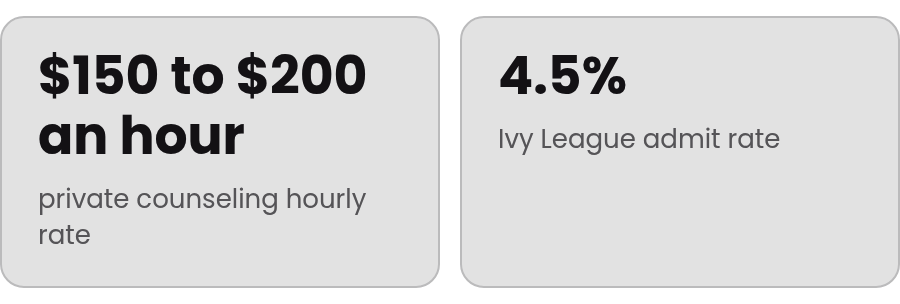
Our recommendation is simple. That money only makes sense if a college admissions consultant fills a gap your family genuinely can't fill. If your student is aiming mostly at schools that admit more than half their applicants, doing it yourselves tends to work, and one consulting firm says so openly. The calculation changes at the top. With the Ivy League averaging roughly 4.5% for the Class of 2028, as one test-prep provider reports, a flat essay or a lopsided list costs a lot more.
Access is the second lever. Limited counselor time can leave a large gap. If your school can't offer real one-on-one time, someone still has to do that work.
Staffing doesn't settle it, though. Plenty of families with good counselors still call a consultant because every college conversation at home turns into a standoff. A well-staffed school only rules out outside help if someone at home can enforce deadlines calmly.
How do you rate your family's need?
Score each factor Low, Medium, or High. Mostly Low means you can likely skip paid help and put that money toward something else. Any High, especially on selectivity, deserves a closer look before applications open.
- Target selectivity: mostly above 50% admit (Low), mixed list (Medium), single-digit admit rates (High).
- Counselor access: near the 250:1 benchmark (Low), near the 430:1 national average (Medium), above 500:1 (High).
- Home dynamic: calm (Low), occasional friction (Medium), every college talk becomes an argument (High).
- Student readiness: organized and a strong writer (Low), needs nudges (Medium), stalled (High).
If your scores land mostly Low, trust that. If a few come back Medium or High, an initial consultation can help you see where your student actually stands and what support, if any, would help.
Sign 2: Your student's story already hangs together
Ask your senior one question. Why this subject, and why now? If the answer takes two sentences and matches the transcript, you probably don't need a college admissions consultant to find the story. There already is one.
Two terms are worth defining. Holistic review means admissions readers look at grades, courses, activities, essays, and recommendations together to understand the person behind them. Supplemental essays, or supplements, are the shorter school-specific prompts colleges add on top of the main personal statement. Both reward choices that already point somewhere.
Run this checklist on your own before talking to anyone. It's a gut check, not a scoring formula:
- Your courses follow your interests, not an AP count picked because it "looks good."
- Your activities show depth: something you stayed with and grew in.
- You can name an interest you dropped and explain why.
- A teacher would describe you the way your essay does.
- You can draft a "why us" supplement without faking enthusiasm.
All five check out? Outside help tends to add polish, not direction, and late help especially becomes editing rather than story-building. If two or more feel shaky, that gap is real. Even then, a teacher, your counselor, or a limited outside review may close it without a full package.
Sign 3: Your school counselor actually has time for you
Your daughter's counselor knows her by name, answers email within a day, and has already suggested two colleges she'd never heard of. That relationship is an asset. For some families, it's the reason a college admissions consultant isn't worth the cost.
Still, test it. Ask what the counselor can realistically provide during application season. With large counselor caseloads, availability swings widely from one building to the next. If your counselor can offer regular meetings, school-specific guidance, and an informed recommendation letter, in-house support may be enough. As one consulting firm puts it, "The counselor is not the problem. The math is."
Five questions to ask your counselor
- How many students are on your caseload, and how much one-on-one time can my child expect this year?
- Which colleges have admitted students from our school with a similar profile?
- What do you need from us to write a strong recommendation?
- Which teacher or mentor could give honest feedback on an essay draft?
- When should we schedule our first real planning meeting?
Vague answers, or a caseload in the high hundreds, mean this sign doesn't apply to you. Specific answers and a workable process mean you should keep the application centered on that relationship.
A simple calendar that keeps you ahead
- Junior fall: Meet the counseling office. Many students wait until winter of junior year, and that's time you don't get back.
- Junior spring: Review the transcript in context and settle on a testing plan.
- Summer before senior year: Draft essays and narrow the list.
- Senior fall: Submit. Consultant Megan Stiphany argues that senior fall should be execution, not strategy-building. We agree.
Sign 4: You can cover the cost, the hours, and the referee role yourselves
Your son's supplements are drafted on schedule. Sunday afternoons are blocked for revisions, and nobody at dinner is arguing about deadlines. That calm has a dollar value. Set the hourly rates above against what a consultant would actually take off your plate, and the decision often gets clearer: ten hours of expert support—the amount Avery linked to measurable effects—costs $1,500–$2,000.
Be clear-eyed about what paid help reliably delivers. Research summarized in the consultant hiring guide found the main gains were a smoother process and less stress, and parents named efficiency as the benefit. The admission figures firms publish about their own students tend to be self-reported, with no baseline to compare against. We treat better odds as unproven. Saved time is the documented return.
Time is the real price of doing it yourself
So the question shifts. It's less "does consulting work?" and more "can we handle the research and coordination ourselves?" Keeping up with school-by-school differences and yearly policy changes is "genuinely a part-time job," as one consulting firm describes it. If a parent has that bandwidth and actually enjoys the research, the money can stay in your account.
Count the relational cost too. When a parent runs the process, the student can feel micromanaged and the parent can feel ignored. A consultant comes in as a neutral third party the student chose to work with, and that shift alone can ease the tension.
If your family can cover the research, the scheduling, and that neutral role without straining the budget or your relationship with your teen, skip the package. If one of those roles keeps slipping, these four signals can help you weigh the decision.
Sign 5: Your list has straightforward requirements, even if you're applying early
Your daughter wants to apply early to her top choice and asks whether that makes everything simpler. Not automatically. Early decision is binding: you apply by an early deadline, and if admitted, you commit to enroll. Single-choice early action—the Harvard early-action screenshot below is one example—gives you an early answer without that commitment, but it limits where else you can apply early.
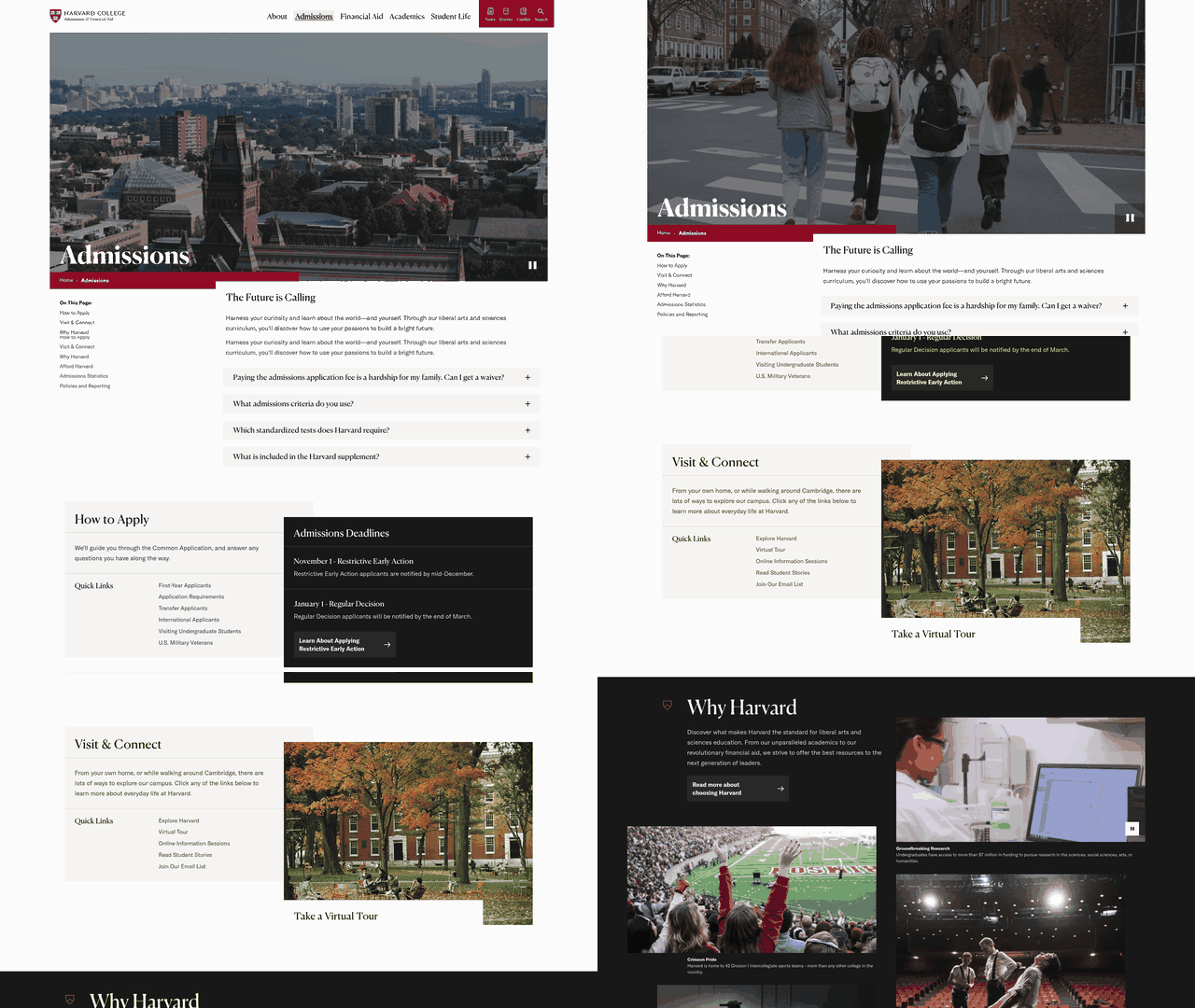
Neither plan tells you whether you need a college admissions consultant. Your list does, and the early deadline itself is not a sign of low need. At schools with broadly accessible admission, a solid transcript and an honest essay often carry the file, and one misstep rarely decides the outcome.
Highly selective schools are a different read. Nearly every applicant has strong grades and scores, so readers lean on the narrative, the essays, the recommendations, and how well the activities fit together. A mistake that barely registers at a less selective school can sink an application where only a small fraction get in. That is the unpublished institutional judgment behind selective early decision: the deadline is public, the standard is not.
If your list leans toward straightforward requirements, you can likely handle this yourselves. If an early application is headed to a highly selective school, get a careful second read before submitting, whether from a strong counselor or from our team.
Where this leaves a reach-heavy list
Your sophomore plays club lacrosse and has a list full of single-digit admit rates. Time to call someone? Work through three questions in order and stop at the first "yes."
When is an admissions consultant still worth it?
Outside help tends to pay off when the list is highly selective, support is thin, or a deadline can't move. If none of those apply, the earlier signs may well describe your family, and going it alone can be a reasonable path.
- Is the list mostly highly selective schools? Small errors carry real weight here. One consulting firm's breakdown names narrative, activity coherence, essay specificity, and recommendation strategy as what separates admits from denials. An unbalanced list or a generic supplement is the mistake we worry about most.
- Is support missing? First-generation families often don't have access to the unwritten rules. As that same firm puts it, "Students from college-educated families absorb this through dinner conversation. Everyone else has to be told."
- Is there a specialized deadline? Athletic recruiting is the clearest case, and it punishes waiting.
How early do recruited athletes need help?
Earlier than most families expect. This college-funding guide notes that coaches can start actively recruiting on June 15 after sophomore year. It also notes that the House v. NCAA settlement, approved in 2025, replaced Division I scholarship limits with roster limits, which has shrunk spots in many sports. One athlete-focused consultant quoted there says she turns away sophomore and junior families because her roster is already full of freshmen.
For your lacrosse player, that changes the timeline. In subjective sports, coaches need to watch a player several times, so a junior-spring start can mean the short lists are already drafted.
Without a constraint like that, there's no rush. Most students begin in sophomore or junior year. One consultant's timing advice makes a point we'd echo: early guidance should shrink how much admissions shows up in daily family life, not expand it.
References
[1] Seven honest signs your family might benefit from a consultant - https://www.eduavenues.com/blog/signs-you-need-admissions-consultant
[2] When Should You Engage a College Admissions Consultant? - https://howtopayforcollege.com/blog/when-should-you-engage-a-college-admissions-consultant
[3] When does a college consultant make sense? - Reddit - https://www.reddit.com/r/ApplyingToCollege/comments/1vwf9y7/when_does_a_college_consultant_make_sense/
[4] Do You Need A College Counselor? 7 Signs It's Time To Get Help - https://toptieradmissions.com/do-you-need-a-private-college-counselor/
[5] When Should You Hire a College Admissions Consultant? - https://www.stiphanyconsulting.com/flow-forward/when-should-my-child-start-working-with-a-college-admissions-consultant
[6] Are College Admissions Counselors Worth It? | C2 Education - https://www.c2educate.com/blog/are-college-admissions-counselors-worth-it/
[7] What are the pros and cons of paying for a college admissions consultant? - https://www.quora.com/What-are-the-pros-and-cons-of-paying-for-a-college-admissions-consultant
[8] Should You Hire a College Admissions Consultant? - https://generalacademic.com/college-admissions-consultants-guide/
FAQ
Do college admissions consultants actually improve a student's chances of getting in?
A consultant may make the process smoother and less stressful, but published success rates do not establish that the service caused better admissions outcomes. Firms often report results from their own clients without a comparable baseline, so families should treat those figures cautiously and focus on the specific work they would be purchasing.
Can a first-generation student apply to college successfully without paid help?
First-generation students can apply on their own, though they often need someone to explain the unwritten rules that college-educated families pass along at the dinner table. A responsive school counselor, a teacher willing to critique essay drafts, and an early planning meeting can fill much of that gap. When those people aren't available, outside support tends to add the most value.
Is there an option between a full consulting package and doing everything yourself?
Targeted help is a reasonable middle path. Since private counseling is often billed by the hour, you can pay for one specific task, such as a careful second read of an early application to a highly selective school, rather than a comprehensive package. That approach keeps the family in control while addressing the point of greatest uncertainty.
What if my child's college list mixes reach schools with less selective ones?
A mixed list usually calls for focused help, not full-service support. Applications to less selective schools tend to hold up on a solid transcript and an honest essay. The reach schools are where a generic supplement or scattered activities can cost you, so concentrate your review time, and any paid help, on those applications.