4 Signals That Tell You Whether to Skip Paid Admissions Consulting
September 22, 2026

Quick Answers
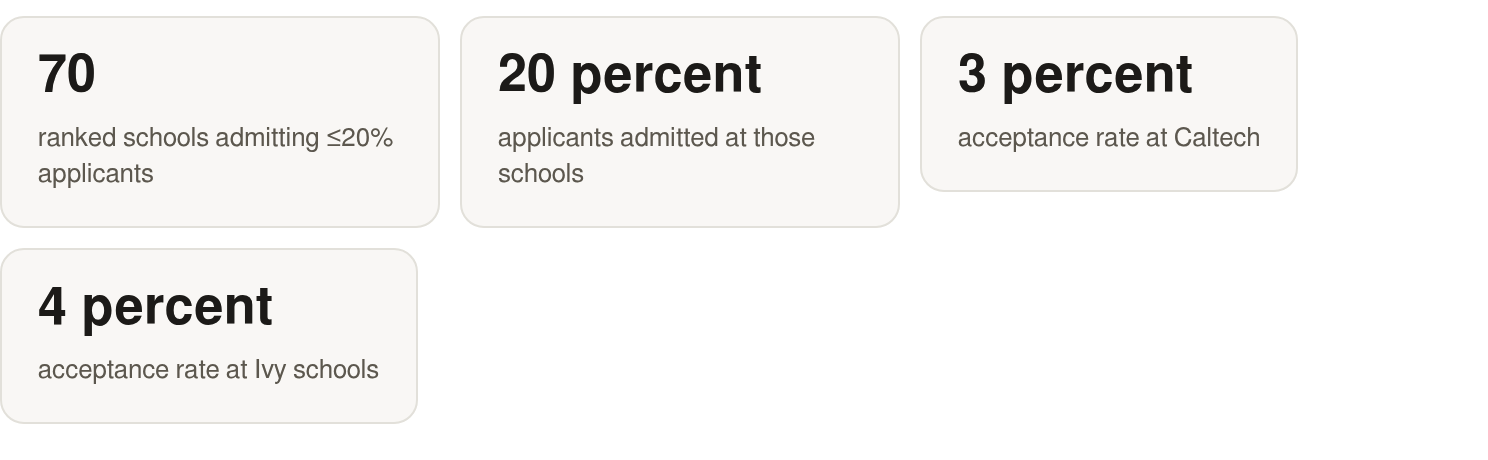
- More than 70 ranked schools admit 20 percent or fewer applicants, and that squeeze pushes anxious families toward paid consulting before they've asked whether they need it.
- The most selective national universities run from roughly 3 percent at Caltech to about 4 percent at Ivies like Harvard and Yale.
- No consultant can manufacture a hook that isn't there. A hookless student at a super-selective school buys polish, not a different verdict.
- A well-staffed school counselor holds historical applicant data, direct lines to regional reps, and institutional trust a private counselor rarely matches.
- Coaches in subjective sports like soccer and lacrosse can begin active recruiting on June 15 after sophomore year.
- Nursing-track applicants have to sequence AP Bio, AP Chem, and Anatomy and Physiology years ahead, which makes a late consulting start far less useful.
- The 2025 House v. NCAA settlement swapped scholarship caps for roster limits, shrinking spots and raising the recruiting bar.
"Skip it" is the honest answer more often than the industry admits
Whether you hire should come down to fit, not fear. The whole decision hinges on one question: do your student's long-term goals actually match what a collaborative mentorship delivers? If they don't, you're paying premium rates for marginal returns.
A savvy, organized family can run this process at a high level without paying a dime. Ask an experienced counselor whether a given family needs help, and the honest reply is often a flat "maybe." The signals below tell you when that "maybe" tips toward skip it.
A sub-10% acceptance rate is a weak reason to spend
The trigger isn't the school's selectivity. It's whether your student has a hook a mentor can amplify. Single-digit admit rates scare families into spending, and that fear alone shouldn't move anyone.
Think about what actually shifts an outcome. College admissions consulting can sharpen a story, but no one manufactures a hook that isn't there. There's no secret handshake that lifts an average, hookless student into a super-selective admit. Anyone selling one is selling a marketing line.
- Confirm your student has a genuine hook or a distinct academic story before paying for elite-access strategy. Without one, the spend buys polish, not a different result.
- Separate the individual question from the systemic one. You can DIY successfully even as private counseling widens structural gaps for wealthier families.
Your school counselor may already hold the best cards
If you attend a well-staffed school, an outside consultant often duplicates work you already get for free. School counselors carry years of applicant data to specific colleges, direct lines to regional reps, and admissions offices that trust their read because of the relationship. Private counselors rarely match that.
Extra help can even backfire. A student juggling conflicting advice from two sources ends up more confused, not less. Plenty of families discover they need less than a full package, sometimes just focused support on essays and a school list.
- Audit what your high school already provides before you assume there's a gap.
- Ignore anyone promising special power to "get kids in" to "dream schools." That's a pitch, not a service.
Timing can shut the door before a consultant helps
A mentorship pays off only if the collaboration starts before key gates close. By senior year, many choices that shape an application are already locked. Some tracks demand course sequences planned years in advance, which is why early support pays off most. Serious firms often start with students well before senior year, sometimes as early as eighth grade.
If your student's goals need that runway and you can't start early, the honest answer is that paid help delivers less. For vetting quality, membership in a body like the Independent Educational Consultants Association is one signal when you have no other way to check, but a strong referral does the same job.
- Match the engagement window to your student's timeline, not the sales pitch. A late start shrinks both your options and what any consultant can do.
Signal 1 – Targeting sub-10% acceptance-rate schools
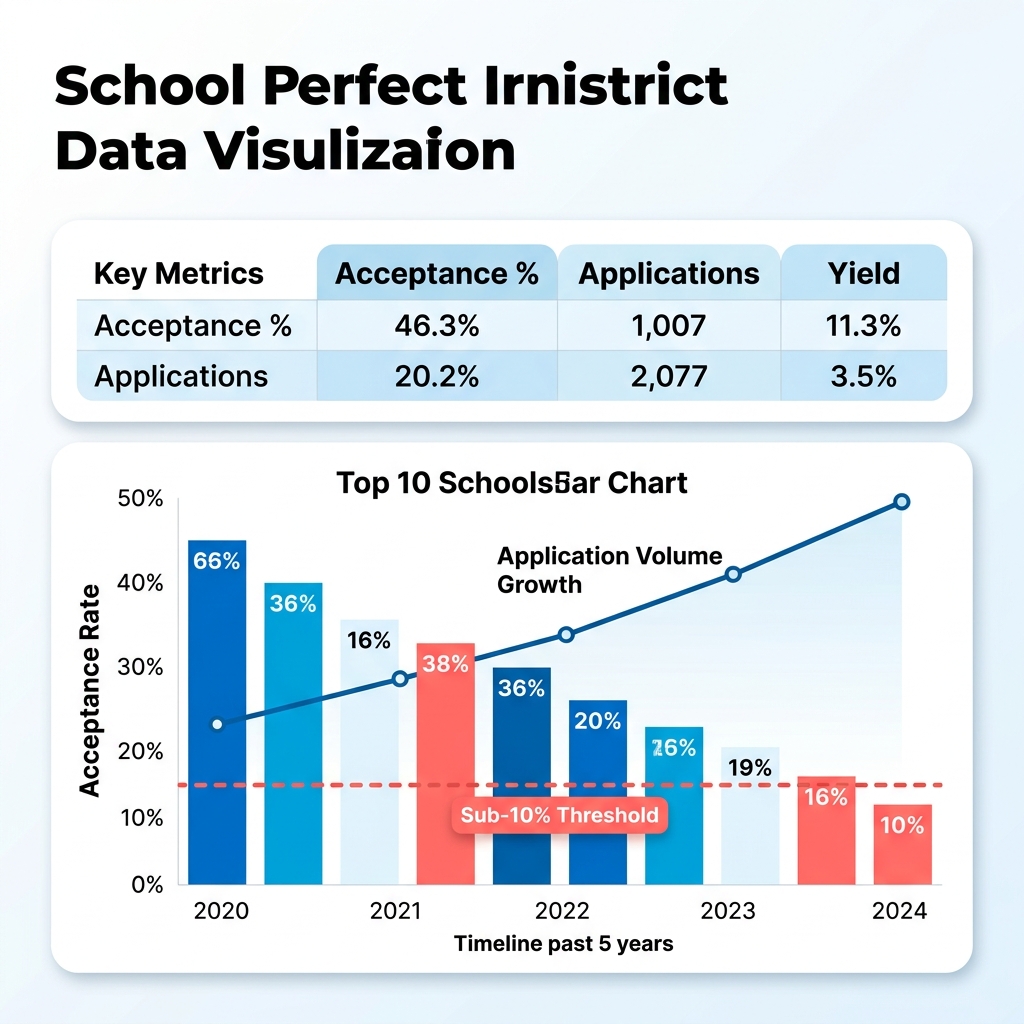
The acceptance-rate math looks brutal on paper, and families feel it in their chest. Selectivity has tightened across the top tier, application volume keeps climbing, and class sizes barely move. College planning resources note that this squeeze pushes parents toward paid help before they've asked whether it fits their situation.
That fear is the wrong starting point. Selectivity alone tells you almost nothing about whether the spend pays off. The sharper question: do your student's timeline and profile still fit what a collaborative mentorship can shape?
The window closes earlier than the admit rate suggests
By the time a family panics over a single-digit rate, the most valuable years are often behind them. Guidance on when to engage a consultant points earlier than most parents expect, and firms that plan around multi-year runways tend to prioritize students who start well before senior year. The strongest work often splits into a life-preparation phase and a college-application phase, with support that can begin in eighth grade.
The gates are concrete. Soccer and lacrosse coaches can open active recruiting on June 15 after sophomore year. A nursing-track applicant needs AP Bio, AP Chem, and A&P sequenced years ahead. The House v. NCAA settlement traded scholarship caps for roster limits, so recruited spots got scarcer and the bar for early planning went up.
- Check whether your target schools demand multi-year prep, like a recruited sport or a specialized major sequence, before you assume a late start still works.
- Confirm no recruiting or course-sequencing deadline has already passed. Those become water under the bridge by senior year.
Authentic applications are coached, not stumbled into
DIY applicants to the most selective schools hit the same wall. They assume authentic means spontaneous. But showing authenticity on paper takes real attention to how your genuine self reads to an admissions officer, and that's a skill built through revision, not a happy accident.
That's where mentorship earns its keep. A panel model, where at least two readers work on every essay, exists to develop a student's story for an outside reader. If your student already frames their interests in a way an evaluator reads as authentic, you may not need to pay for that lens.
- Judge whether your student can present genuine interests in a way an admissions reader hears as authentic, not merely true.
- Be honest about whether a coached narrative that translates real strengths for an outside evaluator would actually help your family.
When the sub-10% target is a reason to skip
The field is crowded, and more supply doesn't mean more value for you. What matters is the fit between your timeline and what a consultant can realistically shape.
A rising senior with no hook and no runway left gets marginal returns from elite-access consulting. Skip it. A ninth grader with goals that need years of sequencing? That's exactly where a base-plus-bonus model has room to move the needle.
Signal 3 – Matching cost and ROI to your family budget
Sticker prices for college admissions consulting swing wildly, from a single hour-long meeting to packages covering all of 11th and 12th grade. A base-plus-bonus model keeps standard prices below many competitors.
The math is genuinely tricky. As College Essay Guy explains, a counselor earns the fee when they help a student reach schools that advance a career and future income, but life does life things and outcomes resist prediction. So don't treat the fee as an entry ticket to a guaranteed return. Treat it as a bet whose odds you can estimate before you sign.
The fee only pencils out against a real aid gap
The strongest financial case for hiring isn't prestige. It's aid. Good consultants steer students toward schools more likely to offer a generous package and help them graduate on time, and both cut total college cost by more than the fee.
- Estimate the merit or need-based aid a mentor could realistically unlock. Some advisors get calls from schools hunting for students with specific interests, which can widen scholarship eligibility.
- Subtract the full fee from that projected aid. If the gap you're targeting is smaller than the fee, the spend doesn't pencil out.
- Add the value of finishing in four years instead of five. One extra semester of tuition often dwarfs the entire consulting cost.
Cost is the real barrier, and it sorts families by income
Who actually hires tells you something. Private counseling has long skewed toward higher-income families, as TIME reports. The field has grown over the past few decades as competition for top schools intensified.
- Set a hard ceiling before you shop. If the fee competes with your actual college savings, that money buys more sitting in a 529.
- Ask what the bonus triggers on. A results-linked bonus is fairer to a budget-conscious family than a big flat fee paid up front no matter the outcome.
The payoff that never shows up on a spreadsheet
Some of the return is invisible. Consultant Pam Rambo tells MassMutual that families report happier homes because nobody has to nag about application progress. That's real. It's just hard to price against a four-figure invoice.
- Put a rough dollar value on the hours a parent would otherwise spend project-managing the process, then judge whether the fee beats it.
- Skip paid help if your family is already calm and organized. Stress relief you don't need isn't worth buying, and a framework that ignores fit just reprices fear. The signals that justify hiring start from the same place.
Signal 4 – The insider knowledge and support you may already have
Your best reason to skip paid help might be sitting at your dinner table or down the hall at school. Families with engaged teachers, an accessible counselor, helpful alumni, or a former consultant in the mix often duplicate what they'd pay for. The test isn't whether the network exists. It's whether it does the specific work a months-long mentorship does.
This is where fit gets sharp. A mentorship earns its fee by shaping a story over months. If your circle already delivers that, adding college admissions consulting buys redundancy. But most internal networks cover one slice of the process, not the whole arc. Knowing which slice you're missing is the whole decision.
Do you already have another pair of eyes?
The most portable advice in this space is free: get another reader on the application and essays. A parent, teacher, or counselor who knows a student well can genuinely improve an application. It's the same principle a panel review runs on, where every essay gets more than one reader for input and development.
That's the baseline. If you have someone honest and available to read drafts, you've covered the single most common reason families hire out.
- Confirm you have at least one adult who will read essays critically and on your timeline, not just praise them.
- Check whether that person knows the student's story well enough to catch a flat or generic draft.
How do you judge whether your network is strong enough?
Availability is the catch. Consultants exist partly to compensate for how little time high school counselors can spend with each student, and the paid alternative is really just filling that time gap.
So a counselor on paper isn't the same as a counselor with bandwidth. Weigh frequency and depth, not titles.
- Estimate how many students your counselor juggles and how many one-on-one sessions you'll realistically get.
- Look for range: someone for essays, someone who knows target majors, someone who has seen recent admissions cycles.
- Judge feedback cadence. A mentor who reviews work every few weeks beats a famous name you reach once.
When an outside voice still earns its fee
Research on private college consulting points to a hard truth about applications: showing authenticity is as much about how a reader perceives a student as it is about who the student actually is. Knowing a student and knowing how an admissions reader will read that student are two different skills.
That reader's-eye view is what a fresh external voice adds when your network is loving but not admissions-literate. A panel built to review work from multiple angles catches how a story lands, not just whether it's sincere.
One caveat worth stating plainly: the field is unlicensed, so credentials aren't a hard gate. Some counselors treat membership in a body like the Independent Educational Consultants Association as a vetting signal, others don't, and both can be right depending on the situation. If a referral or track record already verifies quality, skip the credential hunt.
- Ask whether anyone in your circle can predict how a reader will interpret the application, not just whether they like it.
- If your network is supportive but hasn't sat on an admissions committee, price a limited outside review before committing to a full package.
Score it yourself before you spend a cent
Four signals down. Now turn them into a number you can act on. The point is to replace gut fear with a score, so your call on college admissions consulting rests on fit.
Rate each signal from 0 to 2. Two means the signal clearly says skip paid help. One means partial or unsure. Zero points toward hiring. Add the four numbers and read where you land.
Mark each signal honestly
Print this, sit down with your student, and fill it in. The notes matter more than the checkbox.
- Signal 1 – Target schools. Does your student have a genuine hook a mentor can amplify, or just a dream-school list? A hookless applicant aiming at the most selective schools gains little from paid guidance, because no secret vaults an average profile into a super-selective admit.
- Signal 2 – Timeline. Is there still runway to shape the story, or has the window already closed? Early runway favors DIY. A compressed timeline raises the value of a coach.
- Signal 3 – Budget and ROI. Does the fee map to a measurable outcome like aid awarded or fit-list quality, not prestige alone?
- Signal 4 – Support network. Does your circle already do the months-long story work, or just one slice of it?
Read your total, then decide
Your four-signal sum sorts into three tiers. Use the table to sanity-check where you land.
| Total Score | Verdict | What It Means |
|---|---|---|
| 6–8 | DIY Likely Successful | Signals mostly point to skip. Self-manage with free tools and your network. |
| 3–5 | Consider DIY | Mixed picture. Try a single paid strategy session, then reassess. |
| 0–2 | Consulting Recommended | Real gaps in profile, time, or support. Paid mentorship earns its fee. |
If three or more signals score a full 2, self-manage with confidence. One quick check: audit what a consultant actually does before assuming you need one. Roughly half offer career advice, about a third handle test prep, and nearly half guide financial aid. If your counselor and family already cover those slices, you're paying for redundancy.
Re-score every semester
This isn't a one-time verdict. A hook that didn't exist in sophomore spring can emerge by junior year, and a supportive counselor can leave mid-cycle. Re-score after any real change: a new extracurricular, a testing result, a shift in target schools.
The honest read on hiring stays a firm maybe, and for a lot of families that's the correct answer. Free webinars, public essay guides, and a strong counselor relationship carry many students the whole way. If your revisited score still sits at 0–2 with the application window closing, that's your cue to bring in help. And if the gaps are non-academic, the most durable work usually happens before the application phase even starts. Building real life experiences and skills, starting as early as 8th grade, is exactly the long-term story work a customized plan is built to support.
References
[2] When Should You Engage a College Admissions Consultant? - https://howtopayforcollege.com/blog/when-should-you-engage-a-college-admissions-consultant
[3] Do You Need a Private College Counselor? I Asked the Pros - https://akilbello.com/posts/do-you-need-a-private-college-counselor-i-asked-the-pros/
[4] College Admissions Counselor: Factors to Consider and Questions ... - https://www.collegeessayguy.com/blog/college-admissions-counselor
[5] Private College Consulting and Selective College Admissions - https://journals.sagepub.com/doi/10.1177/00380407231202975
[6] The Case Against Private College Admissions Counselors - TIME - https://time.com/6237286/private-college-counselors-gatekeepers/
Still Wondering?
1. What exactly counts as a "hook" that a consultant can amplify?
A hook is a genuine distinguishing factor already present in a student's profile, not something a consultant can manufacture. The article points to recruited athletic ability or a specialized academic track as examples. Without one, paid elite-access strategy buys polish rather than a different admissions verdict at super-selective schools.
2. If I do decide to hire, how early should I actually start?
As early as 8th grade, well before key gates close. Endurable Education splits its work into a life preparation phase and a college application phase for this reason. The earliest support pays off most because course sequences and recruiting windows shape applications years before senior year arrives.
3. What's the difference between one-on-one consulting and a panel review?
One-on-one gives a single reviewer's perspective, while a panel routes every essay past at least two team members. Endurable Education uses the panel approach so a story gets refined for how an outside reader will actually perceive it, catching flat or generic drafts one set of eyes might miss.
4. I'm a recruited athlete prospect. What timeline can't I miss?
Coaches in subjective sports like soccer and lacrosse can begin active recruiting on June 15 after an athlete's sophomore year. Miss that window and it becomes water under the bridge by senior year. The 2025 House v. NCAA settlement also swapped scholarship caps for roster limits, shrinking spots and raising the bar.
5. Does a nursing-track student need to plan differently?
Nursing-track applicants must sequence AP Bio, AP Chem, and Anatomy and Physiology years in advance. That course requirement makes late consulting engagement far less useful, because by senior year the academic foundation is already set. If you want paid support here, start early enough to actually build the sequence.
6. Should I trust a consultant based on IECA membership?
Membership in a body like the Independent Educational Consultants Association signals vetting when you have no other way to verify quality. The field is unlicensed, so credentials aren't a hard gate. A strong referral or a proven track record can substitute just as well, so skip the credential hunt if quality is already verified.
7. How does a base-plus-bonus model with a happiness guarantee actually work?
The base-plus-bonus structure keeps standard prices lower than many competitors, with a bonus that triggers on results rather than a large flat fee paid up front. Under a happiness guarantee, you only pay the full fare if you're satisfied. That's fairer to a budget-conscious family than prepaying regardless of outcome.