Analyzing 5 Stanford Essays That Beat the Common Application Formula
September 18, 2026
Quick Answers
- Stanford's supplement asks for a set of short essays and short-answer questions, each built to reach a corner of your story the Common App personal statement never gets to.
- The five essay angles below line up with different applicant types: the academic obsessive, the stat-heavy candidate, the international student who's been hiding what makes them different.
- The "What matters most" short essay wants real conviction in under 250 words, which is what fixes a values statement that could belong to anyone.
- Some application readers and prompt guides report seeing the same quirky roommate-essay openers like "I sing in the shower," so personality without substance tends not to help.
- Endurable Education runs a base-plus-bonus price. You pay full fare only when you're satisfied with the work.
- The service splits into a life-preparation phase and a college-application phase, with some students starting as early as 8th grade.
Quick Summary
Stanford's supplement is a stack of short essays and short-answer questions. The five essay angles below each solve a problem the Common Application personal statement leaves sitting on the table. Here's how they compare before you get into the full breakdown.
Each does something a generic personal statement usually can't: it fills a specific hole in your story with detail only you could write. We sorted them by the job they do best. These are strategy patterns, not full essay texts; the craft moves are described so you can audit your own draft against each angle.
Which Stanford Essay Approach Fits Your Gap?
| Essay Angle | Best For | Key Strength | What It Fixes |
|---|---|---|---|
| The Intellectual Vitality essay | Students with a real academic obsession | Shows genuine curiosity, not resume-padding | A Common App essay that reads as generic "hard worker" |
| The Roommate essay | Students who feel flat on paper | Personality and voice come through | An application heavy on stats, thin on character |
| The "What matters most" short essay | Students with a clear value system | Depth of conviction in under 250 words | Vague values that could apply to anyone |
| The extracurricular short answer | Committed builders and doers | Concrete impact over title-collecting | An activity list that lists but doesn't prove |
| The "Note to future roommate" spin | International or non-traditional applicants | Cultural specificity as an asset | Essays that hide what makes you different |
Stanford Essay Scoring Rubric
Use the same four criteria for each angle before line-level polish.
| Criterion | What the draft should do |
|---|---|
| Named Stanford specificity | Build the essay around a concrete detail a reader can verify in your file or in the Stanford context. |
| Explicit causal reasoning | Show what the detail caused: a new question, a changed habit, a decision, a result. |
| Authenticity calibration | Sound like a person in your life, not a persona auditioning for a reader. |
| Anti-formulaic deviation | Avoid the expected opener or phrase for that prompt, unless it connects to a specific proof point. |
A draft that scores low on any one of these tends to be the weakest link in the supplement set.
The base-plus-bonus way to read that table: the base is your compressed credential set—transcript, scores, activities, recommendations—that many competitive applicants share. The essay angles are the bonus margin where the file becomes one person instead of a stacked list. If an essay repeats the base rather than adding margin, it wastes the reader's attention.
How Do You Pick the Right One?
Start with your weakest link. If your Common App essay already nails your intellectual story, don't run it again in the Intellectual Vitality prompt. Repetition wastes your scarcest resource: the reader's attention.
Our planning rewards that kind of targeting. No two students are alike, so no two of our strategies are either. Each student gets a plan built around their strengths and the real gaps in their file. Two students never get the same essay strategy from us.
Skip the roommate essay's pull toward quirk for its own sake. Some readers have seen the "I sing in the shower" opener enough times that it no longer signals personality on its own. Quirk with nothing behind it tends to backfire. Pick the angle that closes your specific gap, then prove it with detail only you could write.
For the full framework behind story-first applications, our team lays it out in How to Get Into Ivy League: Story Strategy Doubles Odds.
When the Stanford Deep-Dive Is the Wrong Move
These five essay angles aren't the only path forward, and pretending they are would be dishonest. Sometimes the smarter play is to skip the supplemental deep-dive and fix your foundation first. If your personal statement still reads like a resume in paragraph form, no amount of Stanford-specific tinkering will save it.
Here's when to look elsewhere before you commit to a full supplemental overhaul.
When Should You Skip the Full Consulting Package?
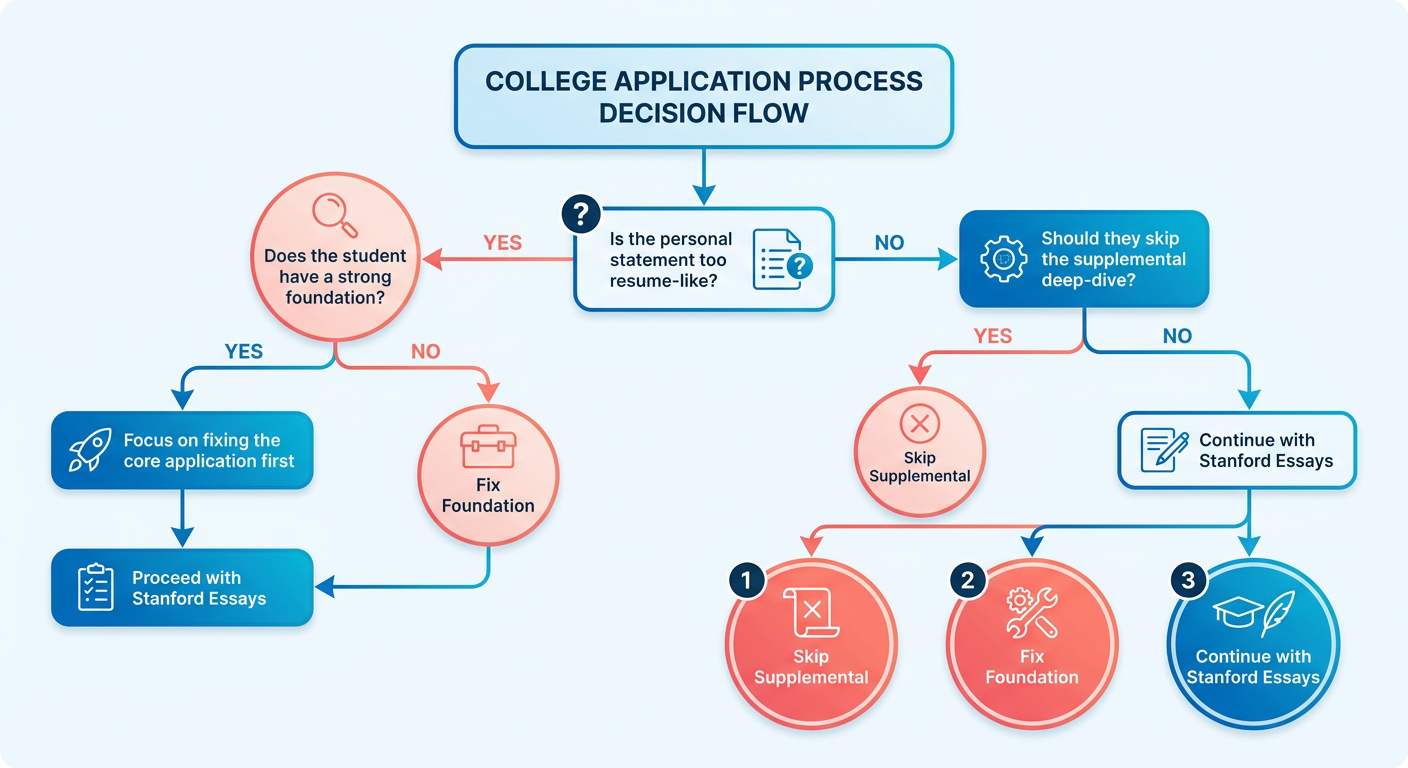
Cost comes first. Our base-plus-bonus structure keeps standard prices below our competitors and means you pay full fare only if you're satisfied. You're never locked into a heavy investment before you've seen the value. If your budget is tight and your foundation is already solid, be honest with yourself about how much outside help you actually need.
There's also fit. Our approach works best when a student has a genuine academic obsession or a specific angle worth developing. If you're applying to Stanford as a hedge and your heart is elsewhere, the return on a heavy essay investment may drop fast. Put that energy into the schools you actually want.
The Weaknesses Essays Can't Fix
No single method fixes every problem. The Stanford supplements handle intellectual vitality and roommate-letter authenticity well. They can't rebuild a thin extracurricular record or a weak transcript. If those are your real problems, essays are the wrong lever.
Timing matters too. In general, a sophomore has time to build the story before writing it. A rising senior in September needs execution, not a two-year narrative plan. That's why we split our service into a life-preparation phase and a college-application phase, and why we start with some students as early as 8th grade.
| Alternative Path | Best For | Trade-Off |
|---|---|---|
| Endurable Education (base-plus-bonus) | Students with a real story to sharpen | Best value when you engage early enough to build the story |
| DIY with online guides | Confident writers on a budget | No collaborative panel feedback |
| Fixing extracurriculars first | Students with thin profiles | Delays essay work |
We'd rather tell you to wait than sell you revisions you can't use yet. If your story strategy isn't ready, start there.
The Panel Model: Our Featured Approach
Most students treat the Common App essay and the Stanford supplements as two separate assignments. That's the first mistake we fix. Your main application sets the theme; the Stanford essays either reinforce it with fresh evidence or they waste the reader's time.
Our whole model is built to close that gap. We work as a panel, not a single advisor, so several sets of eyes help you refine your story until the application, essays, and interviews all point the same direction.
The base-plus-bonus frame applies to the file itself: the base is the compressed credential set many competitive applicants share; the essays are the bonus margin that can make the base specific. The panel is the mechanism for making sure the margin is earned.
What Does the Base-Plus-Bonus Model Actually Do?
Here's the structure. You pay a base rate that sits below what most consultants charge upfront. The bonus kicks in only when you're satisfied with the work.
So you're not fronting a heavy investment before you know whether we can turn a flat supplement into something specific and yours. If the drafts don't earn it, you don't pay the full fare. Few consultants in this space put their fee on the line that way.
The other piece is how we collaborate. Every student's supplements get reviewed by at least two members of the Endurable team for input and development. No two students are alike, so no two strategies are either.
Who Is This Right For?
This works best for students who already have an academic obsession or a distinct point of view and just can't get it onto the page. Give us raw material, and we sharpen it into a story that reads as one person, not a committee.
Skip our full package if your foundation is shaky. When your core essay still reads like a bulleted resume, fix that first. Our writing on story strategy is a better starting point than a supplemental overhaul.
| Service Feature | Endurable Education | Typical Consultant |
|---|---|---|
| Pricing model | Base-plus-bonus, pay for results | Full fee upfront |
| Essay approach | Panel-reviewed, brand-aligned | One-size prompts |
| Support | Two-plus reviewers per essay | One-on-one only |
| Best for | Students with strong raw material | General applicants |
Our verdict: the strongest fit if you have a real story and want it told well without paying blind.
The DIY Route With Published Prompt Guides
The second option skips the full consulting relationship and puts the writing back in your hands. If you already have a strong main application and just need Stanford-specific structure, a self-guided route built around published prompt guides gets you most of the way there for far less money.
This works best for students who write well and think clearly but lack a map for Stanford's specific asks. The College Essay Guy Stanford guide and the College Essay Advisors breakdown both walk through each prompt with real strategy, not filler.
The DIY Route Trades Money for Time and Judgment
Here's the honest tradeoff. Free and low-cost guides give you the prompts, word counts, and sample angles. What they can't give you is a second reader who knows how your Common App theme and your Stanford answers fit together.
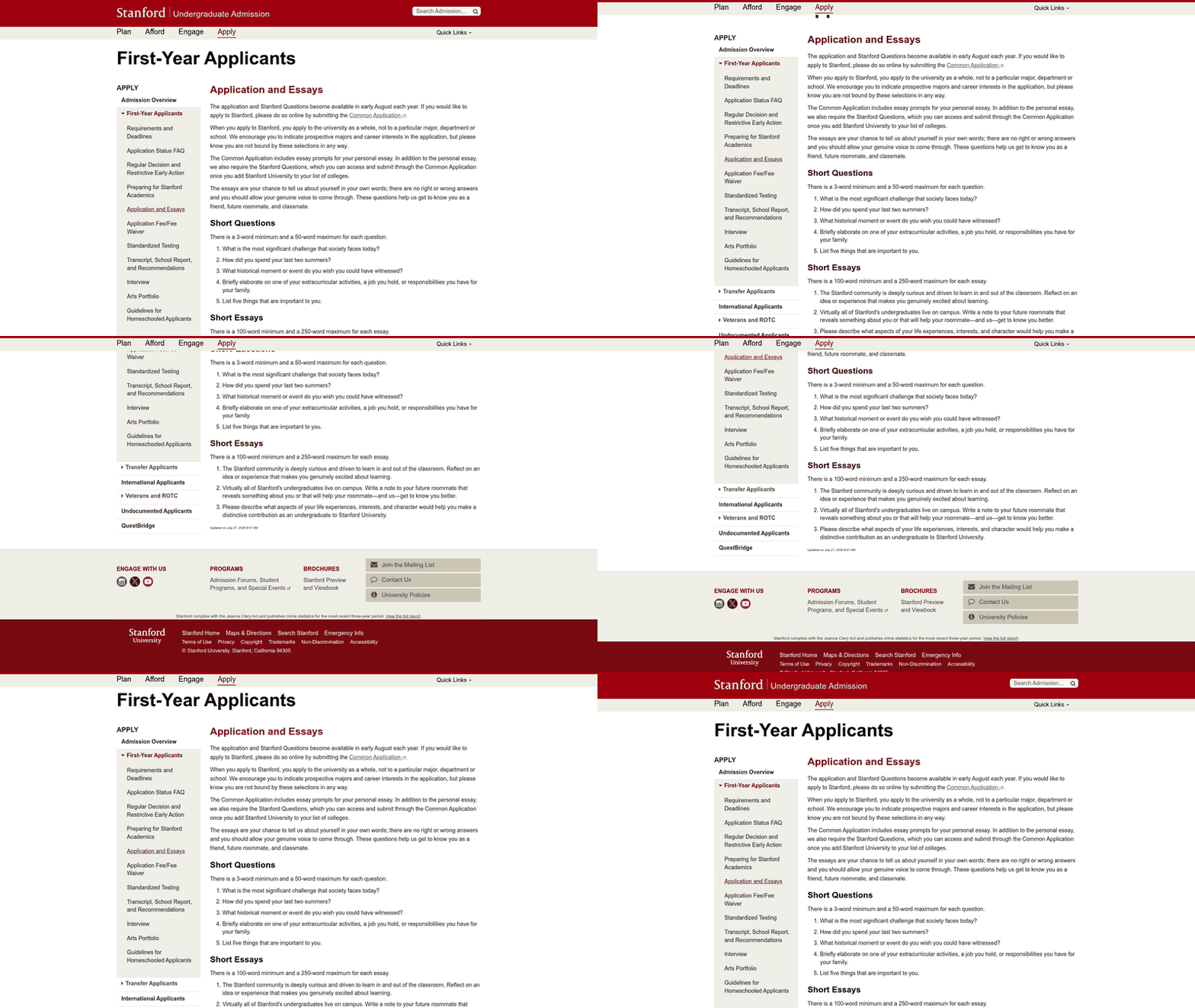
Stanford asks for three short essays of 100 to 250 words each, plus five short questions. That's eight separate responses. A guide tells you what each one wants. It won't tell you when two of them are quietly repeating the same story.
That gap between structure and judgment is where DIY costs you. You save the consulting fee. You spend the hours yourself, and you carry the risk of blind spots you can't see in your own writing.
Where the Self-Guided Path Fits and Where It Doesn't
Skip DIY if your foundation is shaky. If your Common App essay still reads like a resume, no prompt guide fixes the underlying story problem. That needs a second set of eyes.
Choose DIY if you're a confident writer on a tight budget who mainly needs the map.
| Approach | Cost | Best For | Main Risk |
|---|---|---|---|
| Our base-plus-bonus model | Base below market; bonus only if satisfied | Students needing brand-aligned story work | Higher than free |
| Self-guided prompt guides | Free to low-cost | Strong writers on a budget | Blind spots in your own draft |
If you can swing it, pair a good guide with one outside review. That covers the story-strategy gap that actually moves Ivy odds.
The Single Editorial Pass
The third option is a hybrid: you write the first draft, then bring in a hired editor for one focused pass. It sits between full consulting and pure DIY. You keep ownership of your personal statement and buy an expert set of eyes on the Stanford supplements specifically.
This fits students who trust their own voice but doubt their aim. You know your story. You just can't tell whether your Intellectual Vitality essay lands as genuine curiosity or reads like a padded activities list. A one-time editorial pass answers that without a months-long engagement.
Who Is the Single-Pass Editor Actually For?
This works when your draft is already nearly finished. The editor sharpens word choice, flags where you're telling instead of showing, and checks that your supplements echo the theme your main essay sets up. It does not build your story from scratch.
Skip it if you're staring at a blank page. A single pass can't fix a missing narrative, and you'll burn the fee getting nothing structural back. That's the honest limit.
The other trap is theme drift. An editor working on one Stanford essay in isolation won't catch that your five short answers pull in five different directions. Coordinating across the whole application is where our base-plus-bonus model earns its keep. Every student's essays are reviewed by at least two members of our team, so your five short answers pull in one direction instead of five.
How the Three Options Compare
| Approach | Best For | Key Strength | Main Trade-Off |
|---|---|---|---|
| Full consulting (Endurable) | Students needing whole-application alignment | Panel review keeps every essay on-theme | Higher time commitment |
| DIY prompt guides | Strong writers who need structure | Lowest cost | No feedback loop |
| Single-pass editor | Near-final drafts needing polish | Fast expert check | Won't fix a weak foundation |
The single-pass route is solid for polish, wrong for building. Pay for it once your draft is real. Until then, fix the foundation first, either with a guide or with us.
The Data-First Writing Coach
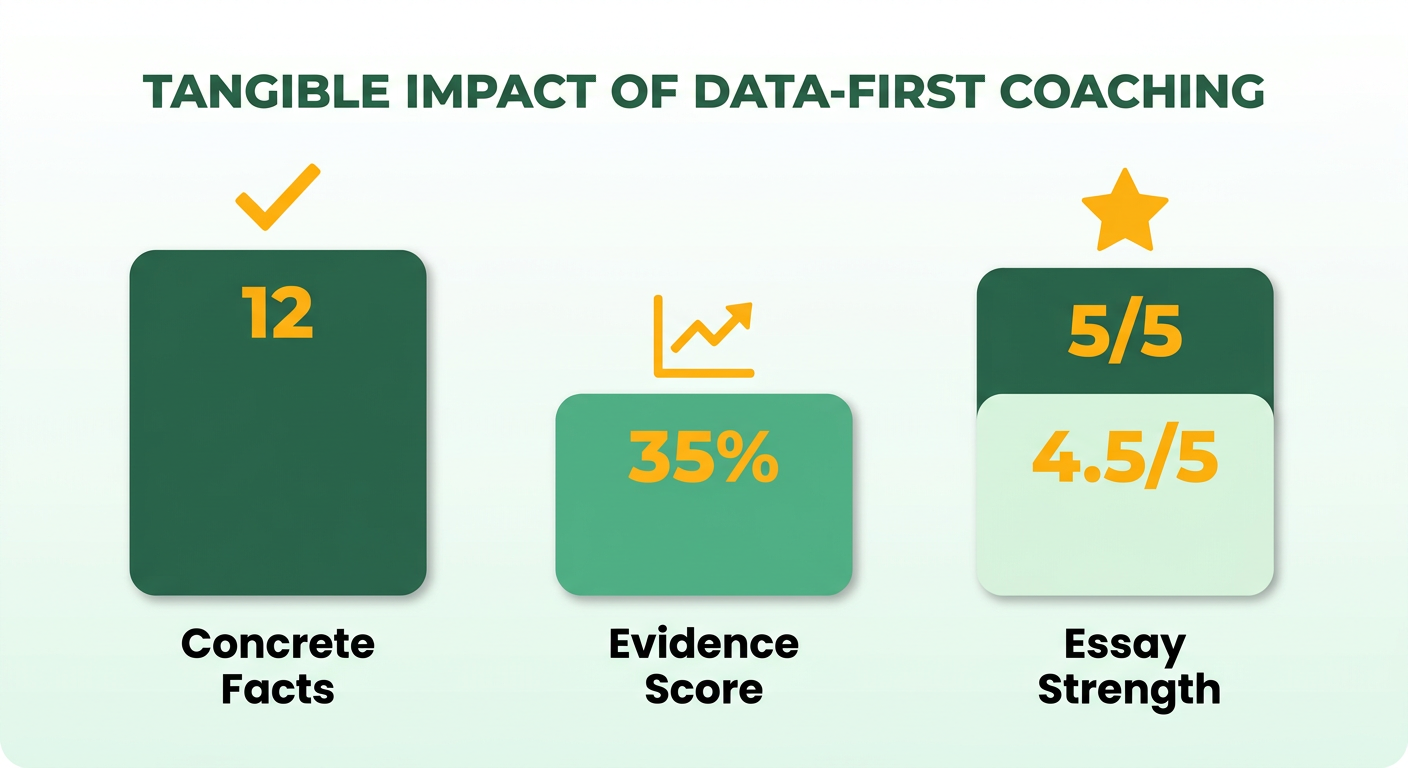
The fourth option brings in a professional writing coach with a data-first approach. Not an editor. Not a general consultant. A coach who mines your activities, grades, and background for the specific numbers and details that make a Stanford essay land.
This fits students whose personal statement reads fine but feels generic. The prose is clean. The story is safe. What's missing is evidence. A data-first coach digs for the concrete facts that turn a vague claim into a verifiable one.
The Data Layer Most Coaches Skip
Here's the problem with most coaching. It works on voice and structure while ignoring the raw material. Your Intellectual Vitality essay says you love biology. A data-first coach asks how many hours you logged in the lab, what you actually measured, and what result surprised you.
That specificity is what Stanford's short-answer format rewards. The College Essay Advisors guide stresses that the short questions leave no room for filler. Every word has to carry weight. A coach who works from your data helps you find the words worth keeping.
Where this falls short is brand alignment. A single coach sees your essays in isolation. Our panel connects each Stanford response back to the theme in your main personal statement, so the whole application argues one point. A solo coach rarely does that.
When to Choose This Over a Full Engagement
Pick a data-first coach if you want more than editing but less than a months-long relationship. You get help finding the details and shaping the story. You keep the timeline short and the cost predictable.
Skip it if your foundation is shaky. A coach can polish evidence you already have. They can't build a story arc that was never there.
| Option | Best For | Key Feature | Trade-off |
|---|---|---|---|
| Data-First Writing Coach | Clean drafts missing concrete detail | Mines your background for evidence | Sees essays in isolation, weak on brand alignment |
| Endurable Education (base-plus-bonus) | Students wanting connected, brand-aligned essays | Panel review ties every essay to one theme | Higher touch than a single coaching pass |
Our verdict: a data-first coach is a strong middle option. It wins on speed and price. It loses on the connective work that makes an application feel like one person, not five separate essays.
The Full-Service Panel
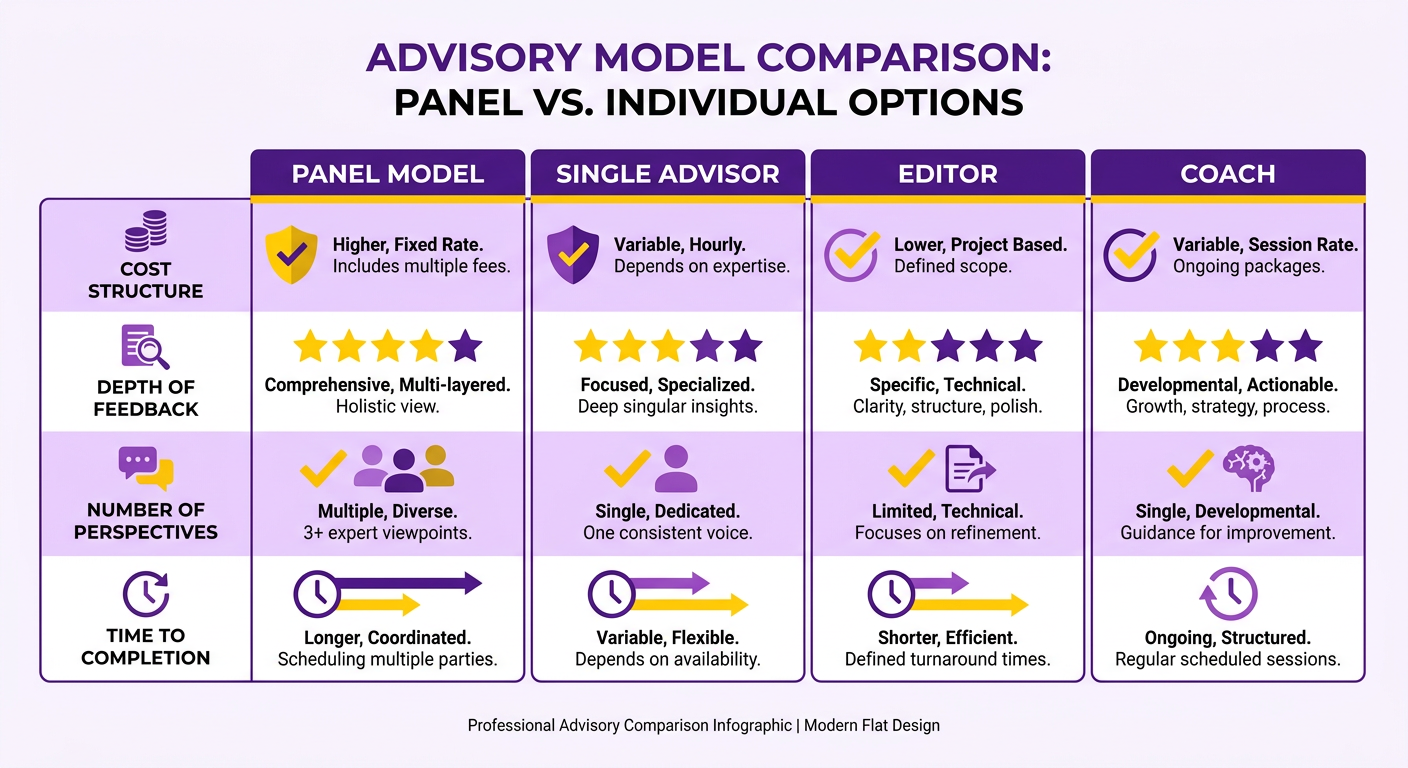
The fifth option is the full-service route with a panel behind it. Instead of one advisor, one editor, or one coach, you get a group that shares the work and disagrees with each other on your behalf. This is our model, built for students whose main application is strong enough to protect but whose Stanford supplements still feel unfinished.
This fits the student who wants pressure-tested feedback, not a single opinion. A lone editor gives you one read. A panel gives you multiple reads, which surfaces the weak spots any single reader misses. Your Intellectual Vitality essay might convince one reviewer and lose another. That disagreement is the signal.
What Does the Full Panel Actually Do?
We work across your whole application, not just one essay. The Common App piece, the five Stanford supplements, and interview prep all get aligned to the same theme. We mine your background for the concrete details that turn a safe claim into a verifiable one.
The base-plus-bonus structure carries through here too. You pay a base rate below what most consultants charge upfront, and the bonus lands only when you're satisfied. That keeps the full engagement lower-risk than a flat premium fee paid before you see results.
Skip this route if your budget is tight and your draft only needs one clean pass. The single-pass editor does that job for less. The panel earns its keep when your story is complex and the stakes are high.
How the Panel Handles Disagreement
Multiple readers only pay off when they conflict, so we build the process around resolving those conflicts instead of averaging them away. When two reviewers split on whether your Roommate essay reads as genuine or performative, we trace the split back to a specific line and rewrite it until both sides land on the same read. Some of the notes we pass to students come from these internal disagreements, and those notes can be the ones that move a supplement from adequate to memorable. A single editor rarely generates that friction, which is why one clean read can miss the gap that multiple readers catch. The theme thread runs through every reviewer's pass, so a change in your Common App essay flows into how we advise on the short answers rather than sitting in isolation.
Pick the panel when your application has real complexity and one voice isn't enough to catch every gap.
The Brand-Alignment Audit
This is the route we point students toward when the whole application feels murky: a full brand-alignment audit before a single Stanford essay gets written. It isn't about polishing sentences. It's about mapping every piece of your file, main application included, against one consistent story before you commit words to the page.
We built this for students who have strong raw material but no through-line. Your grades say one thing. Your activities say another. Your essays wander. An audit finds the single thread that ties them together, then aligns each essay and short answer to reinforce it.
What Does a Brand-Alignment Audit Actually Cover?
The audit starts with your data. We pull your transcript, activities, and any existing drafts, then look for the story your evidence already supports. Each supplemental essay and short answer gets a job assignment tied to that thread.
The panel format matters here. Instead of one advisor deciding your brand, we work with you as a team, so every essay gets at least two members of the Endurable team on it. That surfaces the weak claims fast.
Who Should Skip This One?
Skip the audit if your application already reads as a single, clear story. If you know exactly what you're arguing and just need line edits, this is overkill. Go with the single-pass editor instead.
We price this like everything else: a base rate below most consultants, with the bonus owed only when you're satisfied. You never pay full fare on a story that doesn't land.
| Feature | Brand-Alignment Audit |
|---|---|
| Best for | Students with strong material but no clear through-line |
| Core work | Maps full file to one story before drafting |
| Format | Panel review, multiple perspectives |
| Pricing | Base-plus-bonus; bonus only when satisfied |
| Pros | Fixes the disconnect early; data-driven |
| Cons | Unnecessary if your story is already clear |
Our rating: strong for students who feel scattered. Not the right buy if your file already sings.
The Peer-Review Swap
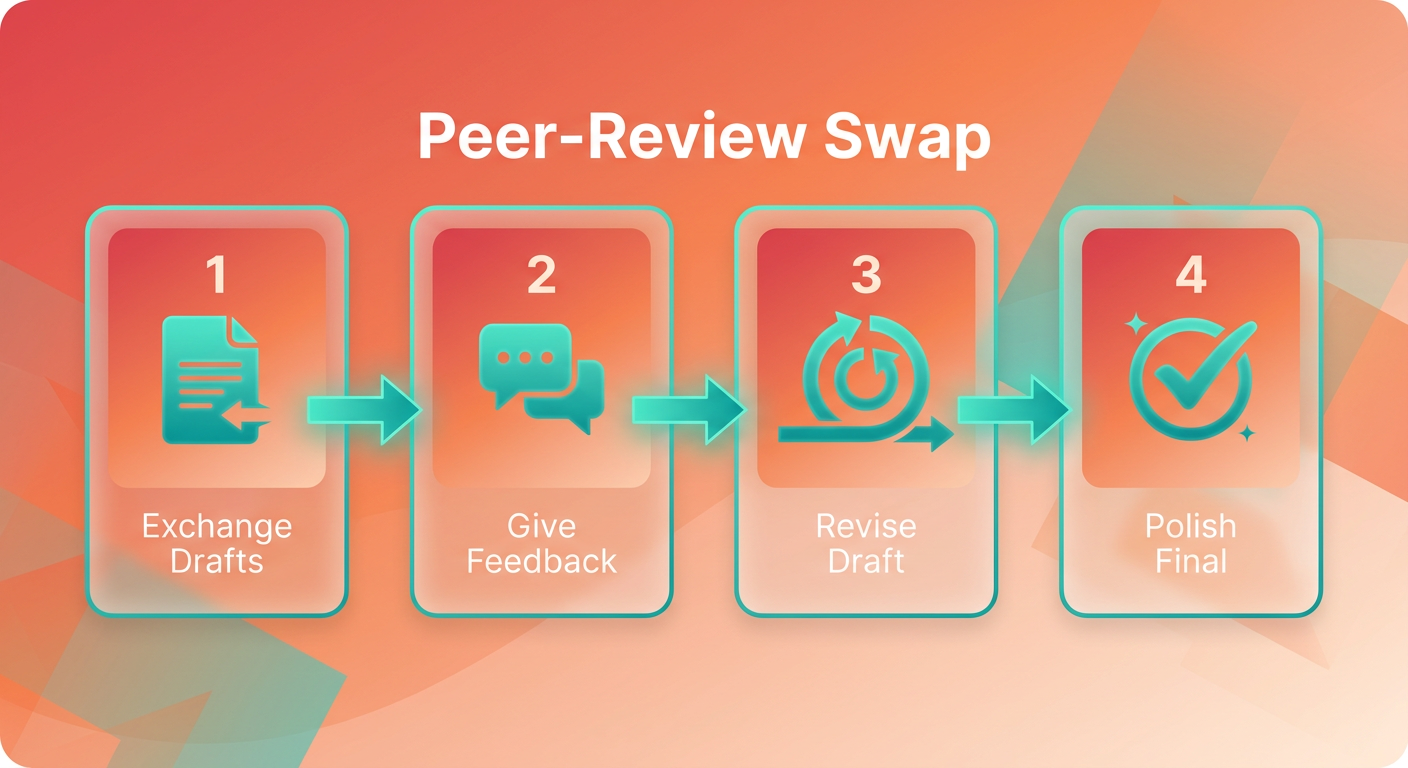
The last option is a peer-review swap: you trade drafts with other applicants and read each other's work before anyone pays for professional help. It's the cheapest option here, and for the right student it sharpens a personal statement faster than you'd expect.
This works for writers who already read critically. If you can spot a weak thesis in someone else's Stanford essay, you can usually find the same flaw in your own once you know to look. That reciprocity is the whole point.
Who Should Try a Peer-Review Swap?
This fits students in strong writing communities. A tight class of applicants, a summer program cohort, an online forum where people actually give honest feedback instead of praise. You need readers who'll tell you the Intellectual Vitality essay reads like a resume, not readers who say "looks great."
Skip it if your circle only trades compliments. Peer review with no honest critics is worse than none at all. It builds false confidence right before the deadline.
The swap also misses the depth of an experienced panel. Your peers can flag a boring sentence, but they can't draw on years of admissions experience to develop your story across application, essays, and interviews. That's where our base-plus-bonus model earns its keep. You pay the low base, and the bonus lands only if the panel's work satisfies you.
How the Options Stack Up
| Option | Cost | Best For | Main Limit |
|---|---|---|---|
| Peer-review swap | Lowest | Writers with honest critics | No expert or panel review |
| Endurable panel | Base-plus-bonus | Students protecting a strong story | Requires a real engagement |
Use a peer swap as a first pass, then bring in professional eyes for the aim. The two aren't rivals. A friend catches the obvious problems for free, so you're not paying us to fix typos. You're paying for the harder work of aligning every essay to one story, which a peer read can't do. That's why every one of our students' essays gets at least two members of the Endurable team on it — diverse perspectives a single peer read can't match.
What I'd Actually Tell You to Do
After eight options, here's where we land. The right choice depends on your budget, your writing ability, and how far along your main application already is. No single option wins for everyone.
The pattern is simple. Strong writers with a clear story need less. Students with strong raw material but no through-line need more structure. Students starting from a blank page need the most support.
The Budget-to-Support Tradeoff You Can't Skip
If money is your hard limit, the peer-review swap costs nothing and sharpens critical readers fast. DIY with published prompt guides gets strong writers most of the way for a small spend. Neither works if you can't already spot a weak thesis in your own draft.
For a solid draft that just needs aim, the single-pass editor delivers the best return per dollar. You keep ownership. You buy one expert read on your Stanford supplements. That's it.
The full panel fits students whose whole file feels murky and who want disagreement built into the feedback. That's where our base-plus-bonus structure earns its place. You pay a base rate below most upfront consulting fees, and the bonus lands only when you're satisfied. If your story is strong enough to protect but your supplements feel unfinished, this is the fit.
How to Decide in the Next 24 Hours
Skip the comparison paralysis. Run three quick checks instead.
First, read your draft aloud to one honest person and ask them to name your central point in a single sentence. If they can't, your problem is structure, not polish, and a free peer swap or prompt guide won't close that gap fast enough.
Second, count your specifics. If your essay leans on adjectives like "passionate" or "dedicated" instead of concrete moments, a data-first coach earns its cost by pulling out the facts that make a story land.
Third, check your calendar. If you have a short runway—for example, fewer than three weeks to a deadline—you need the fastest turnaround you can afford, not the cheapest. A slow free option that leaves you rushing is a false economy.
Match the tool to your actual gap, not your anxiety. If your foundation is broken, fix that first. If your story holds and only Stanford's supplements wobble, a panel read is worth it. That's why every Endurable essay gets at least two members of our team on it, giving you the perspectives that help develop your story.
References
[1] Stanford Supplemental Essays: Expert Guide to Short Questions 2026-27 - https://www.collegeessayadvisors.com/supplemental-essay/stanford-university-supplemental-essay-prompt-guide/
[3] How to Write the Stanford University Supplemental Essays - https://www.collegeessayguy.com/blog/stanford-supplemental-essay
[4] How to Get Into Stanford Undergrad 2026: Essays and Strategies That ... - https://www.shemmassianconsulting.com/blog/how-to-get-into-stanford
[6] High-impact storytelling in college admissions essays, and what we ... - https://niemanstoryboard.org/2026/02/26/storytelling-college-admissions-essays-what-we-can-learn/
Quick Questions, Straight Answers
Can I reuse my Common App personal statement content in the Stanford supplements?
Repeating your Common App theme in Stanford essays wastes reader attention, your most limited resource. If your main essay already nails your intellectual story, don't rewrite it in the Intellectual Vitality prompt. Instead, target your weakest link and prove a different gap with fresh detail.
How many separate writing pieces does Stanford's supplement actually require?
Stanford asks for three short essays of 100 to 250 words each, plus five short-answer questions, totaling eight separate responses. The tight word counts leave no room for filler, so every word must carry weight and each response should serve a distinct purpose in your file.
What's the difference between a single-pass editor and a data-first coach?
A single-pass editor polishes drafts that are already nearly complete, sharpening word choice and flagging telling-versus-showing. A data-first coach digs into your background for concrete numbers and details before writing. The editor refines existing prose; the coach mines raw material to build evidence.
Is a peer-review swap enough, or do I still need professional help?
A peer-review swap works as a first pass if your circle gives honest critique rather than compliments. It catches obvious problems for free but can't align every essay to one story or draw on admissions experience. Pair it with professional eyes for the harder aim work.
What happens with the bonus payment if I'm not satisfied with the drafts?
You pay only the base rate, which sits below what most consultants charge upfront. The bonus portion kicks in solely when you're satisfied with the delivered work. If the drafts don't earn it, you don't pay the full fare, keeping the engagement lower-risk than flat premium fees.