How Elite Consultants Screen Clients Before Taking Them On
October 27, 2026

Key Takeaways
- The college admissions consulting industry has expanded over time.
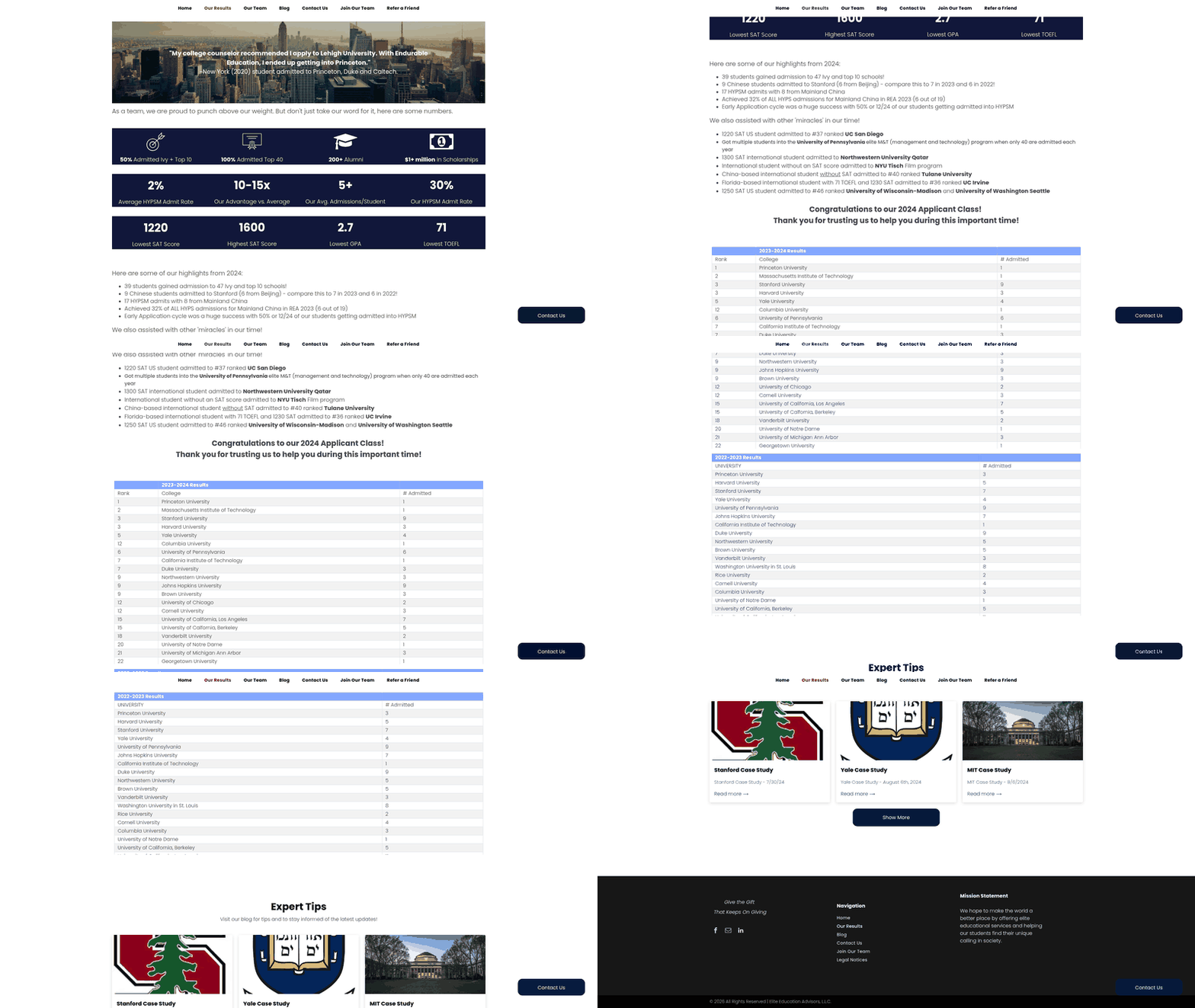
- Over 50% of our students gain admission to top 10 and Ivy League schools, with nearly all entering Top 35 colleges.
- No legitimate consultant can promise admission to specific schools because universities control decisions based on institutional needs beyond outsider influence.
- Ethical consultants refuse to write essays for students because ghostwritten work doesn't sound like authentic teenage voices that admissions officers recognize.
- Students can experience mental health struggles when consultants overcriticize to manufacture problems they can charge to fix.
- Strong practitioners answer process questions with specifics from recent student work, while weak ones speak in generalities.
Why We Screen Before We Start
Before we work with a family, we ask a series of questions that might seem like extra steps. They're not. They're how we evaluate both objective fit and relational compatibility: whether the partnership will actually help the student, and whether we'd be taking money for a service we can't deliver well.
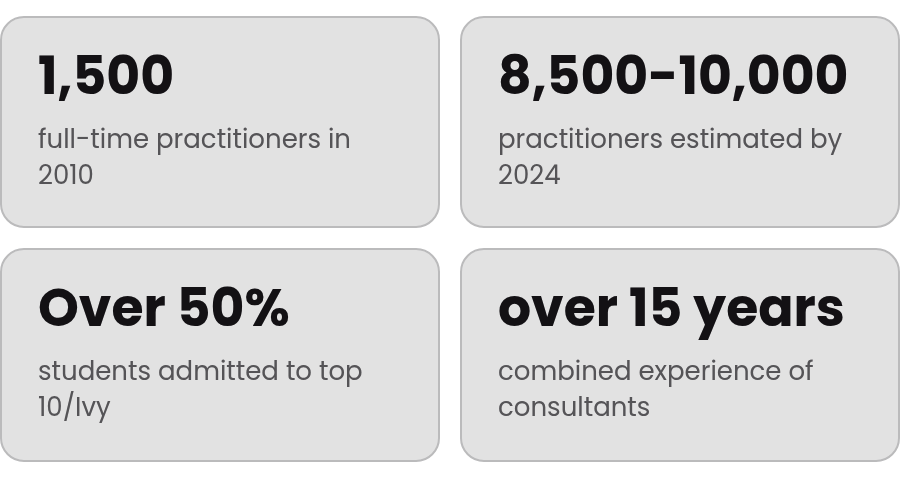
The college admissions consulting field has grown from roughly 1,500 full-time practitioners in 2010 to an estimated 8,500 to 10,000 by the end of 2024. That growth brought a quality problem. The field is unregulated—anyone can hang a shingle after finishing an online certificate. High-quality practitioners invest time understanding whether a family is a good fit. Volume-focused consultants accept nearly everyone to maximize revenue.
When Expectations Don't Match Reality
Families hire consultants hoping we helped, but outcomes are nearly impossible to verify. A student applies, a decision arrives, and no one can rerun the experiment to isolate what the consultant contributed. That uncertainty makes the initial conversation especially important. We try to make the process observable: we explain what we evaluate, the tradeoffs we weigh, why we reject alternatives, and how we assess our work when admission results cannot prove causation.
Mismatched expectations affect service quality. Families who treat consulting as transactional, who change scope after signing, or who disappear during critical project phases create friction that affects the working relationship.
What We Look For
We work best with families who understand the limits of this process. Our service is customized planning, strategic guidance, and collaborative support. It is not access to an admissions decision-maker. Our track record includes over 50% of students admitted to top 10 and Ivy League schools, with nearly all admitted to Top 35 colleges. Those results reflect student talent and sustained effort, not a magic phone call.
We also prioritize student-owned work. Ethical consultants refuse to write essays for students, fabricate activities, or coach students to misstate facts. Our mentorship helps students develop their own voice and articulate their genuine experiences. Families who expect someone else to "just fix" an essay reveal a fundamental misunderstanding of what builds a credible application.
Clear communication matters throughout the engagement. Our initial consultation is designed to reveal how we think: the questions we ask, the sequence we propose, and whether our recommendations respond to the student's actual circumstances. We begin by assessing each student's unique needs and goals, then provide customized mentorship through both the life preparation phase and college application phase.
We look for sustainable collaboration patterns. Our approach emphasizes friendly support through regular check-ins and availability via multiple communication channels, not creating dependency. Students can experience mental health struggles from criticism received from college consultants, particularly when consultants overcriticize to manufacture problems they can charge to fix. The work we do requires focus and preparation. Families who understand that our team approach—including graduates from Harvard, Yale, and Princeton with over 15 years of combined experience—delivers thorough guidance tend to see stronger results than those expecting on-call availability.
Life Preparation First, Applications Second
We separate our work with students into two phases: life-preparation and college-application. These phases reflect the stages of development competitive admissions requires.
Building the Foundation
Before we touch a single essay or application portal, students benefit most when they've built the developmental foundation competitive admissions requires. This means cultivating extracurricular commitments, a strong academic trajectory, and genuine personal interests. A junior who just started their first club or hasn't explored activities outside the classroom often needs time to develop authentic interests and sustained involvement first.
Intellectual curiosity and self-motivation matter. Does the student read independently? Do they pursue projects beyond what's required? Can they articulate why they care about their activities, or are they checking boxes because someone told them to? A student who can't explain their own interests in their own words won't produce compelling application materials, no matter how skilled the guidance.
At this stage, screening is less about predicting a college result than determining whether the student is ready to participate. We can provide structure and perspective, but we cannot substitute for sustained effort or invent a personal direction on the student's behalf.
Moving Into Applications
Once a student has that developmental readiness, the college-application phase begins. Communication skills become central—can they write clearly, revise thoughtfully, and incorporate feedback without becoming defensive? Essay writing and interview preparation help students articulate their story authentically under time pressure.
We also clarify family roles. Parents often want to help, but the student must drive the process. If a parent answers every question during an initial consultation while the student sits silently, that's a signal the application may not reflect the student's voice. The application must come from the student, not a well-meaning adult's vision of what admissions officers want to hear.
Promises We Never Make
A guarantee of admission to any school is the clearest disqualifier. Anyone who claims otherwise is either misunderstanding the work or lying. The honest framing is a candid assessment of your student's odds at each school, including the reaches where the real answer is "possible, not likely."
Claims of personal connections inside admissions offices are the second disqualifier. Former admissions officers can offer genuine insight into how file reading works at their previous institution, but that insight does not translate into influence over current decisions. Admissions offices do not hand out seats as favors to a consultant they once met at a conference.
What the First Conversation Should Reveal
Ask how a consultant approaches essays, builds a college list, or handles timeline planning. The response should reveal a repeatable process rather than a sales pitch. The asymmetry is usually obvious in the first consultation: an experienced practitioner engages with the work itself, while an inexperienced one redirects attention toward credentials, vague success language, or the family's anxieties.
Consultants who offer to write essays for students strip out the authentic voice admissions officers are reading for. A polished adult's prose sitting in a 17-year-old's file reads false. We guide students to develop their own writing and present their genuine stories. Our role is mentorship and feedback, not producing text they submit as their own.
Also worth flagging: consultants who only take on top-scoring students already headed for solid outcomes, then publish those results as proof of their skill. A firm's published results need context. Ask which students it accepts, how it defines success, and whether it can explain the work done for applicants whose profiles are less predictable. Otherwise, impressive outcomes may reflect selection practices more than consulting ability.
References should be asked about what went less well in the engagement, not just what went well. Every engagement has friction. How it was handled reveals more than aggregate satisfaction. Two or three substantive reference conversations usually clarify more than any brochure.
How We Start Working Together
Once you've confirmed a family clears the hard and soft requirements we described earlier—development readiness, ethical alignment, communication patterns—the next step is defining scope and setting expectations in writing. We send a detailed engagement letter that names each party's responsibilities: what we'll deliver (strategy sessions, essay review rounds, timeline management), what the student commits to (drafting on schedule, attending sessions, owning the final work), and what parents agree not to do (rewrite essays, pressure the student to apply against their wishes, expect guaranteed admission outcomes).
That last point matters. We frame our role as improving odds at reach schools and helping students present their strongest case—not as a secret pipeline to Harvard. If a family pushes back on that framing during the contract review, we know the fit isn't there and we decline the engagement before anyone signs.
We also propose our base-plus-bonus structure at this stage, though it's worth emphasizing this is our model, not an industry standard or a promise of results. The base fee covers the full scope of work regardless of outcomes. The bonus component rewards agreed milestone achievements, but it's structured so families aren't paying for admission itself. We've found this aligns incentives without creating the ethical hazard of pay-for-acceptance schemes, which cross the line into misconduct.
After contract signature, we hold a kickoff meeting with the student and parents together. We review the engagement timeline, confirm communication preferences (email, video calls, shared document platforms), and set the first set of deliverables. For life-preparation clients, that might mean identifying two extracurricular commitments to deepen over the next six months. For application-phase students, it's often a school list draft and a brainstorming session for the personal statement. This meeting also gives us a final behavioral read: does the student speak for themselves, or do parents dominate the conversation? The answer tells us whether our boundary-setting held.
From there, the work proceeds in structured cycles of check-ins, draft reviews with written feedback, and progress assessments. We stay alert for scope creep (parents asking us to write rather than edit) and revisit the engagement letter whenever roles blur. The goal is a partnership where everyone knows their lane and the student drives the process.
References
[1] Clients Intellectual Property Attorney Placement | Elite Search Consultants - https://eliteconsultants.com/clients
[2] Red Flags When Choosing a College Admissions Consultant - https://orieladmissions.com/red-flags-when-choosing-a-college-admissions-consultant/
[3] Red Flags When Hiring a College Consultant - SocratesPost - https://socratespost.com/feature/college-consultant-red-flag-list
[4] How to Choose a College Admissions Consultant: 4 Red Flags - https://ingeniusprep.com/blog/how-to-choose-a-college-admissions-consultant/
[5] 12 Questions to Ask Before Choosing a Med School Consultant - https://elevate.iit.edu/blog/2026/07/13/12-questions-to-ask-before-choosing-a-med-school-consultant/
[6] 12 Consulting Client Red Flags You Should Avoid Working With - https://www.consultingsuccess.com/consulting-client-red-flag-list
[7] Management Consulting Journal Title Professional purchasing provides ... - https://www.researchgate.net/publication/329625985_Management_Consulting_Journal_Title_Professional_purchasing_provides_professional_projects_and_removes_personal_bias_Doesn%27t_it_Authors_Name_Organisation_Main_author_contact_details_Name_Email_and_pho
Quick Questions, Straight Answers
Can a consultant guarantee my child will get into Harvard or another top school?
Treat any certainty about a particular admission as a reason to pause. A responsible consultant should discuss the student's profile, the range of possible outcomes, and the limits of outside guidance. Ask whether the firm is willing to put those boundaries in writing before you pay a deposit.
How can I tell if a consultant is actually experienced or just completed an online certificate?
Ask for a walk-through of the work itself. A credible consultant should be able to explain how they would evaluate a preliminary college list, organize a student's timeline, and respond when a plan stops working. You should leave the conversation understanding the method, not merely the consultant's résumé.
What happens if the consultant wants to write my child's essays instead of coaching them?
Do not accept that arrangement. The student should generate the ideas, language, and final submission, while the consultant provides questions, structure, and editorial feedback. Ask to see the firm's policy on authorship and confirm that parents will not be expected to perform hidden rewriting either.
Should I worry if a consultant criticizes everything my child does?
Pay attention to the pattern and to the student's response. Useful feedback identifies a specific issue, explains why it matters, and gives the student a workable next step. If conversations leave the student afraid to take initiative or convinced that every accomplishment is inadequate, discuss the concern directly and reconsider the relationship if the tone does not change.