What a College Admissions Consultant Actually Does During Your Senior Fall
October 17, 2026

Key Takeaways
- Students who worked with a large structured consulting provider had a 31% Ivy League acceptance rate, compared with 4.8% nationally.
- That same provider reported a 38% acceptance rate to top-10 US universities and a 98% admission rate to at least one top-10 school among students applying to about 16 colleges on average.
- Senior-fall consulting typically covers six functions: timeline planning, essay scheduling, activity-list review, interview preparation, application review, and supplemental strategy.
- Most seniors arrive with a strong draft and a weak overarching narrative; the first job is usually to define the application’s core argument before editing essays.
Why senior fall is where the consulting leverage lives
Senior fall is packed. Early decision deadlines (the binding early application plan), supplemental essays, and final school lists all collide in the same eight-week window. If outside help is going to change an admissions outcome, this is the stretch where it happens.
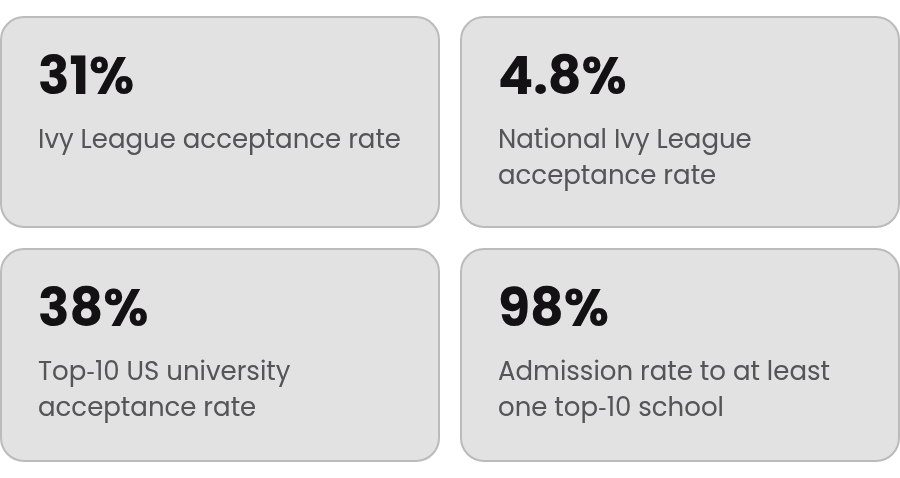
The outcome gap does not guarantee admission. We don’t view the six‑times Ivy League gap as proof that paying for support buys a yes; we see it as a signal about where structured senior‑fall work aligns with stronger outcomes.
Senior fall also concentrates three pain points: timeline overload, essay fatigue, and decision-phase anxiety.
Reading the outcome data without overselling it
The pattern is real: students who work with a structured consulting provider tend to see stronger admissions results than the national baseline, and the lift is largest while the application list, early strategy, and essays are still open. Use the benchmarks as a pre-application stress test, not as a promise.
- List check: Compare the current list against the benchmarks before the early round. If the list is top-heavy with Ivy or top-10 reaches, use the 31% Ivy and 38% top-10 acceptance rates as the reference point, and treat the 98% top-10 admission rate as tied to a cohort averaging about 16 applications.
- Calendar check: Audit the senior-fall calendar for overload before essays start. Sorting deadlines ahead of drafting prevents rushed supplements and forces a sequence for the eight-week window.
- Decision check: Decide whether the remaining decisions need outside eyes. Focused support is most useful while the school list or early strategy is still open, not after submission.
Mapping the senior-fall calendar before essays start
For a senior, we begin with an initial consultation to understand the student’s fall classes, activities, and supplement deadlines before building a plan. A student carrying four AP classes, a fall sport, and a dozen supplement deadlines needs a sequence, not a vague to-do list.

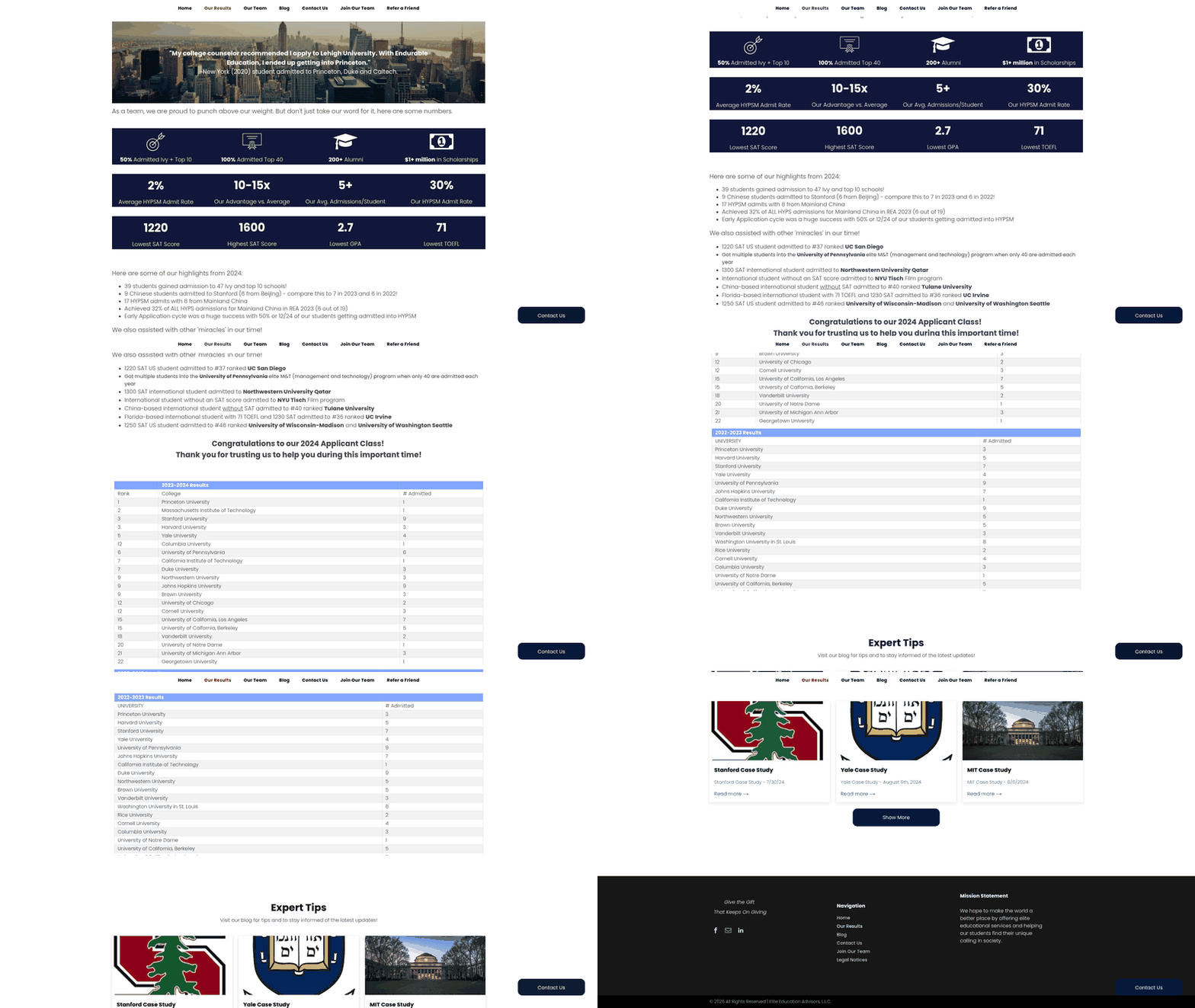
One large provider reports an average application volume in the double digits, and we see the same pressure on our side: students juggle multiple early deadlines and regular decision tasks in the same fall sprint. That is where the work becomes a planning function, not just an editing service.
The six functions we organize, in order of use
- Timeline planning sets early decision, early action (the nonbinding early plan), and regular deadlines in one view before any essay drafting starts.
- Essay drafts get scheduled so the personal statement and supplements don’t collide with midterms or finals.
- Activity-list and resume review come before essay editing. We cluster meaningful life-preparation experiences around one or two themes so the essays can extend the same throughline instead of introducing a different student.
- Interview prep rehearses school-specific answers and short “why this college” responses before interview windows close.
- Application review uses regular check-ins and feedback sessions to keep materials consistent across activities, honors, and essays.
- Supplemental strategy decides which prompts need original writing and which can adapt cleanly from existing drafts.
Build the narrative before the essays
Most seniors arrive with a strong draft and a weak throughline. Our first job in college admissions consulting is often not editing; it’s deciding what the application is actually arguing. We treat the reported acceptance gap as a reason to make the narrative legible, not as proof that one essay structure works.
Start with the activity list, not the personal statement
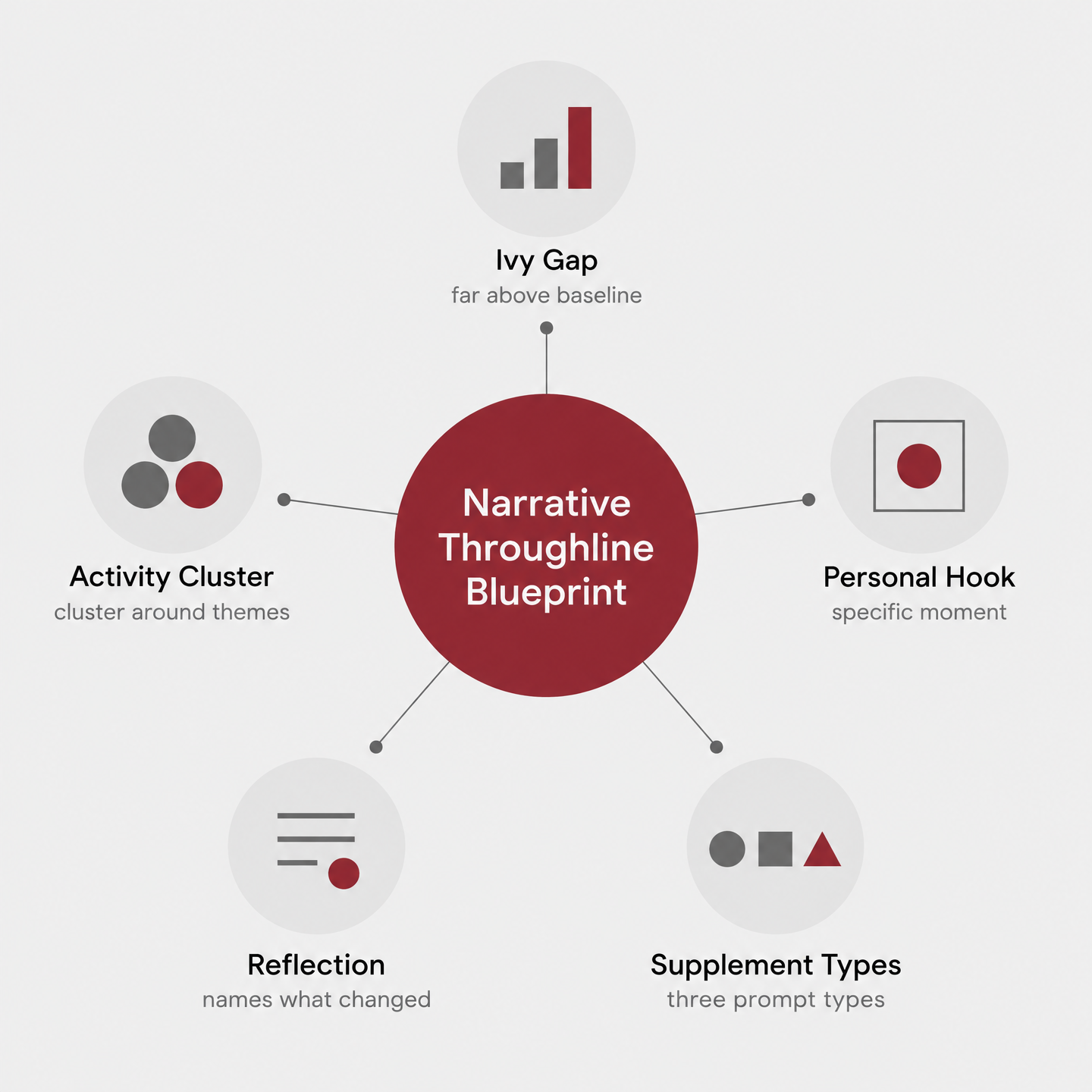
We see students overwrite the personal statement and undersell the activity list. Reverse that order. Cluster activities around one or two themes, then let the essays extend those themes.
- Use the activity list as the source text. Cluster entries around one or two themes, then draft the personal statement hook to put the student in a specific moment that shows a choice or shift in that theme, not a summary of achievements.
- Close with reflection that names what changed. Admissions readers want a student who can explain their own learning, not just list accomplishments.
- Match supplement prompts to the same themes: “why this school,” “community or identity,” and “intellectual interest” prompts each need an answer that extends the activity list, not a general essay reused across colleges.
- Read the finished file in order: activity list, personal statement, supplements. If a reader cannot name the student’s core interest by the end, the throughline is too faint.
Application mechanics and submission-day verification
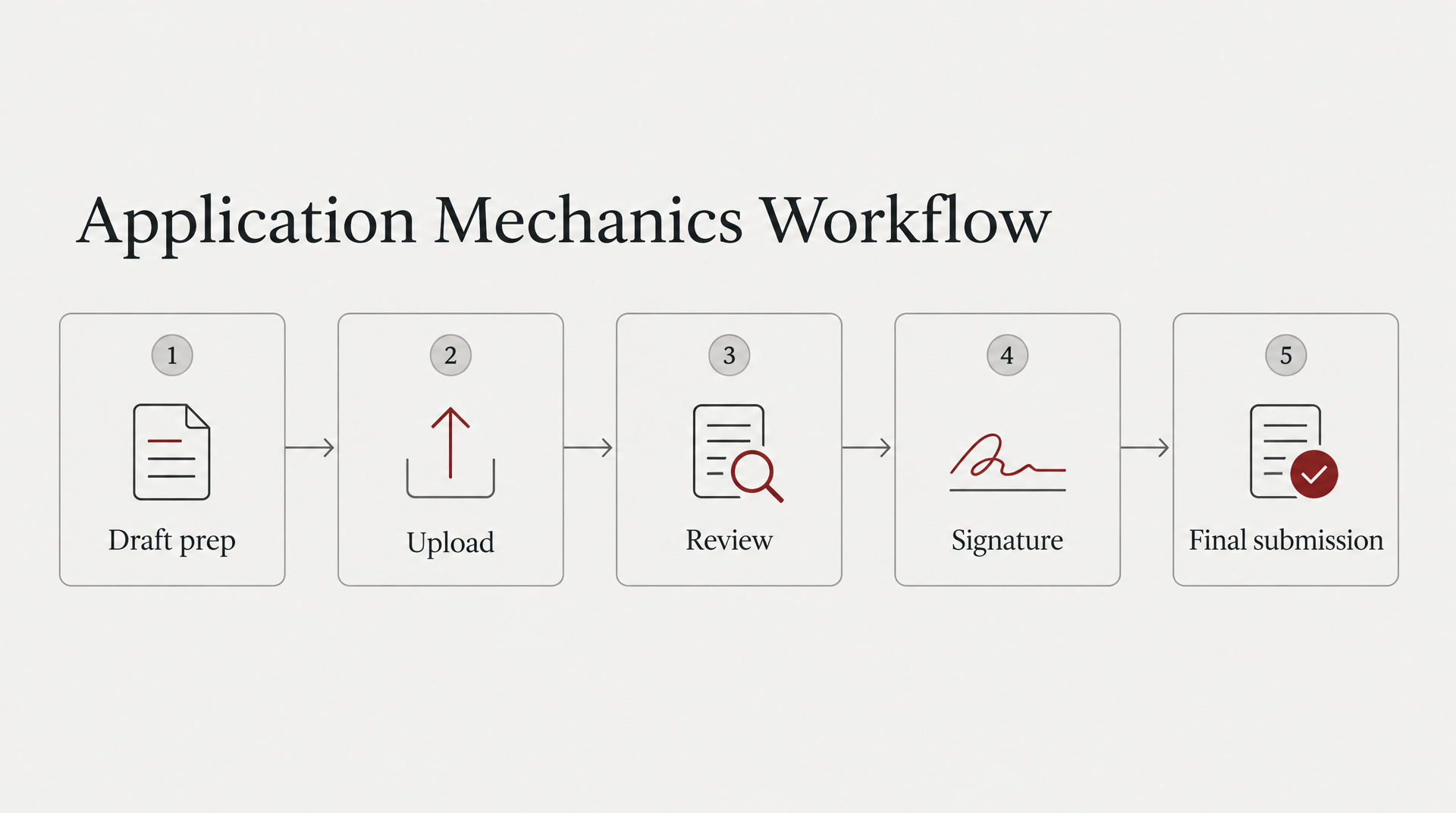
We see the same mechanical risk every fall. A student uploads the wrong draft of a strong supplement. A portfolio link sits unopened until after the deadline. An early decision agreement goes out without the counselor’s signature. Application mechanics is where a second set of eyes earns its keep.
The Common App and Coalition portals reward a single workflow. We have students build one master tracking sheet for every school: deadline, decision plan, writing supplements, portfolio or video links, recommendation status, and fee waiver. For a dozen or more applications, that sheet prevents the fall sprint from becoming a guessing game. Early decision and early action deadlines cluster in the fall; regular decision follows later. The portal does not care which plan you meant to choose.
Final submission-day checks
We ask students to stop revising and start verifying.
- Confirm final essay and supplement versions match each college’s prompt, not just the file name.
- Check that each recommendation and transcript lists the correct counselor and high school, not just “sent.”
- Open every portfolio, video, or audition link in an incognito window to confirm permissions work for an admissions reader.
- Match each application to the correct decision plan: early decision, early action, or regular decision.
- Confirm the fee or fee waiver cleared and the portal status shows submitted, not “in progress.”
What to do after the last supplement is in
After the last supplement is submitted, the work shifts from drafting to deciding. Post-submission support usually focuses on what comes back: interview invitations, decision updates, and financial aid offers that can arrive on different timelines.
When several top-choice acceptances land, the job changes from hoping for a single yes to comparing real options.
Post-submission support that actually matters
- Run mock interviews in three modes: general questions about your story, school-specific questions tied to each program, and behavioral prompts that ask you to reflect on a challenge. This sharpens the same narrative details you need for any late supplements.
- Track every decision in one place. Use a spreadsheet plus each school’s portal to record decision plan, financial aid package, and deposit deadlines so no offer expires unnoticed.
- Compare financial aid packages line by line. Separate grants and scholarships from loans, then calculate net cost for all four years before a large award sticker sways you.
References
[1] College Admissions Counseling - PrepScholar - https://www.prepscholar.com/college-admissions-consulting/
Questions People Ask
1. What if my senior already finished essays but the activities section feels scattered?
Start by clustering existing activities around one or two core themes before touching edits. A consultant often reviews the activity list first because readers form an impression there; essays then extend those themes. This reverse order helps catch a weak throughline even late in fall.
2. Does senior-fall consulting stop after applications are submitted?
Support usually spans early decision, early action, regular decision, and post-submission choices. After submission, consultants often focus on mock interviews, tracking portals, and line-by-line financial aid reviews so multiple offers do not expire unnoticed.
3. When is a final application review enough instead of full consulting?
A focused application review makes sense when the main need is verification rather than strategy. Ask a consultant to check that essay versions match each prompt, decision plans are correct, portfolio links open, and fee waivers cleared before submission.