Inside an MIT Admit's File: The Choices That Actually Mattered
September 23, 2026

Before we get into it, here’s the short version:
- MIT admitted 1,334 of 29,281 applicants for the Class of 2029, a 4.6% acceptance rate.
- MIT is need-blind for every applicant, including international students.
- The median price paid by undergraduates on an MIT scholarship was $10,268, against a $92,760 sticker price.
- MIT’s Common Data Set rates character as Very Important.
- MIT’s enrolled class is 20% first-generation and 68% from public high schools, with no school, state, or regional admissions quotas applied.
Related Video
Watch: Advice from an MIT admissions officer by Sarah Wu
What actually moves an MIT file
At a 4.6% rate, the gap between admit and rejection rarely rests on one number, per MIT's own facts page. It comes down to choices made years before the application opens. Stop optimizing the application. Start optimizing the years behind it. Depth, risk, and fit are the levers. Everything else is packaging.

That's where our work sits. No two students arrive the same way. So we build the plan around the student, not the template. The goal is deliberate early decisions, not insider knowledge absorbed by osmosis. Over 16 years and hundreds of students, the pattern holds: the ones who break through made intentional calls about what to chase and what to skip.
Financial aid won't get you in, so stop treating it like a lever
A correction worth stating plainly. Aid negotiation does not make or break your MIT admission. MIT is need-blind for every applicant, including international students, and meets full demonstrated need. Your ability to pay is invisible in the decision.
The real use for aid sits after admission. The median price actually paid by undergraduates on an MIT scholarship was $10,268 against a $92,760 sticker, according to Crimson's admissions guide. That stage is about making an offer work, not getting in. Confuse the two, and you waste energy on the wrong fight.
The committee is built to protect you
MIT applies no school, state, or regional quotas, and it does not read your file against classmates from your area, as its selection process explains. A large group debates an application before it reaches the admit pile. That design blunts individual bias, which protects applicants who don't come with the polished packaging of a well-coached peer.
Pair that with the enrolled class: 20% first-generation, 68% from public high schools. A strong candidate is judged on their own path, not crowded out by someone else's. We lean into that hard, because it means a student's trajectory is the whole story.
Character over scores, depth over breadth
MIT rates character as Very Important in its Common Data Set. Rigor, GPA, and test scores sit a tier below. A perfect 1600 does not set you apart, the former admissions officer notes. High scores are a threshold, not a differentiator.
So we push depth over resume-padding. As one longtime MIT student blogger put it, "stats don't get you acceptance into MIT, they get you consideration". The choices that mattered in real admit files were the ones that showed sustained commitment to a few things. For more on the non-academic signals that decide these cases, see our breakdown of the four signals beyond GPA.
Demonstrated Initiative: Projects, Research, and Hands‑On Innovation
MIT's own list of what earns an offer reads like a project brief, not a checklist. Initiative, hands-on creativity, risk-taking, and intensity sit right alongside academic achievement on the facts page. That ordering is the whole game: readers want proof you chased something down, not a tidy list of titles.
For the students we work with, that's genuinely good news. With no quotas and no weight given to legacy relations, a first-generation applicant from an underfunded high school competes on trajectory, not connections. At a rate hovering near 4%, readers have every reason to reward real initiative over a file polished by expensive resume-padding.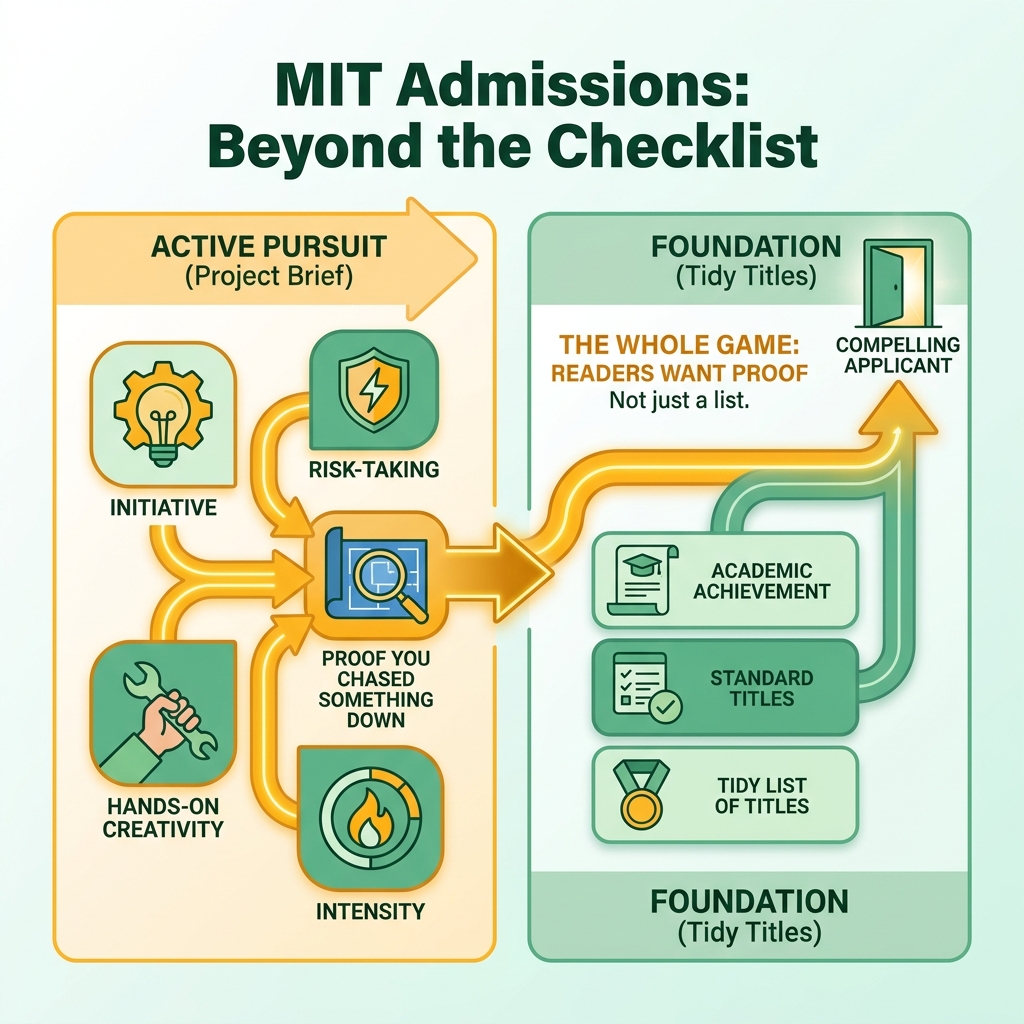
Growth beats a pre-perfected record
MIT says plainly that it wants applicants who are not afraid to fail and who know how to build a support system, per its what we look for guidance. A project that visibly evolved, hit a wall, and got rebuilt tells that story better than a trophy shelf.
We steer students toward messy, iterative work for exactly this reason. A robotics build that broke twice before it ran. A neighborhood water-quality survey that started as a class question and grew into a summer of testing. These read as authentic because the growth is clear.
A contrived, over-optimized activity list can actually hurt. When every line looks pre-perfected, a reader senses the coaching. Curiosity a student can discuss in real detail is what holds up in committee.
Surfacing initiative when the resources aren't there
The hard part for students without lab access or a family science network isn't doing the work. It's showing it. Our team, made up of Harvard and Yale graduates, builds a customized plan for each student and reviews every essay as a panel, so at least two mentors help develop and refine the story behind the work.
Scale is not the point. A student who taught coding to younger kids at a community center, tracked their progress, and iterated the curriculum has a stronger initiative story than one who name-drops a prestigious internship they barely touched.
We also help students pick their spots honestly. MIT explicitly asks for quality over a million activities. Two or three things a student genuinely cares about, documented well, beat a padded list every time.
When a deep project is the wrong play
Skip the manufactured research project when there's no real curiosity behind it. A rushed, borrowed lab placement with no reflection reads as hollow, and readers catch it fast.
Balance matters too. MIT lists "balancing hard work with downtime" among its selection traits. A student burning out across five simultaneous projects is building the wrong signal. We would rather see one sustained effort with honest room to grow, the same authentic profile that has helped our students earn admission and, in many cases, meaningful merit scholarships.
Leadership, Impact, and Community Involvement
MIT tells applicants exactly what impact looks like, and it's smaller than most families expect. "Tutoring a single kid in math changes the world," reads the admissions page on what they value. That one line reframes the whole leadership question: the committee isn't counting titles. It's looking for evidence you took responsibility for something and stuck with it.
For a lot of the students our team works with, that's where the real story lives. Many of them lead by necessity. They translate for parents, run a household, or hold a paying job that funds a robotics kit. Those roles rarely come with a club-president title, but they carry exactly the responsibility MIT rewards. Part of our work is helping students see that unpaid family labor and community organizing are impact, then framing those experiences to show a student at their best.
Sustained responsibility beats a résumé of titles
MIT lists initiative and contributing "to your family or community" side by side. Notice the framing. It's not asking who you managed. It's asking what you carried.
We push students to document the arc, not the label. How long did you run the STEM outreach night at the local library? What changed because you showed up? A student who tutored the same group of kids for three years demonstrates more than one who collected five one-semester officer positions.
This matters for a structural reason. MIT reads each file within its own context and does not compare you against classmates from the same school. Your depth stands on its own.
Well-roundedness often reads as padding
The classic well-rounded profile can work against you here. One sport, one service club, one leadership role, spread so thin that none of them shows the intensity MIT names as a core trait.
MIT says it plainly: choose quality over quantity, and put your heart into a few things you truly care about. A single obsessive project, or one sustained community program, signals more than a balanced-looking list. We would rather a student go deep on food-bank logistics for two years than sample six activities for a semester each.
So when we build a narrative, we cut. If an activity doesn't connect to a genuine interest or show real ownership, it usually leaves the application.
Impact includes the willingness to fail
MIT explicitly wants applicants "who are also not afraid to fail" and who know how to build a support system. That changes how we frame community work. A tutoring program that stumbled and got rebuilt tells a stronger story than one that ran smoothly on paper. The reviewer rewards the student who owned something real, then kept going.
Strategic Application Timing: Early Action vs. Regular Decision
MIT runs a non-binding Early Action round, and that one detail reshapes how we advise families. Non-binding means you apply early, hear back in December, and still compare offers before you commit anywhere in the spring. You get the early signal without giving up your options.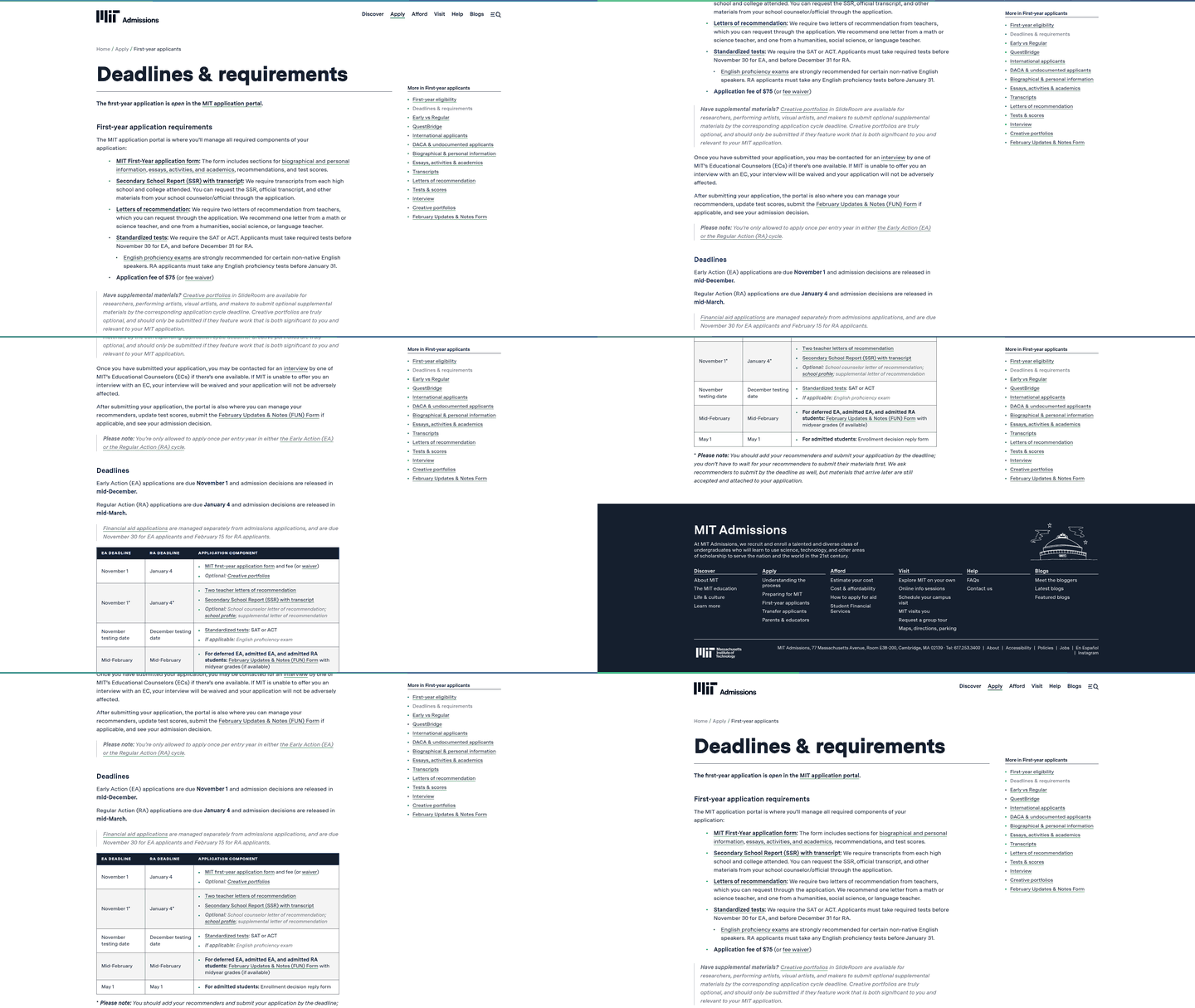
That distinction matters for the range of students we support, from artists to athletes to first-generation applicants. A binding early round forces a student to accept before seeing an aid package. MIT's structure does the opposite. A student can say yes in December and still hold every other offer up against MIT's aid letter months later.
Early Action rewards readiness, not eagerness
Applying early only helps when the file is genuinely finished. A December submission with a rushed essay and half-formed activity descriptions reads worse than the same student's polished January version. We tell students plainly: if the project narrative or the recommendation strategy still needs work, wait.
Skip the early round if your fall semester is where your strongest coursework lands. MIT reads for trajectory, and an in-progress advanced class that posts a strong grade in January can matter more than beating a December deadline. Rushing to submit before that evidence exists trades your best argument for a calendar win.
Good early candidates share a profile. Coursework that already shows the climb. Essays that name a specific thing they built or led. Recommenders who can speak to intensity now, not next term. When those pieces are set, the earlier answer is worth having.
Using the early-action window on purpose
For the students our Harvard- and Yale-trained team supports, timing folds into a larger plan. An early MIT answer buys months to keep refining the application, develop the activity list, and think through next steps before any deposit is due.
That preparation window is the part most families overlook. We build it into our regular check-ins and use the time to keep the student moving from a position of readiness rather than reacting under pressure.
Interviews & Supplemental Materials: Preparing for the MIT Interview
The MIT interview is optional, conducted by alumni, and easy to underrate. Families new to this process often treat it as a formality. It isn't. It's the one moment where a reader hears your voice instead of your transcript, and for the students we coach, that conversation carries weight most applicants never think to prepare for.
We lean on what MIT says it values across its guidance: initiative, curiosity, and evidence you took responsibility for something real. The interview is where you make those qualities audible. A student who translated for a parent or built something from scavenged parts should walk in able to tell that story plainly, without dressing it up.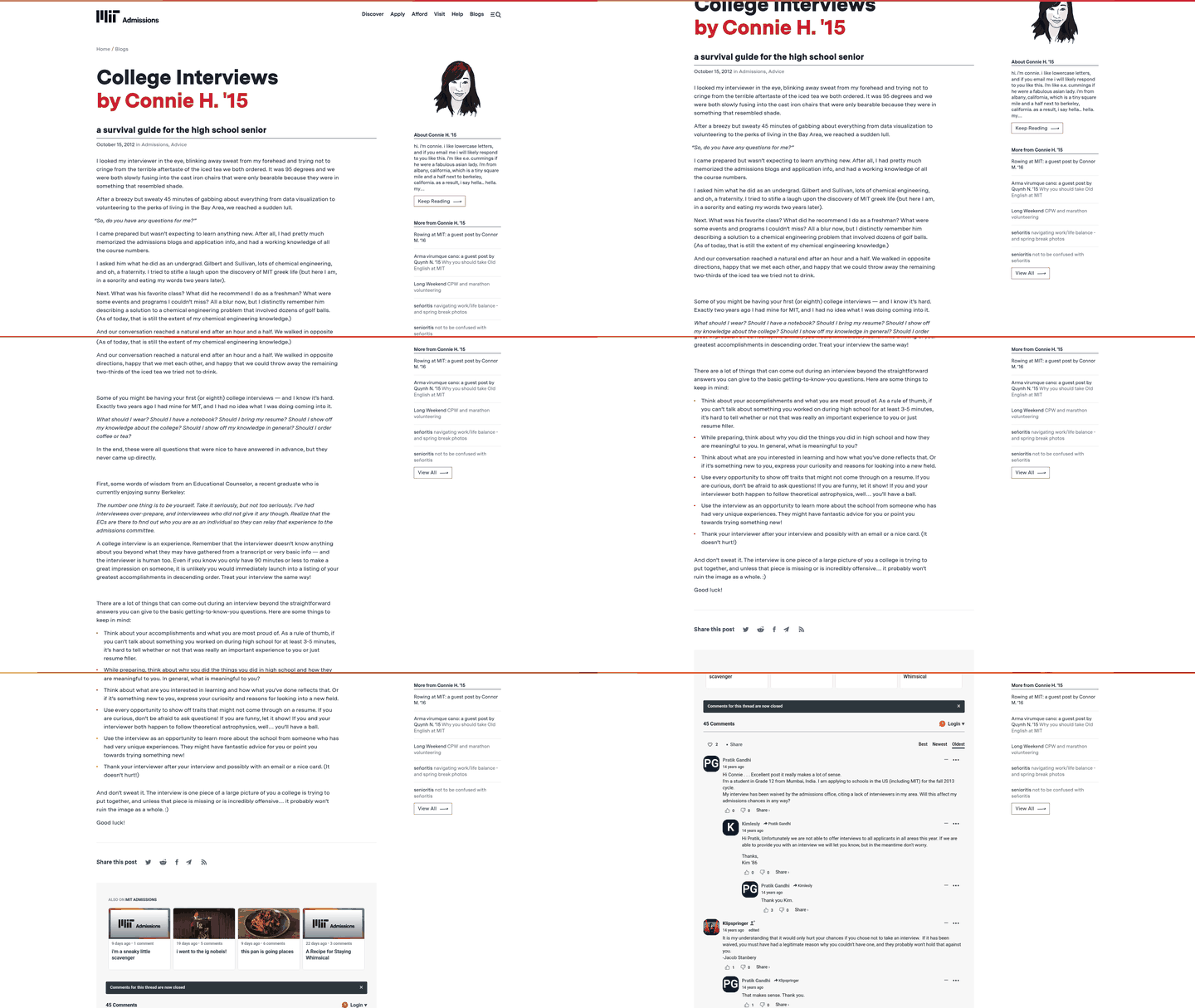
How do we prepare students for the MIT interview?
We run mock interviews with consultants, then hand back specific feedback instead of vague praise. Where does an answer ramble? Where does a student undersell the hard part of a project? We drill the follow-up questions, because an alumni interviewer will push on the thing you skimmed over.
For technical work, we help students decide what to bring and how to show it. A short demo video or a clean portfolio link beats a folder of screenshots. Practice explaining one project in two minutes, then in thirty seconds, so you can meet whatever the conversation allows.
One caution worth stating plainly: don't over-rehearse into a script. Interviewers can hear a memorized pitch, and it reads as coached. We aim for fluency, not performance.
What happens after the interview
The interview won't cover money, but the cost of attendance often shapes whether a family sees MIT as reachable. For the students we work with, an admit is only half the picture, and that stage gets skipped in most prep.
This is where long-term mentorship earns its place. We help students earn scholarships, and we set aside a select number of scholarships each year for students from low-income families. That support sits alongside the interview coaching, part of the ongoing relationship we build rather than a service that ends at admission.
Holistic Review: How MIT Weighs All Elements Together
The thing families misunderstand most about how MIT decides: no single element carries a fixed weight. The selection process puts your whole file in front of a senior admissions officer first, then hands it to additional readers, then to a committee where a large group discusses and debates before anyone lands in the admit pile. That's why smart admissions work starts with the file as one story, not seven separate scorecards.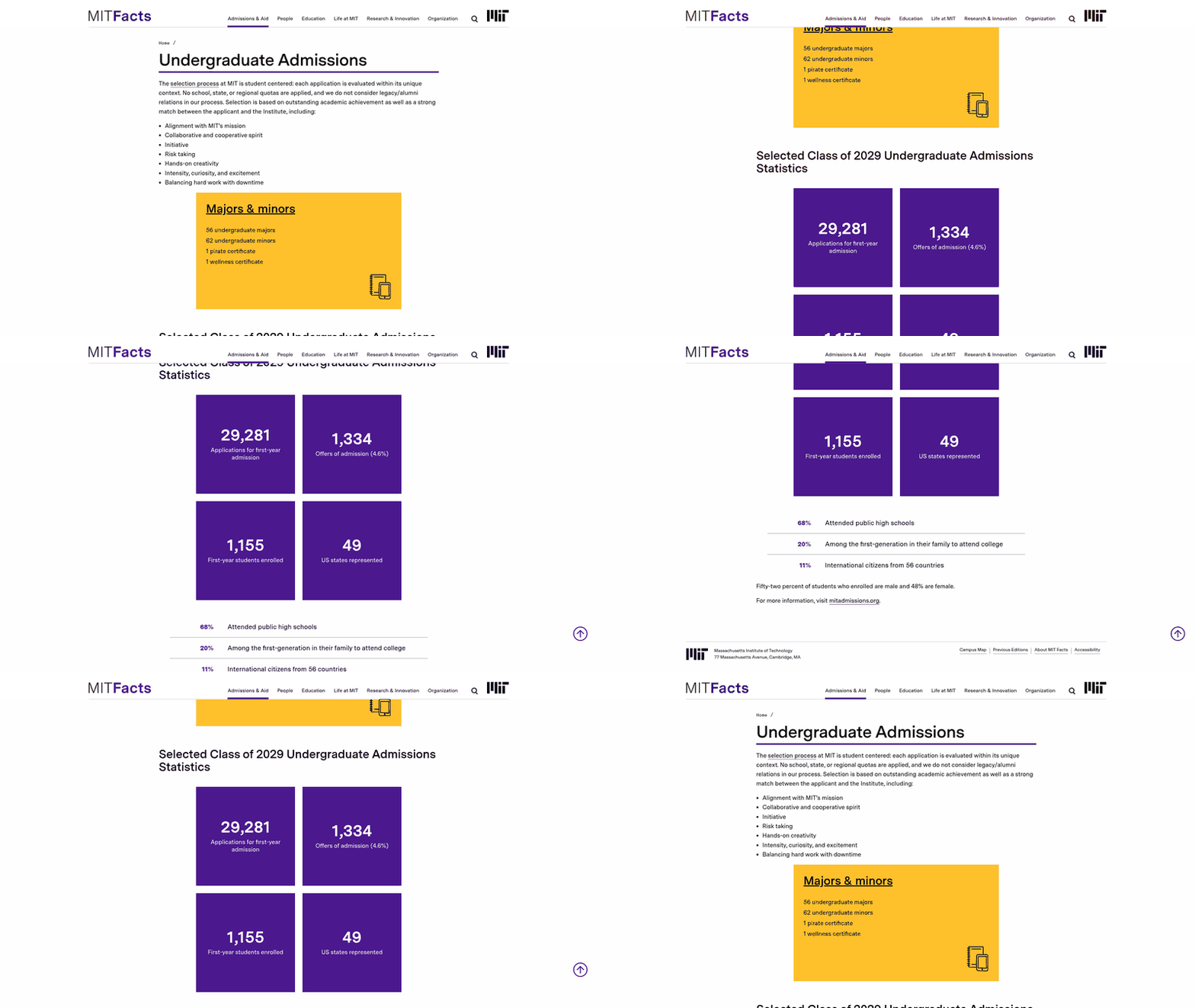
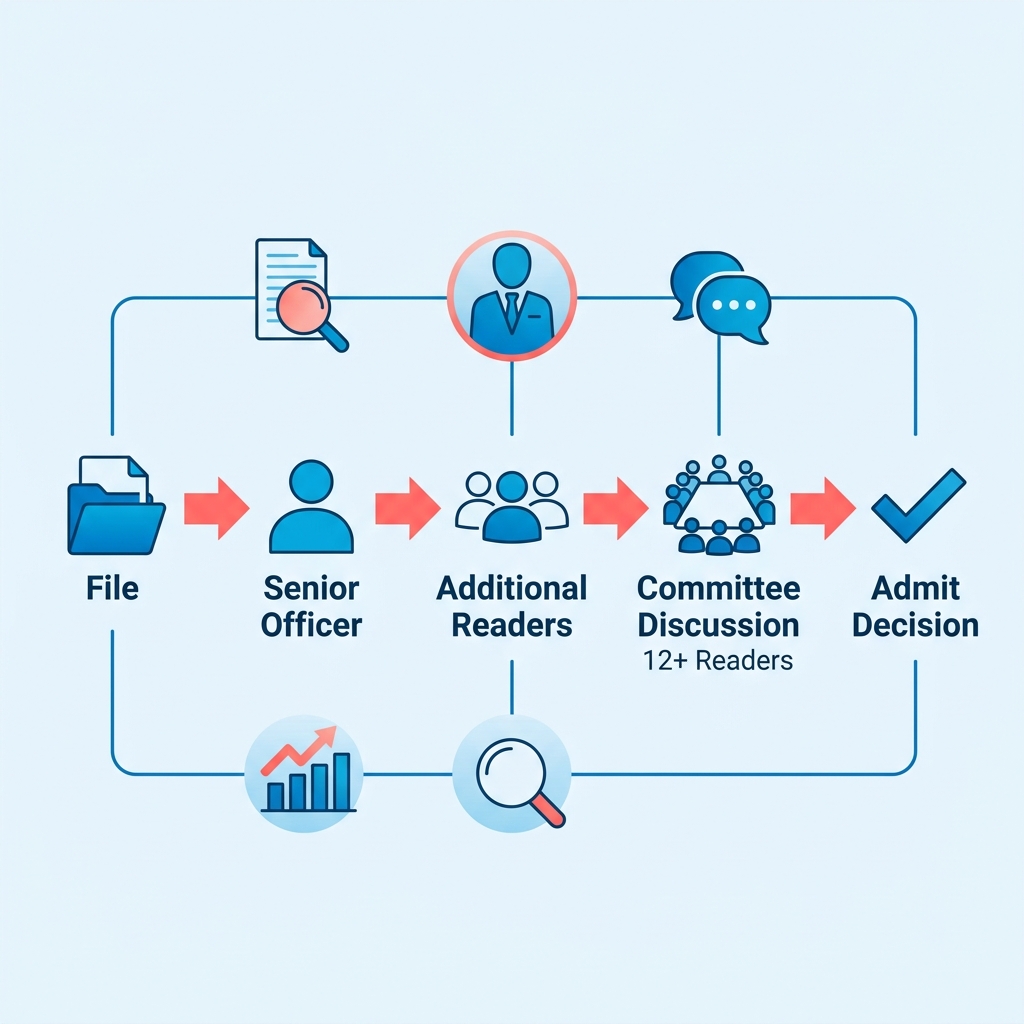
For the students our team works with, that committee design quietly removes the disadvantages they fear most. MIT does not read your application next to other students from your school, and it applies no regional quotas. Each applicant, as MIT puts it, is "evaluated within its unique context." A first-gen student from an under-resourced school is not competing against the three classmates who also applied.
What does "balance" actually mean in a file?
Balance does not mean being well-rounded. A veteran student blogger who hung around admissions put it bluntly: the conventionally well-rounded applicant with one sport, one service club, and one leadership title can read like a "boring, superficial resume-padder."
So how do scores fit? This is where sources appear to clash. One admissions analysis notes that essentially every admit who submitted scores lands in the top SAT band. An MIT admissions officer says scores only confirm "you'll do well in our curriculum." Both are true. High scores are near-universal because the score is a threshold gate, not a tiebreaker. Clear the floor and the extra points stop mattering.
That's the core of holistic review. Academics get you into the conversation. Initiative, risk-taking, and evidence you built something carry the file from there.
Where does financial aid actually enter the picture?
Another common assumption to correct head-on. Aid does not influence whether you get in. Readers never see your family's finances.
The real use for under-represented families comes after the December or spring letter, when affordability becomes the question. This is where a track record with merit scholarships pays off, and many of those awards end up being a strong return on what a family spends. That's where affordability gets won, not in the reader room.
How our panel keeps every dimension covered
We run files through a panel rather than a single mentor, mirroring MIT's own multi-reader logic. Every student's essays are reviewed by at least two members of our team for additional input and development. A panel gives you more perspectives on refining the story, so the application, essays, and interviews all show your best.
The goal is simple. When a large group at MIT debates your file, nothing in it should surprise them, and nothing should feel manufactured. For the signals that separate admits from rejections, our team breaks down the four signals beyond your GPA.
What I'd start building first, and when
Every choice this guide unpacks only pays off when someone helps a student sequence it years ahead of the deadline. That sequencing is the core of what we do. We start as early as 8th grade, splitting the work into a life-preparation phase and a college-application phase, so the projects, leadership, and initiative MIT rewards get built before anyone opens a form.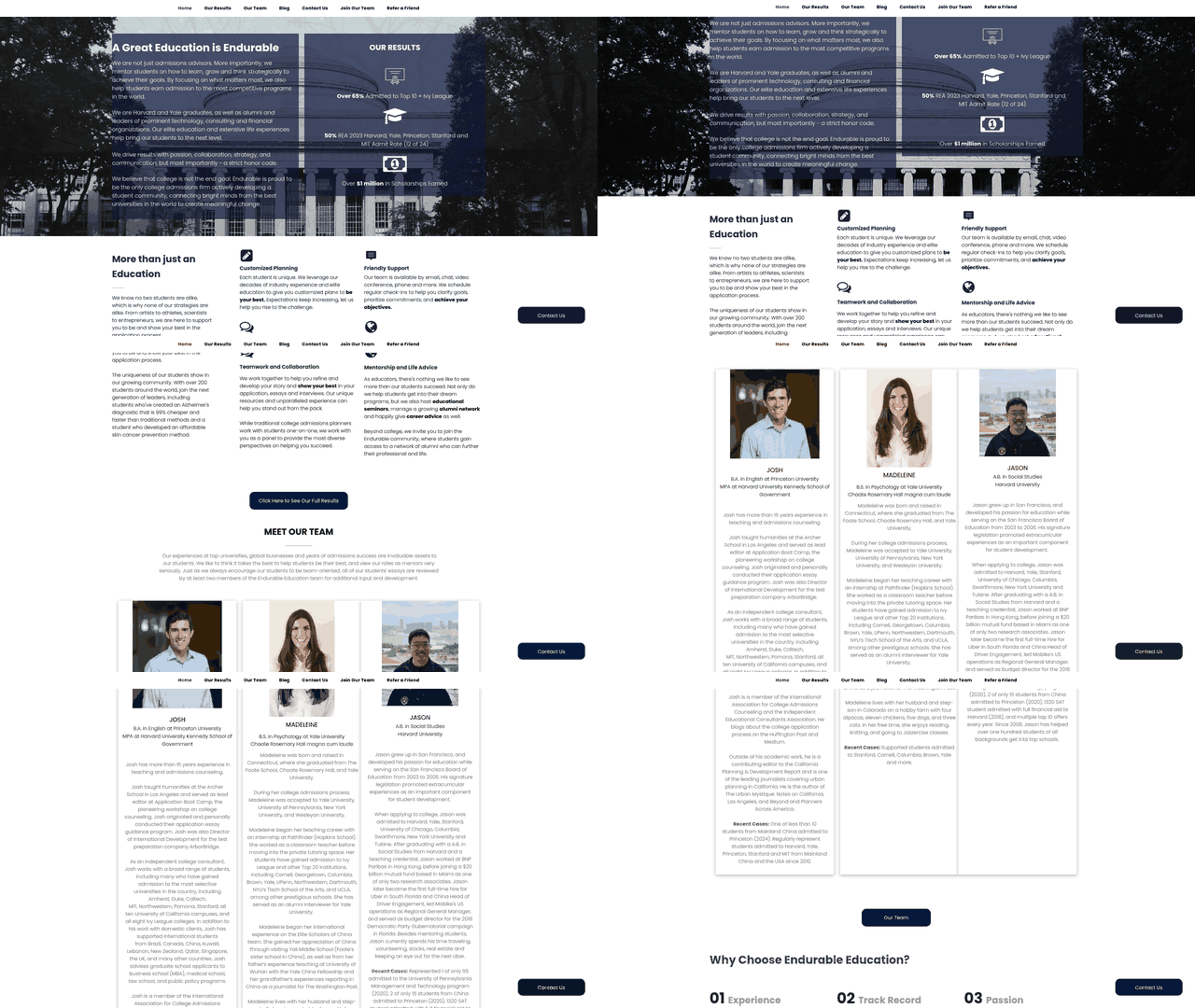
For the students our team works with, that head start matters even more. MIT's non-binding Early Action round means a December admit can hold that offer against other options into spring. Our focus stays on the work we can actually shape: the experiences, the leadership, the applications that earn strong offers, and the scholarship results that help families say yes.
Why the funding is its own battle
A student can arrive at Harvard on full financial aid with a strong SAT score. That combination is the point. The file and the funding are separate fights, and we treat them that way.
Many of the merit scholarships we help secure end up covering what families spend with us. We also reserve a handful of scholarships each year for students from low-income households, so cost of entry doesn't decide who gets guidance.
A panel review that mirrors MIT's committee
MIT hands your file to a senior officer, then more readers, then a full committee. We built our process to look the same from the inside. Every essay gets reviewed by at least two members of our team, not one counselor working alone.
That surfaces the blind spots a single reader misses. A student's household job can read as a chore on a first pass, and a second reader often sees the leadership story hiding inside it.
One student we worked with put it plainly:
"My college counselor recommended I apply to Lehigh University. With Endurable Education, I ended up getting into Princeton." - New York (2020) student admitted to Princeton, Duke and Caltech
That gap, between what a generic recommendation predicts and what a structured plan delivers, is the whole point.
References
[1] Undergraduate Admissions - MIT Facts - https://facts.mit.edu/undergraduate-admissions/
[2] What we look for - MIT Admissions - https://mitadmissions.org/apply/process/what-we-look-for/
[3] How To Get Into MIT | Admissions Guide - Crimson Education - https://www.crimsoneducation.org/us/how-to-get-into/mit
[4] Admissions advice from someone who's been there - https://mitadmissions.org/blogs/entry/admissions_advice_from_someone/
[5] Our selection process - MIT Admissions - https://mitadmissions.org/apply/process/selection/
[6] Advice from an MIT admissions officer by Sarah Wu - https://www.youtube.com/watch?v=lQ8WOKeogas
Frequently Asked Questions
Does applying to MIT Early Action improve my chances of admission?
Applying early only helps when your file is genuinely finished. MIT's Early Action round is non-binding, so it rewards readiness, not eagerness. A rushed December submission reads worse than a polished January one. If your strongest fall coursework posts a grade in January, waiting for Regular Action serves you better.
Can international students receive financial aid at MIT?
International students qualify for full financial aid at MIT. The school is need-blind for every applicant, including international students, and commits to meeting full demonstrated need. Your family's finances stay invisible during the decision. With a median scholarship price of $10,268 against a $92,760 sticker, aid applies regardless of citizenship.
Should I skip the optional MIT interview?
Take the interview if it's offered. Though optional and conducted by alumni, it's the one moment a reader hears your voice instead of your transcript. It lets you make initiative and curiosity audible. Endurable Education runs mock interviews with targeted feedback, drilling follow-up questions so you speak with fluency rather than a rehearsed script.
Does a perfect SAT score give me an edge over other MIT applicants?
A perfect 1600 does not set you apart. High scores function as a threshold gate, not a tiebreaker. Nearly every admit who submitted scores lands in the top band, so clearing the floor is what matters. Beyond that, initiative, character, and demonstrated depth carry your file, not extra points.
Does legacy status or family connections help at MIT?
Family connections carry no weight at MIT. The admissions process weighs no legacy relations and applies no school, state, or regional quotas. A first-generation applicant from an under-resourced high school competes on trajectory, not connections. The enrolled class is 20% first-generation and 68% from public high schools, reflecting that design.
What counts as leadership if I have no club titles?
Sustained responsibility counts more than titles. MIT values what you carried, not who you managed. Translating for parents, running a household, or holding a job that funds your projects all read as genuine impact. As MIT puts it, "tutoring a single kid in math changes the world." Scale is not the point.