What Cornell's Acceptance Rate Hides About Your Real Odds
September 29, 2026

Quick Summary
A high school senior from New York walks in with a strong STEM record. She has a stack of AP courses and dual-enrollment credits. She's staring at Cornell's application, trying to decide whether to commit early. The one number everyone quotes, the overall acceptance rate, tells her almost nothing about her real odds. That gap between the headline figure and a candidate's actual chances is where good admissions consulting helps most.
We tell families to treat the rate as a starting point, not a verdict. In our experience guiding students toward Ivy League outcomes, applicants who win Cornell seats use advanced coursework as leverage, not a box to check. AP and dual-enrollment classes do two jobs at once. Most applicants only see one.
Cornell's admissions numbers, as they stand now
Cornell admitted 9.22% of applicants for the Class of 2030, up from 8.38% the year before, according to IvyWise. That uptick sounds encouraging until you see the raw scale behind it.
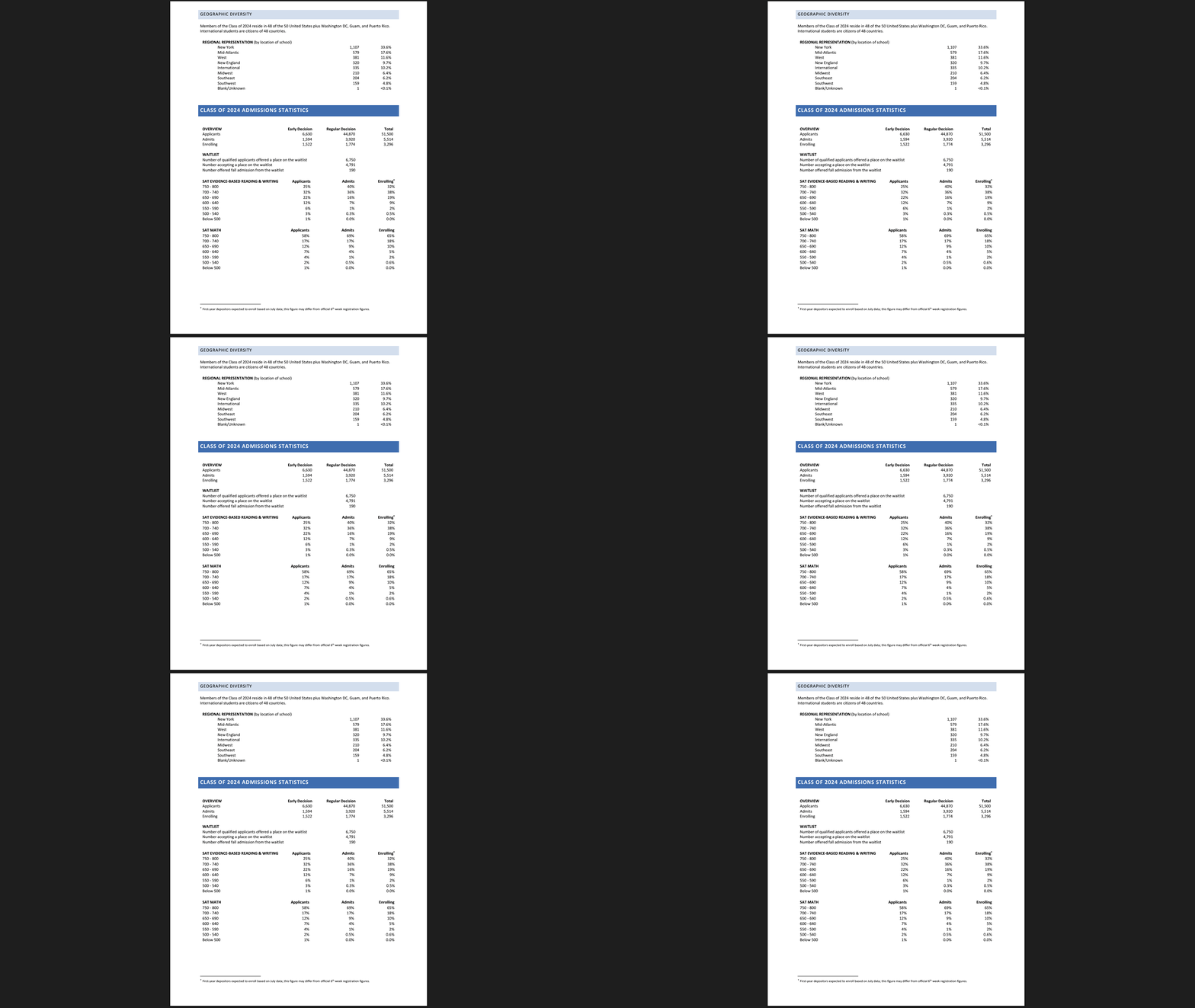
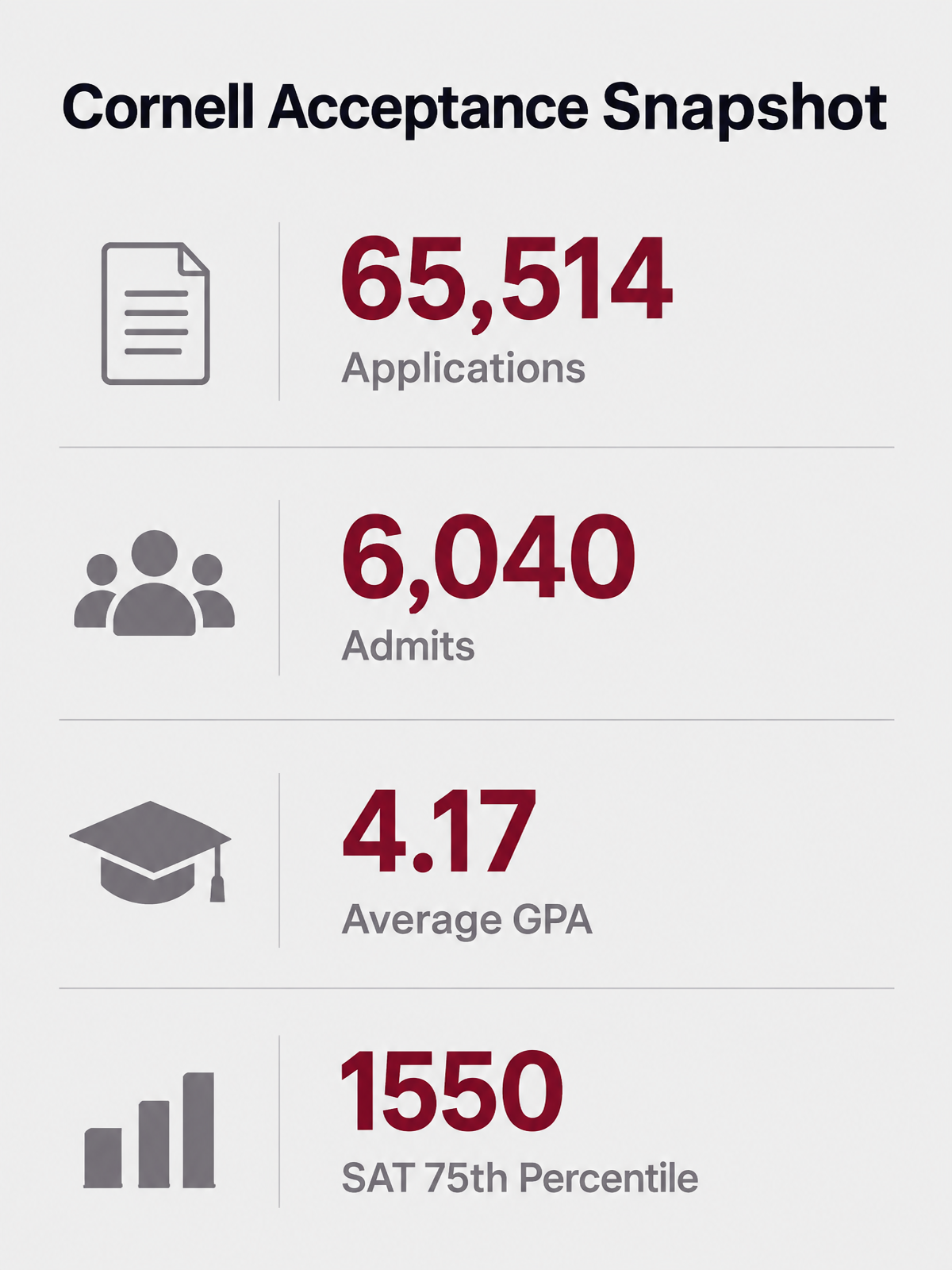
| Metric | Most Recent Figure | |. |. | | Overall acceptance rate (Class of 2030) | 9.22% | | Prior-year rate (Class of 2029) | 8.38% | | Applications received (fall 2026) | 65,514 | | Seats available | 6,040 | | Average GPA (estimated) | 4.17 | | Middle-50% SAT | 1490–1550 | | 75th-percentile SAT / ACT | 1550 / 35 | | Early Decision rate (illustrative, Fall 2020) | 21.4% |
Two variables drive that rate: a huge applicant pool competing for a fixed freshman class. A higher percentage doesn't mean an easier admit. As IvyWise puts it plainly, the highest rate among the Ivies "does not mean it's an easier school to get into."
Why rigor tells you more than the rate does
Cornell screens on academic numbers before anyone reads your essays. PrepScholar notes that below-average stats put your chances "nearly zero," which means a hidden GPA and test bar filters applicants out before holistic review begins.
The part families often miss is that Cornell's colleges are specialized. CollegeVine reports that they aren't chasing "the most well-rounded students"; they want demonstrated depth in one domain. Advanced AP and dual-enrollment coursework clears the numeric gate and signals the subject passion that actually wins the seat. That double duty is the point our students learn to use.
What our New York STEM senior should notice first
Read the table top to bottom, then map your own profile against it. Her AP calculus and dual-enrollment physics credits aren't just GPA padding. They're evidence she can handle Cornell Engineering's rigor and that her interest runs deep.
Early Decision can help here too, but only if the commitment is real. If Cornell is genuinely her first choice and her academics clear the bar, applying early tends to sharpen already-strong odds.
Before we get into it, the short version:
- Cornell's latest reported admit rate rose from the prior year, but the increase is not an easy opening.
- The applicant pool remains enormous relative to the number of available first-year seats.
- Each undergraduate college sets its own class-size goal and reads its own applicants, so acceptance rates vary sharply by program.
- Admitted students present very high grades and testing profiles, which makes the academic screen consequential.
- PrepScholar found that below-average academic stats can remove an applicant from serious consideration before holistic review begins.
- Early Decision can improve the picture for a strong applicant, but the binding nature of the plan matters.
Why the acceptance rate misleads most families
The number that trips up most families is the one that feels the most solid. Cornell publishes a single university-wide acceptance rate every spring, and a small yearly bump reads like good news at the dinner table. We read it as noise, because that figure moves for reasons that have nothing to do with any single applicant's odds.

That gap is where thoughtful consulting does its quietest work. When a headline figure drives the whole conversation, students either flood their lists with reach schools or talk themselves out of applying at all. Neither reaction is grounded in how Cornell actually reads a file.
The headline rate measures supply, not your chances
Cornell's published percentage is shaped by the relationship between demand and capacity. When more students apply for roughly the same number of places, the public-facing rate falls even if the standards haven't changed in a way that affects your individual profile. That's arithmetic about the pool, not a verdict on your transcript.
The more important distinction is internal. Cornell isn't one admissions office in practice. Each undergraduate college sets its own class-size goal and reads its own applicants, so acceptance rates vary sharply by college and program. The university-wide number you're staring at may be far from the real rate for the program you want. Hunt for the college-specific picture and ignore the composite headline.
The academic screen runs before anyone reads your essay
As the pool grows, the first filter carries more weight. Before a reader engages with your story, an Academic Index built from GPA and course rigor decides whether your file gets read at all, according to PrepScholar's breakdown. Cornell's admitted profile sits high, so a transcript that merely looks "good" in isolation may not be enough in this pool.
This is where advanced coursework earns its keep twice over. AP and dual-enrollment classes strengthen the academic signal that clears the gate. They also demonstrate the depth in a specific subject that CollegeVine notes Cornell prizes over generic well-roundedness. Clear the gate with rigor, then win the seat with domain passion. Most applicants treat those as one move. They're two.
Where the numbers genuinely don't matter
Be honest with yourself about the test-score debate. PrepScholar frames a low-but-published score as an application effectively tossed. A study on holistic admissions shows non-submitters stay competitive on other merit signals. Both are true. Once you send a score, it must clear an implicit bar. If you don't send one, the weight shifts to GPA and rigor.
So the "skip it" advice is specific: don't submit a score that sits at the bottom of Cornell's range hoping it helps. It won't. Let your coursework do the talking instead.
The rate is only the surface. The levers you actually control sit underneath it. Knowing which ones matter is worth more than any headline percentage. If you're weighing whether outside guidance is even worth it, these four signals are a fair place to start.
How Cornell actually calculates its acceptance rate
The number Cornell publishes is a single fraction: offers of admission divided by total first-year applicants. It lumps two very different tracks together. Both Early Decision and Regular Decision admits sit in the same numerator, which is exactly where families reading a headline rate get misled. This is one of the first things we clarify, because the combined figure hides a split that changes your real odds.
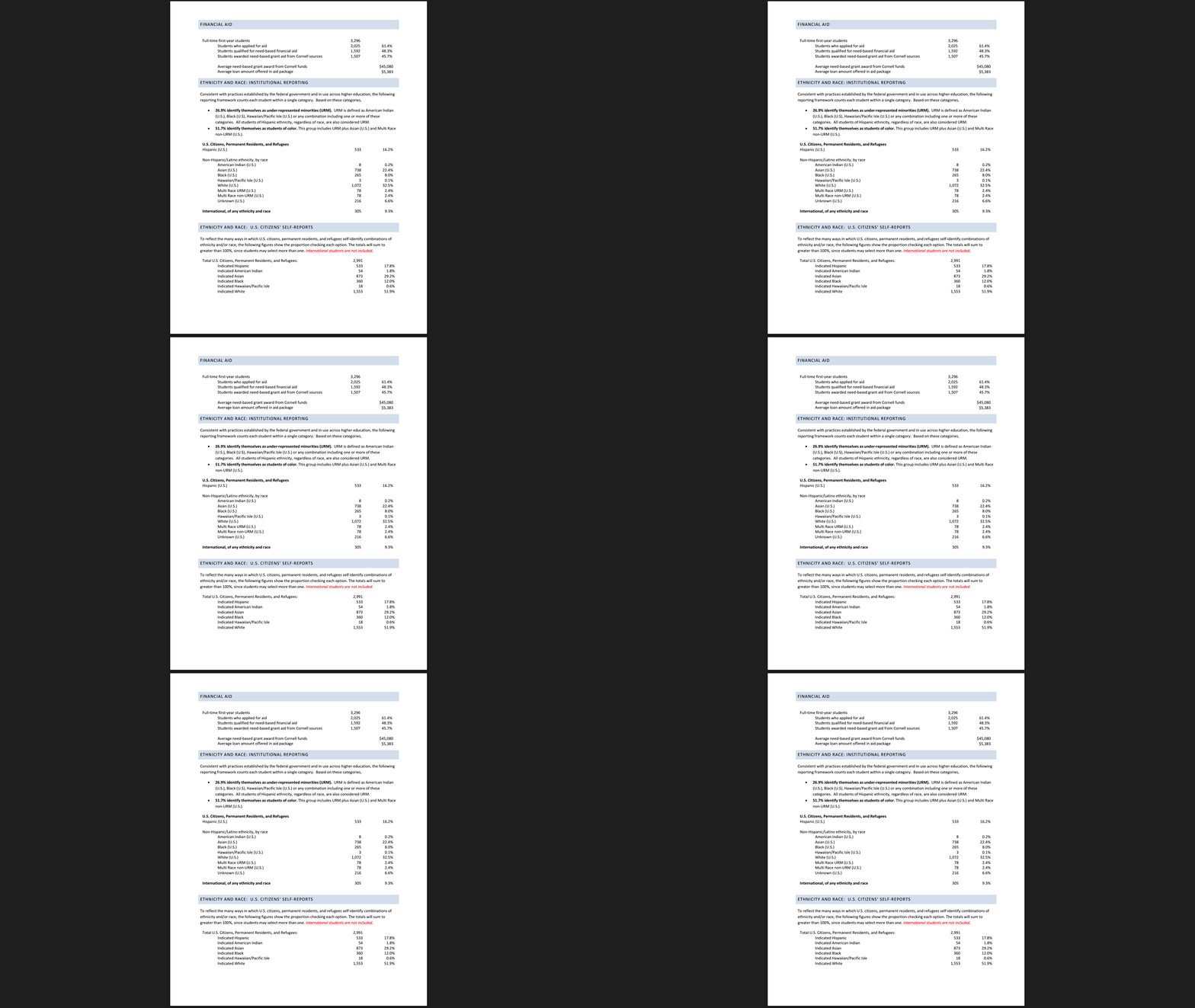
Cornell reports this as a first-year undergraduate rate, separate from transfer and graduate admissions. When you see the number cited in a table next to other Ivies, you're looking at first-year offers only. That distinction matters for anyone weighing advanced coursework, because the applicants who clear Cornell's academic filter are increasingly the ones who stacked their transcript with AP and dual-enrollment rigor before they ever hit "submit."
The Early Decision split the combined rate erases
Early Decision is a binding application. You commit to enroll if admitted, and in exchange you tend to face a different pool from the regular round. That early advantage is real, but it's easy to overstate. Cornell's own reporting shows the early round admitting a meaningful share of each class, while the regular round runs considerably tighter. The two pools carry genuinely different odds, even though the published rate treats them as one.
Blend those two pools and the published rate lands somewhere in the middle. That average tells an ED-strong candidate too pessimistic a story and an RD candidate too rosy a one.
The wrinkle worth knowing is policy direction. Cornell has been deliberately shrinking its ED share, reducing the proportion of each class admitted through the early track. The stated goal is equity. But the same reporting notes that legacy applicants still hold an edge inside the early round through a mutual-commitment relationship. So the equity gain is partial. Cutting ED narrows one advantage while the remaining early pool may still tilt toward legacy families.
Each college runs its own admissions math
Cornell's decentralized structure matters more than the public percentage suggests. A student applying to a quantitative program is evaluated against a different set of expectations than a student applying to a writing-heavy or policy-oriented program, even though both eventually appear in the same university-wide admit figure.
That matters for how you position rigor. A dual-enrollment calculus sequence reads differently to the College of Engineering than to a humanities program. We map coursework to the specific college's expectations rather than the headline rate.
Connect these pieces and a pattern emerges. Application volume keeps climbing while capacity stays constrained, and both traditional shortcuts, the ED odds bump and heavy score-weighting, are narrowing at once. What's left as the dominant first filter is the quantifiable academic signal you actually control: GPA and course rigor. That's why demonstrated strength in the transcript, built through AP and dual-enrollment work, does the quiet heavy lifting long before the holistic read begins.
What test-optional policies and rising application volume changed
A student walks into a test-optional cycle with a score that looks strong at most schools but ordinary in Cornell's pool, and asks the obvious question: submit it or not? That single decision reveals how much test-optional policies have reshaped the way files get read. When scores become optional, the rest of the application has to carry more weight, and that shift is where careful consulting changes the math.
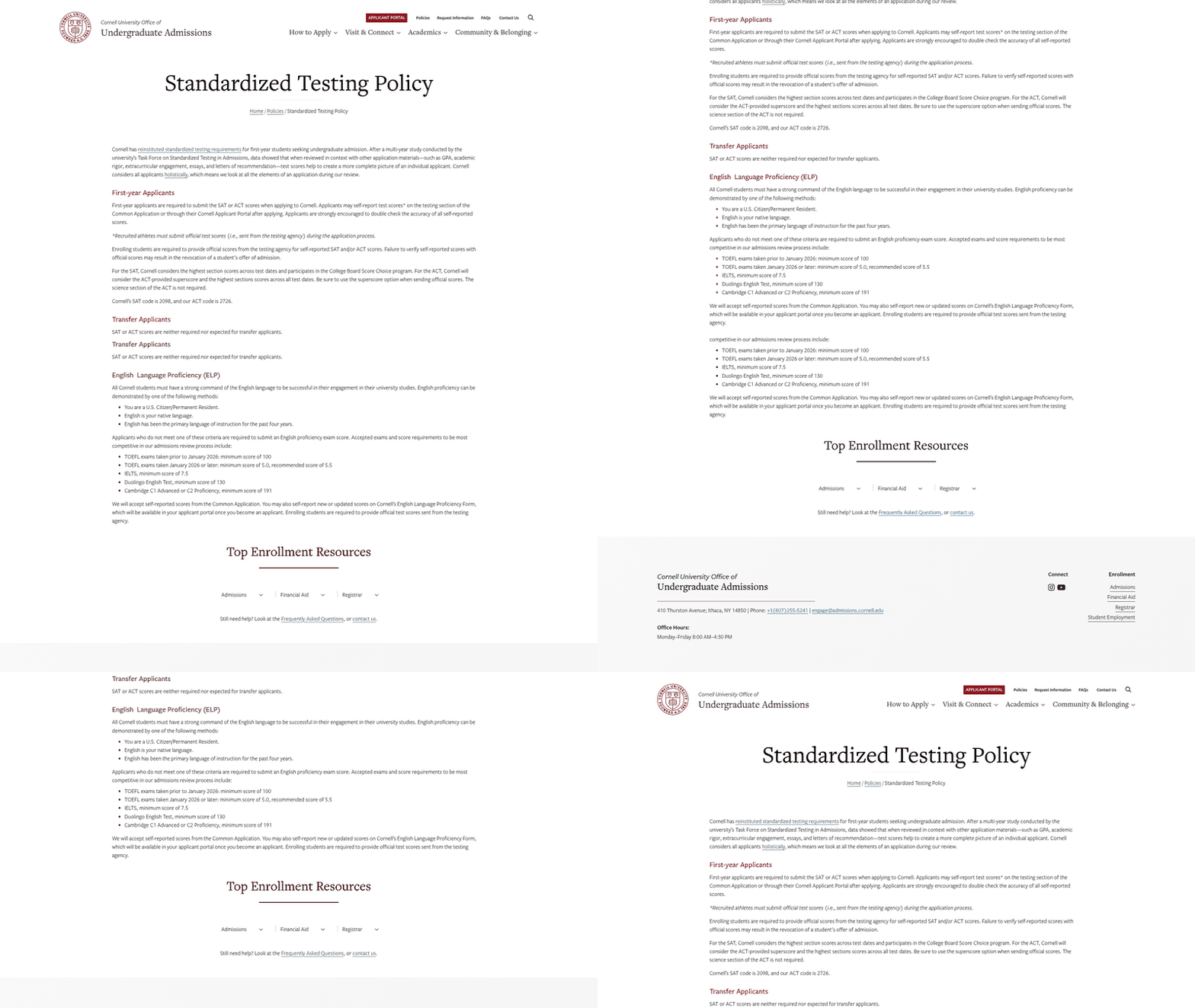
Separate policy from strategy. Test-optional does not mean test-blind. A strong score still helps if it matches the academic story your transcript already tells. But when you withhold a score, readers lean harder on the parts of your file that prove college-level rigor. That is exactly where AP and dual-enrollment coursework earns its keep.
How does test-optional change what Cornell actually reads?
Holistic review is now the default across selective admissions. Research on holistic admissions found that 95% of admissions officers say they use it. Test-optional policies spread fast. Many colleges became test-optional by 2019, and systems like the University of California phased out the SAT and ACT entirely.
The same research flags why so many schools moved: standardized scores track closely with family income, so a test-optional pool widens who feels invited to apply. That tends to push application volume up, which quietly compresses the headline acceptance rate without changing any one applicant's real odds.
So what fills the gap a missing score leaves? Verified academic rigor. A transcript loaded with AP results and dual-enrollment credits from a real college gives readers proof of college-readiness that a self-reported GPA alone cannot. It's the most defensible signal you control.
We turn that into a quantifiable edge. We map which advanced courses actually move the needle for Cornell's colleges, then build a test-optional file where the coursework does the persuading. If your score genuinely strengthens the story, we submit it. If it undercuts a rigorous transcript, we let the coursework speak.
Translating the numbers into your real odds
Start with a real decision families face. A junior with strong grades, some AP work, and a couple of dual-enrollment credits asks us a version of the same question every year: what are my actual chances at Cornell? The honest answer requires mapping your own numbers onto how Cornell reads files, not onto the headline rate. That mapping is the core of what good consulting does, and it starts by separating the gate from the seat.
How do you turn a rate into your real odds?
Think of Cornell's review in two stages. First a screen, then the human read. PrepScholar describes a hidden Academic Index cutoff: fall below it and readers may never open your file. The published testing profile gives you a rough sense of where that bar sits.
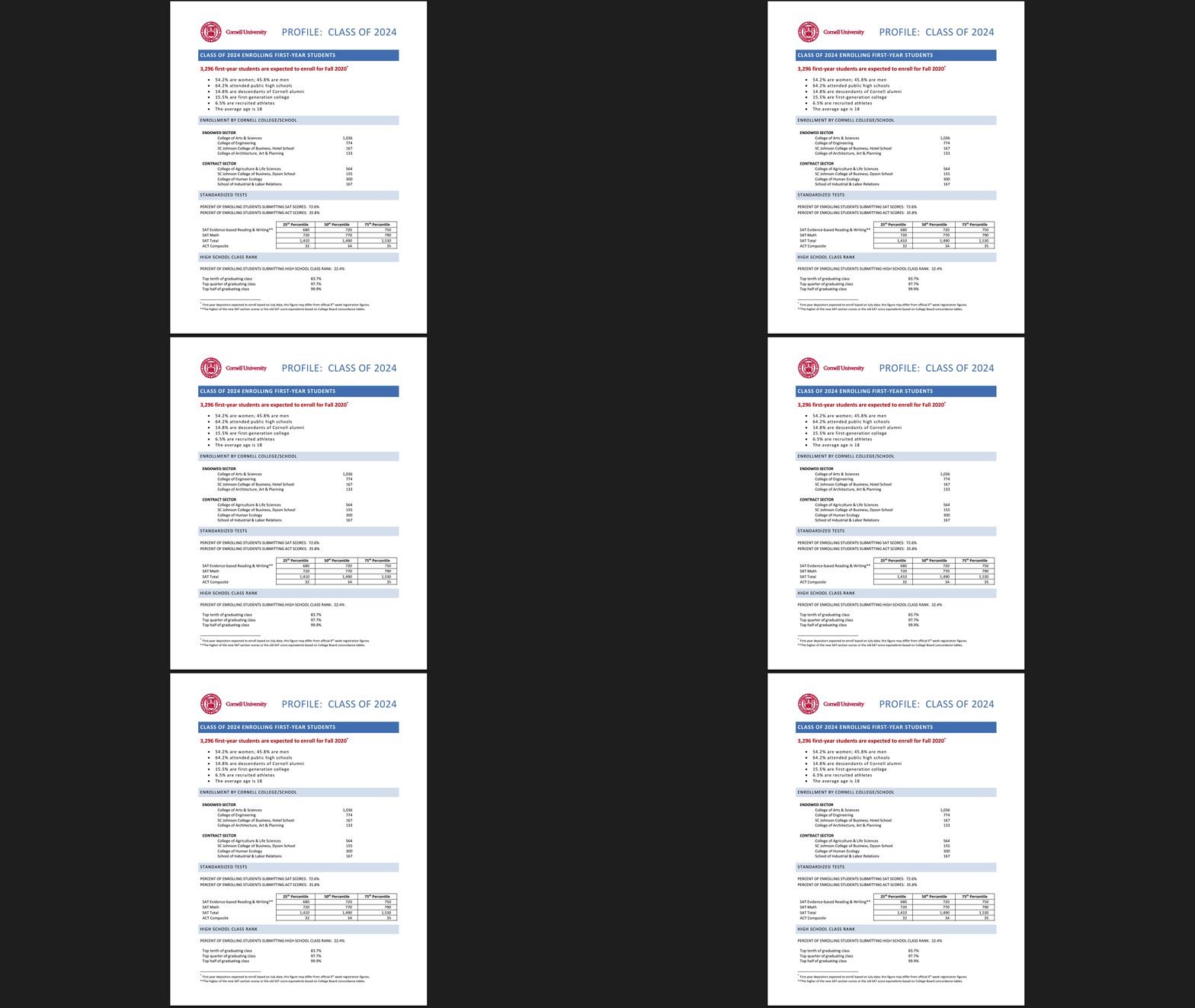
Class rank tells the same story. Cornell's admitted students tend to cluster at the very top of their high school classes, so strong standing helps, but rank reporting is uneven enough that you should read it as directional rather than precise. Your first estimate should ask a blunt question: do your GPA, rigor, and rank clear the gate? If yes, the rate stops being your odds and the rest of the file takes over.
Advanced coursework is especially useful when it lines up with your intended college. A student aiming at a life-sciences program shouldn't think about rigor the same way as a student aiming at architecture, policy, or engineering. The transcript has to answer a specific question: does this applicant already behave like someone ready for the academic culture of this Cornell college?
How much does Early Decision move your number?
The round you pick can reshape your odds more than almost any single factor. At selective schools like Cornell, the early round often shows a higher admit rate than regular decision, though the exact gap shifts year to year. Early decision means a binding commitment: apply early, and if admitted you enroll.
That gap tends to be real, but it isn't free. Cornell has been trimming the share of its class admitted through early decision even as some peers hold steady, so the ED edge that exists today may narrow. Apply early only when Cornell is a clear first choice and your file already clears the gate. Applying early to fix a weak profile rarely works.
Where do demographic factors fit?
Some advantages are structural, and honesty here matters more than comfort. Former enrollment VP Jason Locke noted that legacy students hold a stronger edge in the early round. Legacy preference at some peer schools is well documented, with those applicants often admitted at noticeably higher rates than the overall pool.
If those factors aren't in your favor, your controllable levers matter more, not less. Course rigor, domain depth, and round choice are the variables you own. We build every real-odds estimate around those first, then adjust for the structural pieces you can't change.
Strategies to strengthen your Cornell application
Start with a decision we see families wrestle with every spring: a rising junior has room for one more advanced class, and she's choosing between a fifth AP in a scattered mix of subjects or a dual-enrollment course that deepens the field she actually wants to study at Cornell. Pick the scattered path and you signal breadth. Pick the focused one and you do two jobs at once. That single choice is where hands-on consulting changes an outcome, because Cornell rewards depth over a well-rounded résumé.
The strategic question is not "How many hard classes can I collect?" It's "Which hard classes make my intended Cornell college believe I belong there?" A rigorous transcript only becomes persuasive when it points somewhere.
Depth in one domain beats breadth everywhere
Cornell's specialized colleges each read for domain fit. An applicant to the School of Industrial and Labor Relations who stacks Mock Trial, a law-clerk internship, and a dual-enrollment policy course tells a coherent story. The same hours spread across six unrelated clubs tell none.
We often see a student with strong grades but a thin activity list. We don't add more activities just to make the résumé longer. We prune to the two that match the college she's applying to, then push those toward research, leadership, or a capstone. Depth in one lane reads as intent. Intent is what survives holistic review.
Recommendations and essays that match the transcript
Letters carry quiet bias worth planning around, a concern the broader literature on holistic review takes seriously. When we prep students for recommender conversations, we ask them to give teachers concrete evidence of analytical work, so the letter reinforces the transcript instead of drifting into "pleasant to have in class."
Essays face a parallel trap. Students often default to the theme that feels safest rather than the one that shows real work. Cornell reads for depth and genuine passion in a single domain, so we steer supplements toward a specific problem the student has actually worked on. Specificity beats polish here.
Demonstrated interest only counts when it's real
Skip the checkbox version of demonstrated interest. Logging into a webinar you ignore does nothing. What moves a file is interest that shows up as substance: a supplement that names the exact Cornell lab or program tied to your coursework. If you can connect a specific Cornell program to a real project you've built, that's demonstrated interest with teeth. If you can't, a campus visit won't rescue the application.
The bottom line on a Cornell-ready plan: timeline and next steps
Most families come to us with the same question at the wrong time. They ask about Cornell in the fall of senior year, when the highest-value moves happened years earlier. Work backward from decision day, and the earlier you map that path, the more room you have to build the kind of advanced coursework record Cornell rewards.
The timeline we build with families is tuned to the dual-enrollment and AP advantage this guide has traced throughout.
What does a Cornell-ready timeline look like?
Think of the runway in four stages. In 8th and 9th grade, the work is quiet: pick a rigorous course sequence and start pointing it toward a field. This is where a scattered schedule or a focused one gets decided. We help students choose the AP and dual-enrollment tracks that will later read as depth, not filler.
By 10th and 11th grade, the plan sharpens. You lock in the advanced classes that matter for your intended Cornell college, sit for standardized tests early enough to retest, and decide honestly whether a score helps your file in a test-optional cycle. Our mentors, who graduated from schools like Harvard, Yale, and Princeton and bring years of admissions counseling experience, read your transcript with an eye for what top colleges value.
Summer before senior year is for the story. That means supplements, the personal statement, and any research or coursework that proves you can handle college-level material. If you're weighing a summer research spot, our guide to landing one that strengthens an Ivy application walks through the mechanics.

Fall of senior year is execution: the Early Decision choice, final drafts, and submission.
Before you pay for any of this, use the free resources first. Cornell runs its own information sessions, virtual campus tours, and college-specific webinars. Your high school counselor is a resource you've already paid for. We tell families plainly: if your student has a clear plan and a strong transcript, you may not need paid help at all. Our signals for when to skip paid consulting lay out exactly when to save your money.
Where we add value is turning the coursework advantage into a coherent file. That's the work.
References
[1] This Year's Cornell Admission Requirements - PrepScholar - https://www.prepscholar.com/sat/s/colleges/Cornell-admission-requirements
[2] Cornell University Acceptance Rate for Class of 2030 - IvyWise - https://www.ivywise.com/blog/cornell-university-acceptance-rate/
[3] How to Get Into Cornell: Admissions Stats + Tips | CollegeVine Blog - https://blog.collegevine.com/what-is-cornells-acceptance-rate-admissions-requirements
[4] Cornell Reduces Proportion of Students Admitted Through Early ... - https://cornellsun.com/2023/11/30/cornell-reduces-proportion-of-students-admitted-through-early-decision-track/
[5] Holistic Admissions in Higher Education: Challenges and Promises - https://journals.flvc.org/jpss/article/view/131099/134937
FAQ
1. How do I find the acceptance rate for the specific Cornell college I want, not the university-wide number?
Start with Cornell's individual undergraduate colleges rather than the university summary. If public data is limited, use the college's academic expectations, enrollment priorities, and major-specific language as your practical guide. The goal is to compare yourself to the applicant pool for your intended college, not to the entire university.
2. I scored 1490, the bottom of Cornell's middle-50%. Should I submit it or go test-optional?
Ask whether the score improves the story your transcript already tells. If it makes your academic profile look stronger and consistent, submit it. If it distracts from stronger grades, advanced classes, or college-level coursework, going test-optional may let the better evidence lead.
3. Will applying Early Decision make up for a weaker academic profile?
No. Early Decision is best used by students who already look academically competitive and are ready to make a binding commitment. It can sharpen a strong application, but it is not a workaround for weak rigor, uneven grades, or an unfocused fit with the college.
4. What can I actually control if I'm not a legacy applicant?
You control the academic story: course selection, depth in your intended field, essays that connect your work to Cornell, and the timing of your application. Endurable Education helps families pressure-test those choices so the file is built around evidence, not wishful thinking.